How to Tell Apart Mini-guide
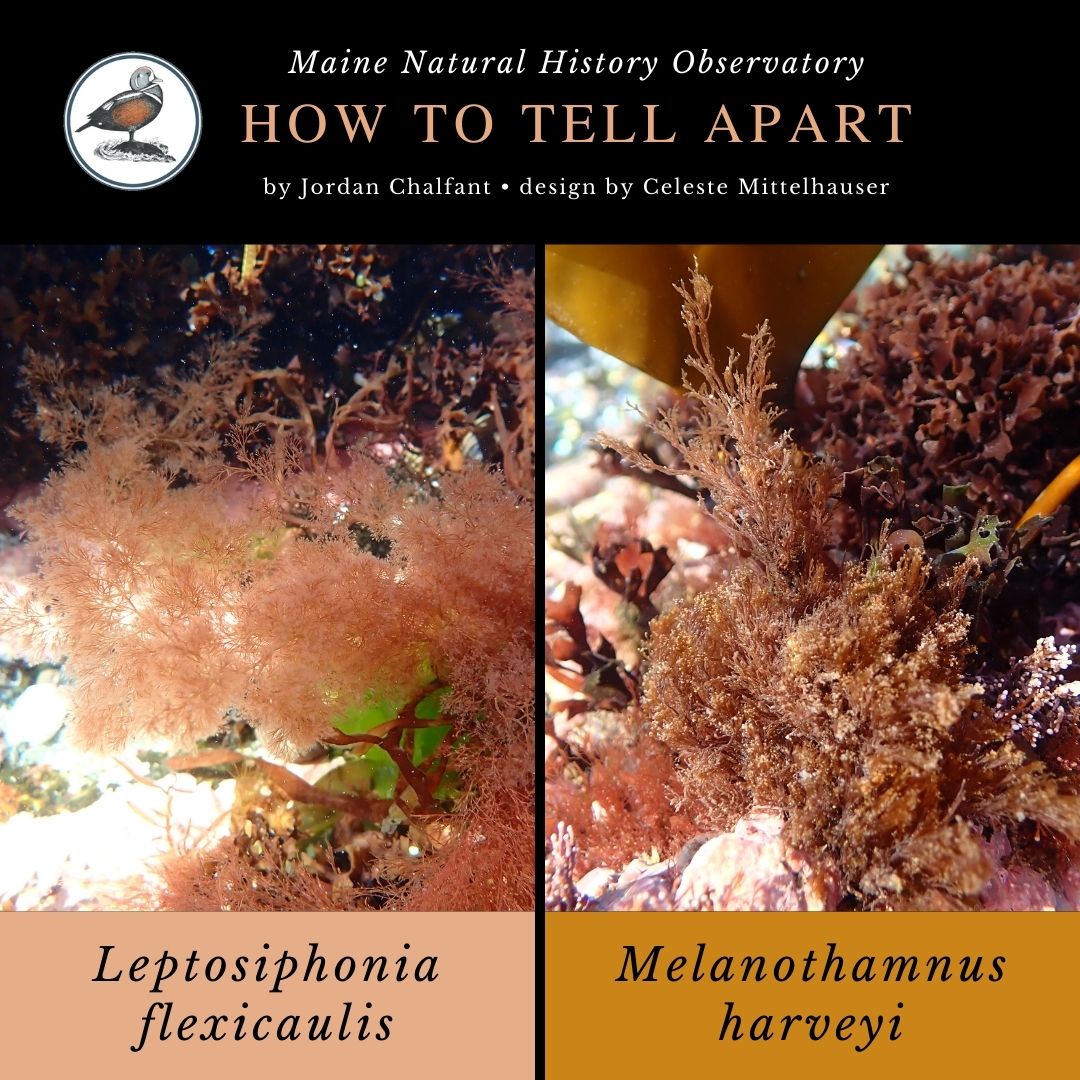
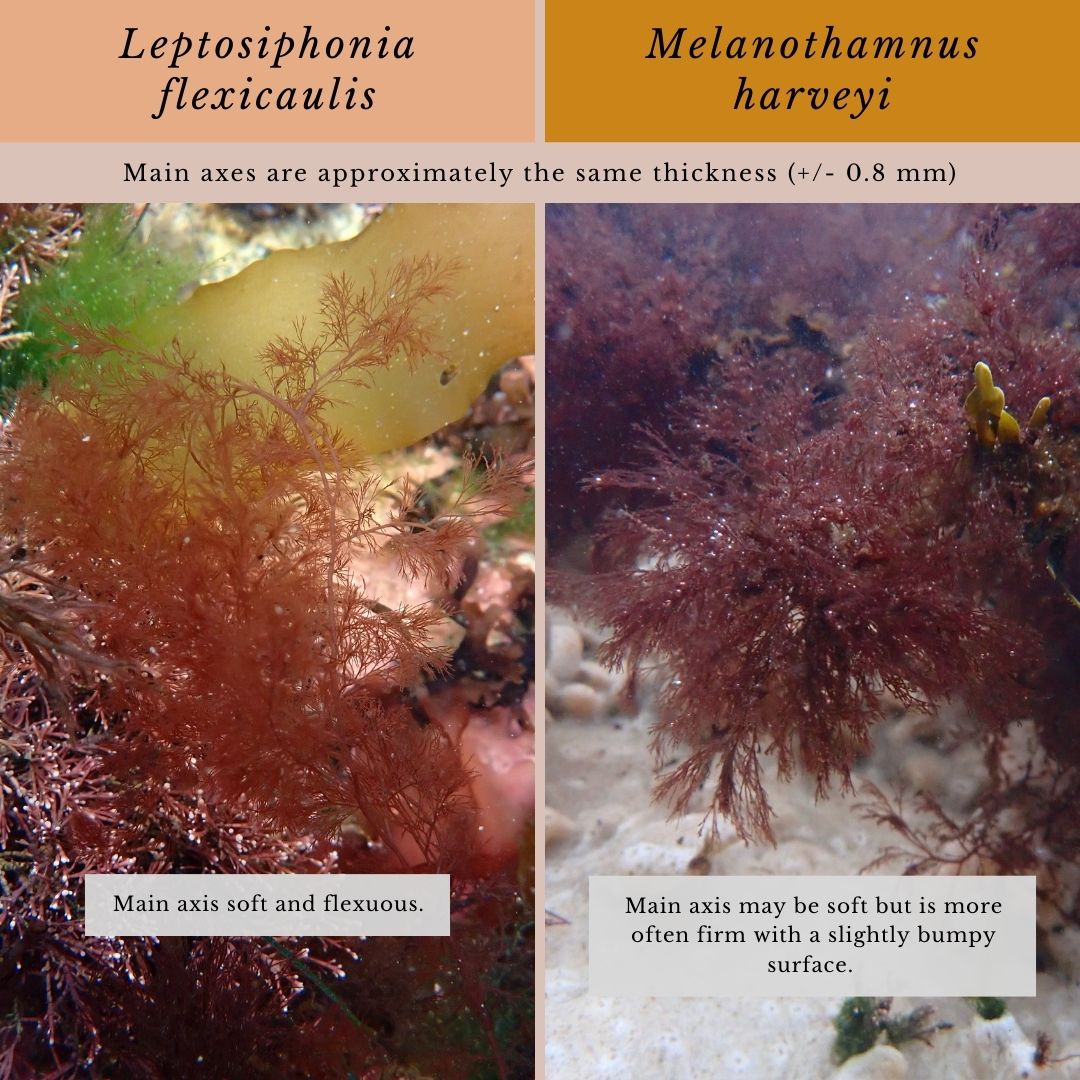
Leptosiphonia flexicaulis and Melanothamnus harveyi in Maine
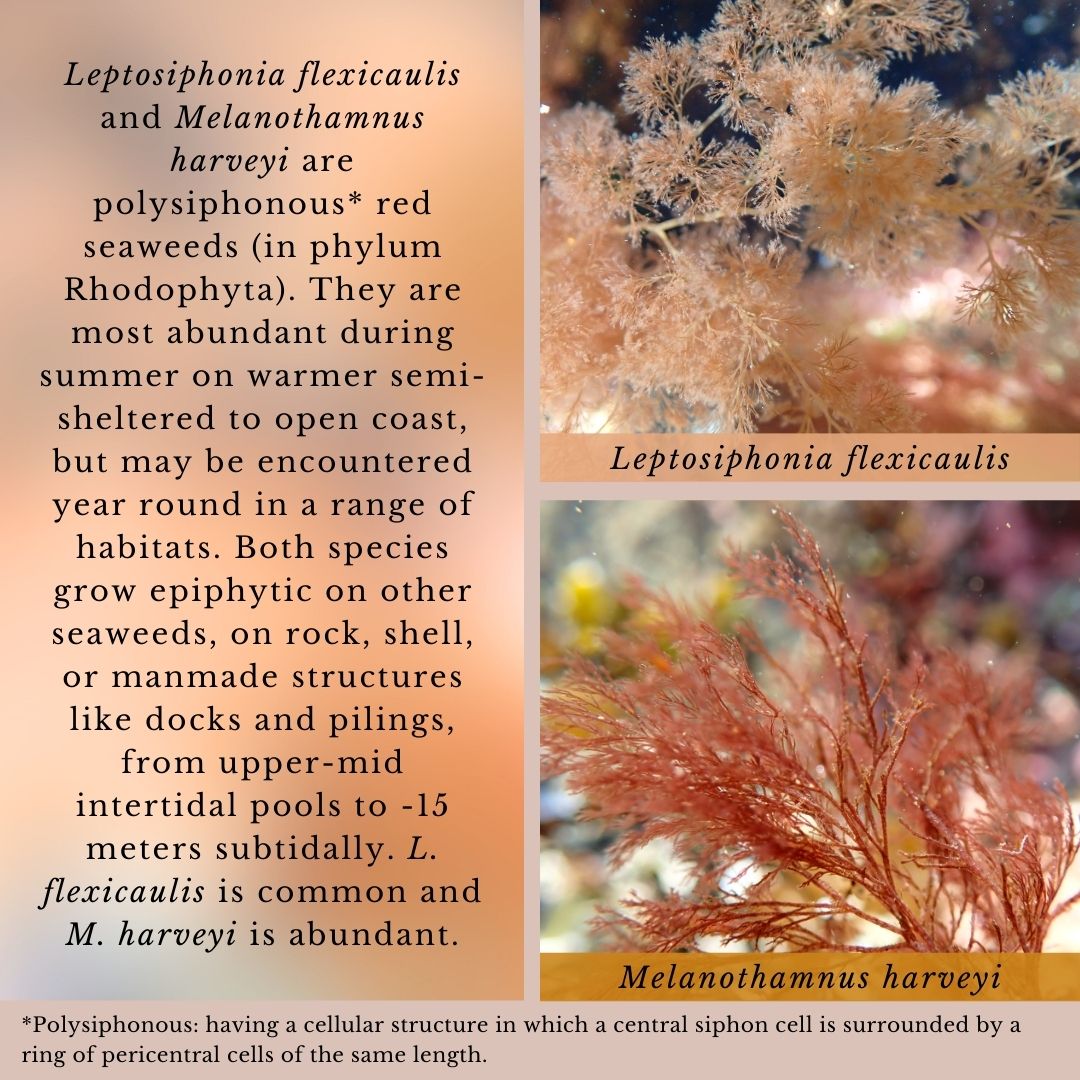
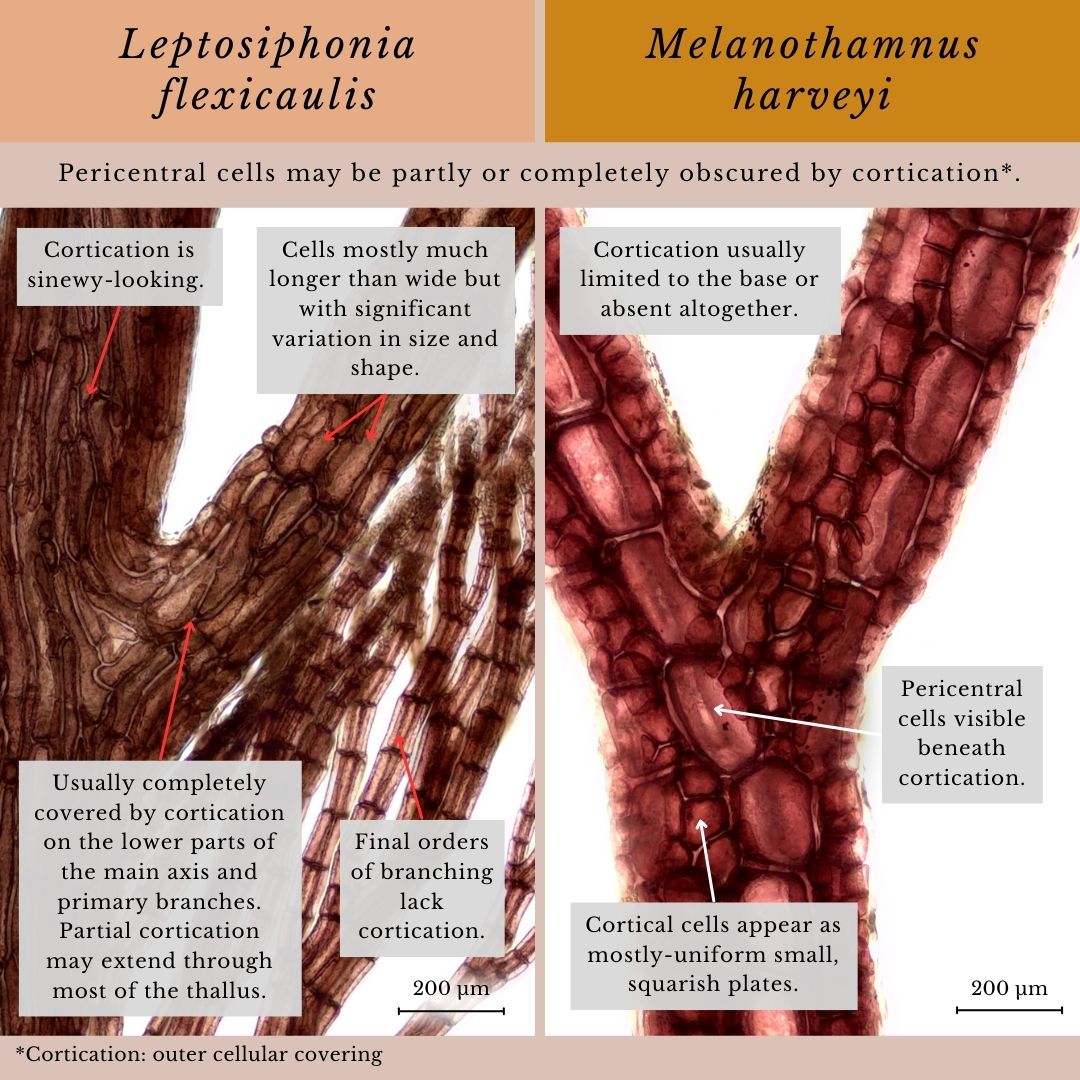
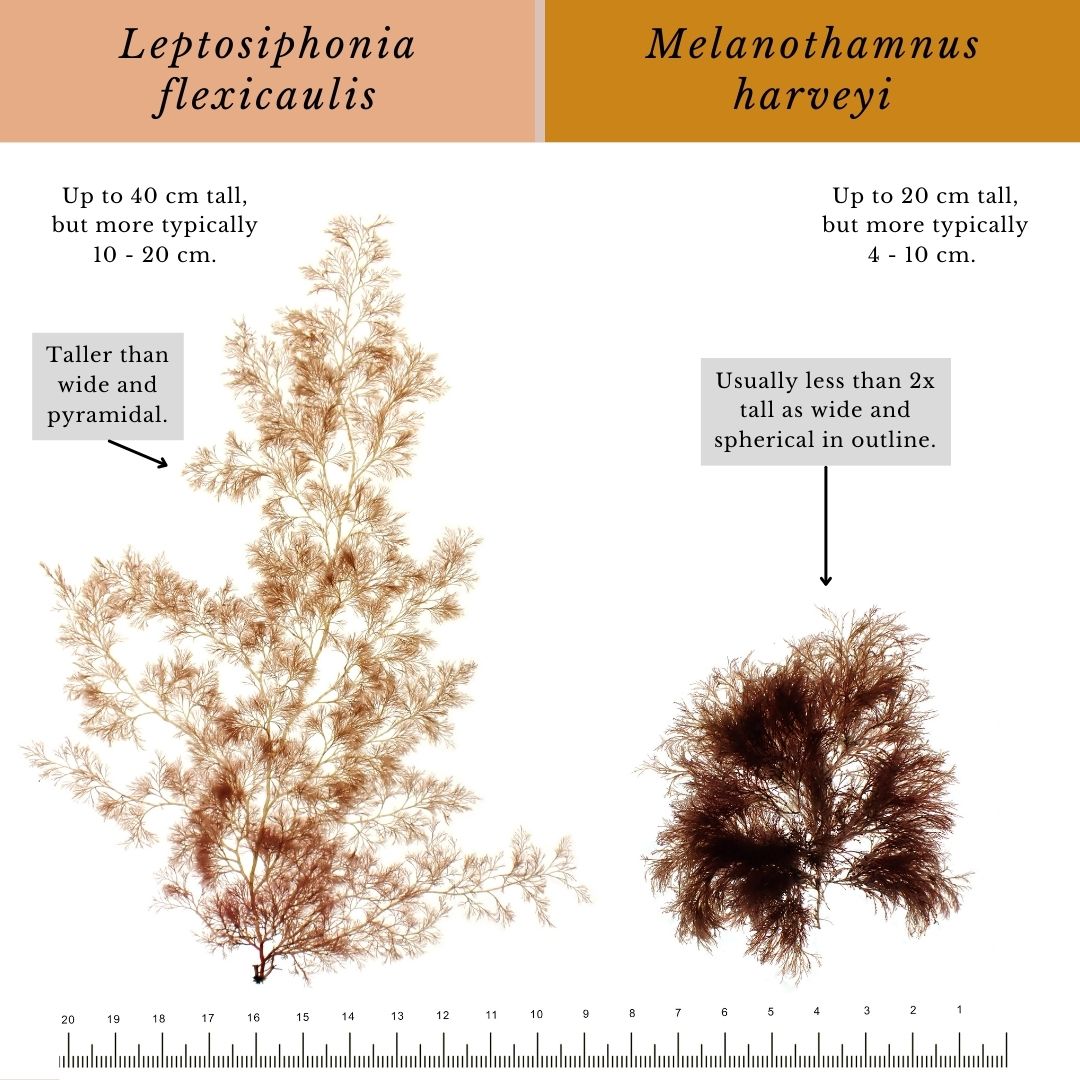
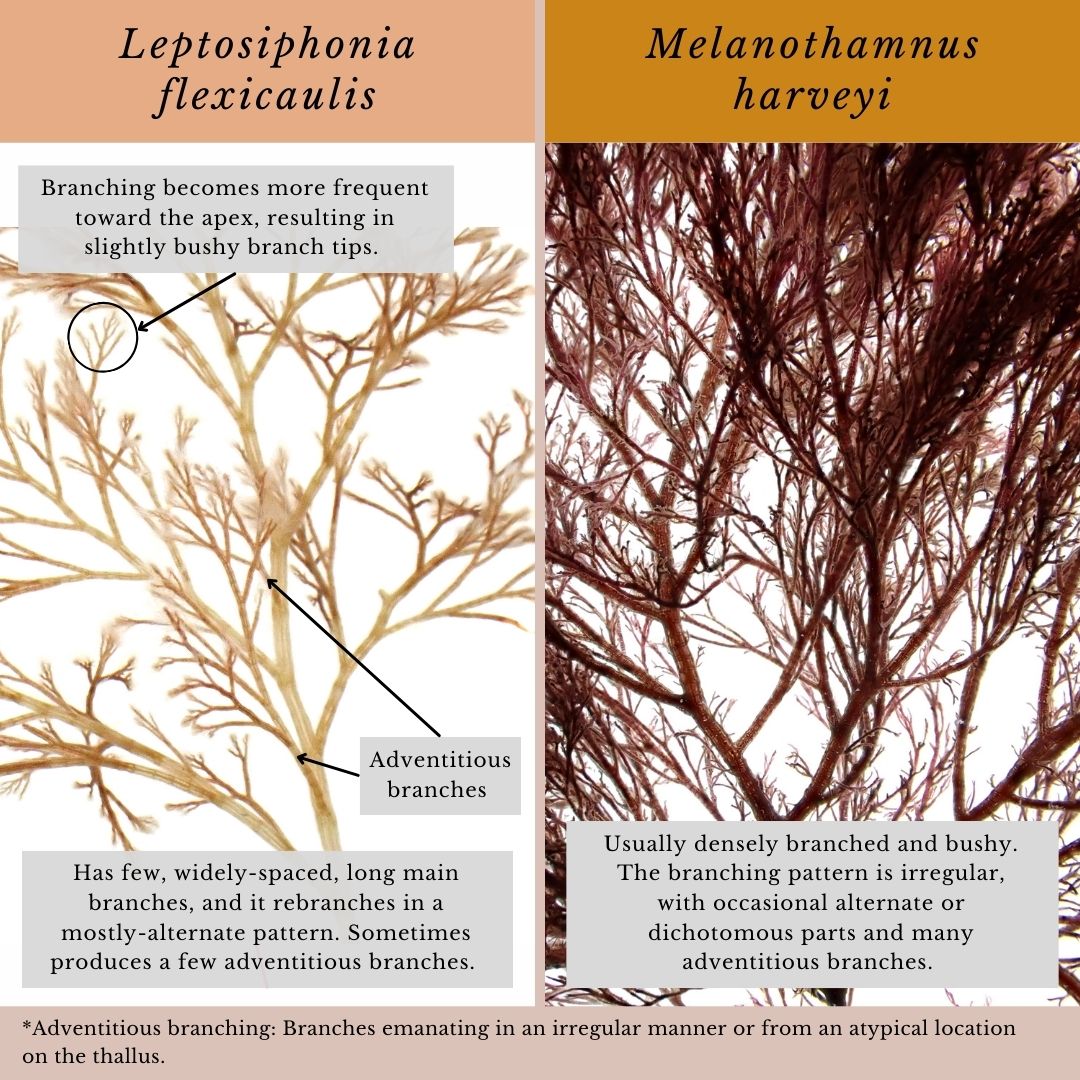
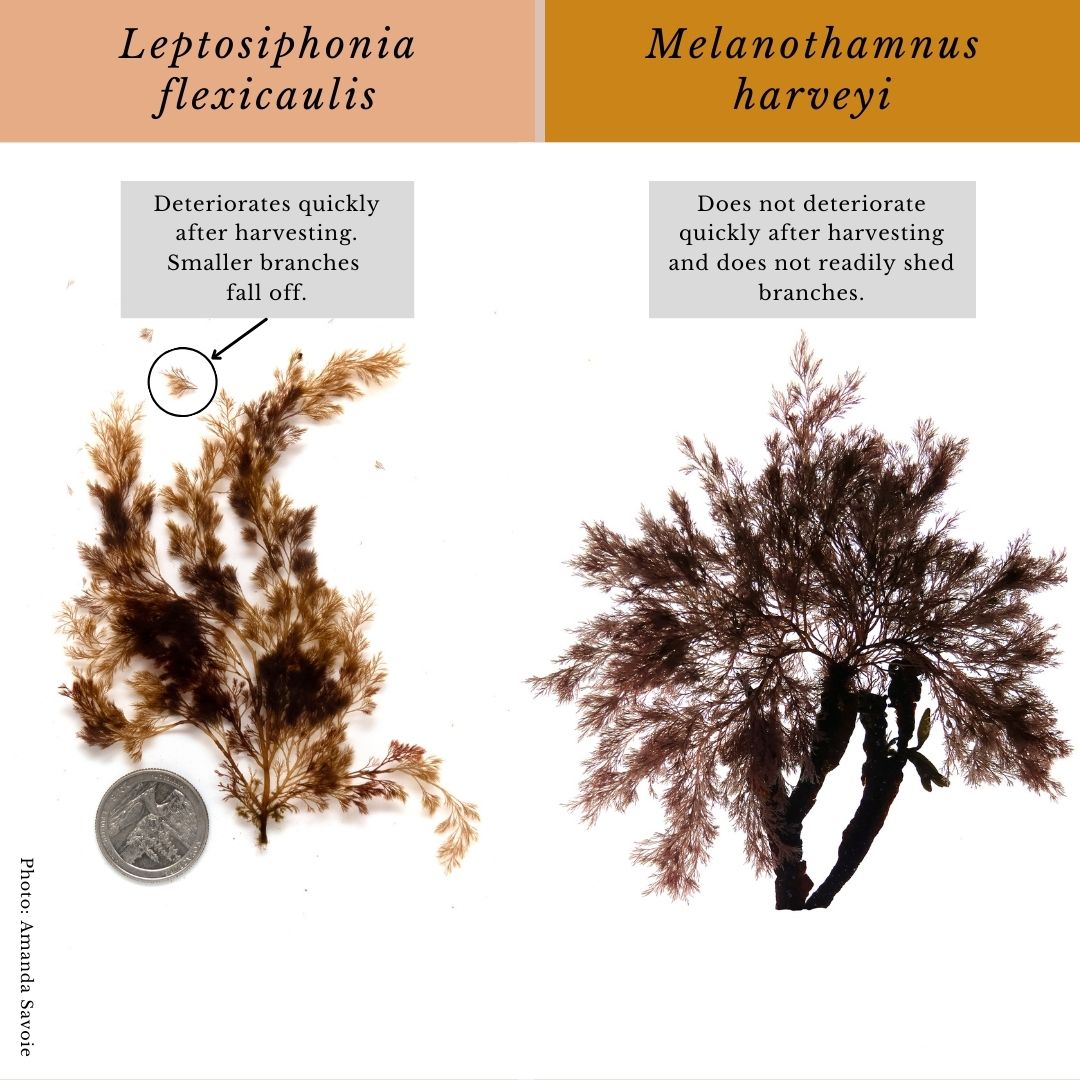
Leptosiphonia flexicaulis and Melanothamnus harveyi are polysiphonous* red seaweeds (in phylum Rhodophyta). They are most abundant during summer on warmer semi-sheltered to open coast, but may be encountered year round in a range of habitats. Both species grow epiphytic on other seaweeds, on rock, shell, or manmade structures like docks and pilings, from upper-mid intertidal pools to -15 meters subtidally. L. flexicaulis is common and M. harveyi is abundant.
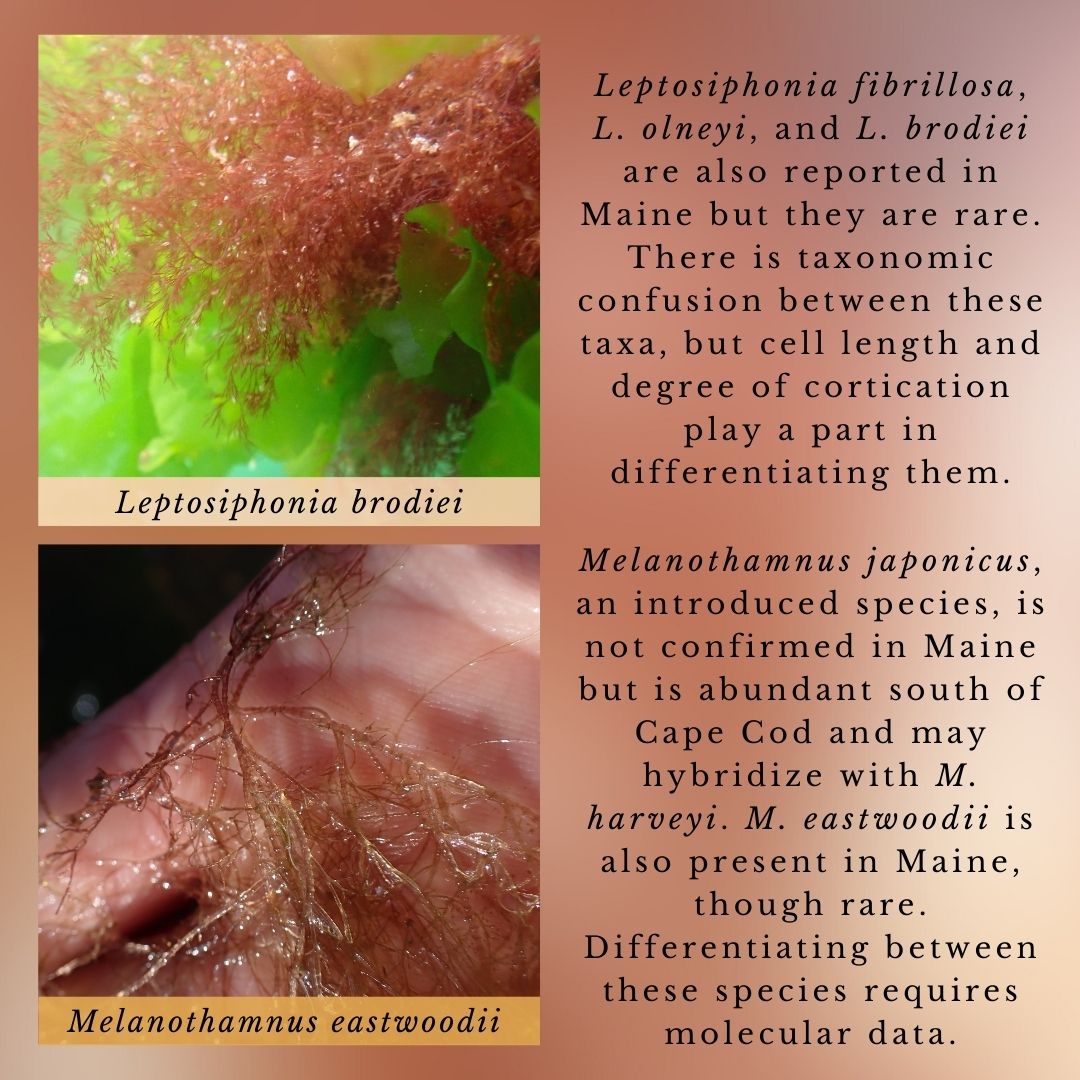
Leptosiphonia fibrillosa, L. olneyi, and L. brodiei are also reported in Maine but they are rare. There is taxonomic confusion between these taxa, but cell length and degree of cortication play a part in differentiating them.
Melanothamnus japonicus, an introduced species, is not confirmed in Maine but is abundant south of Cape Cod and may hybridize with M. harveyi. M. eastwoodii is also present in Maine, though rare. Differentiating between these species requires molecular data.
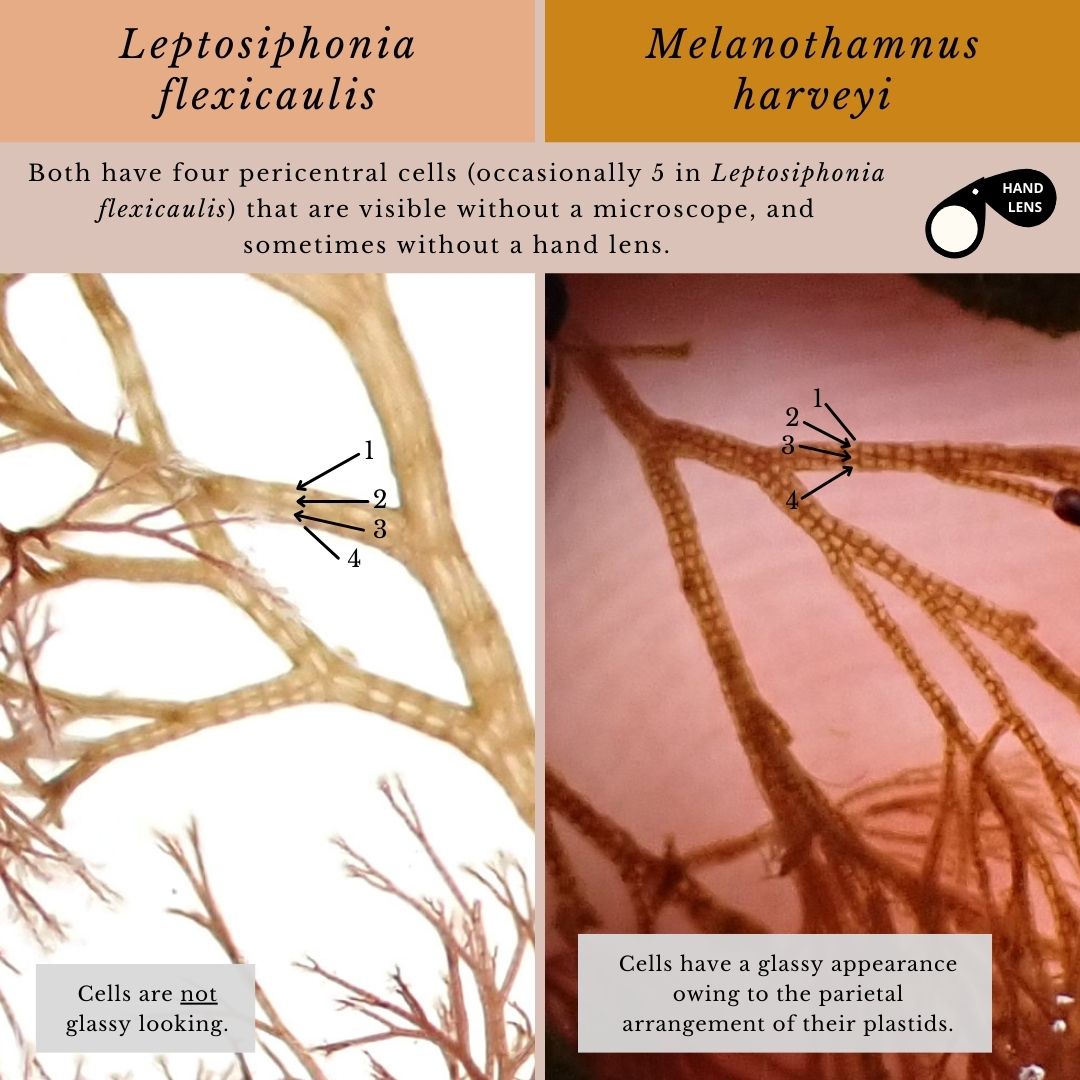
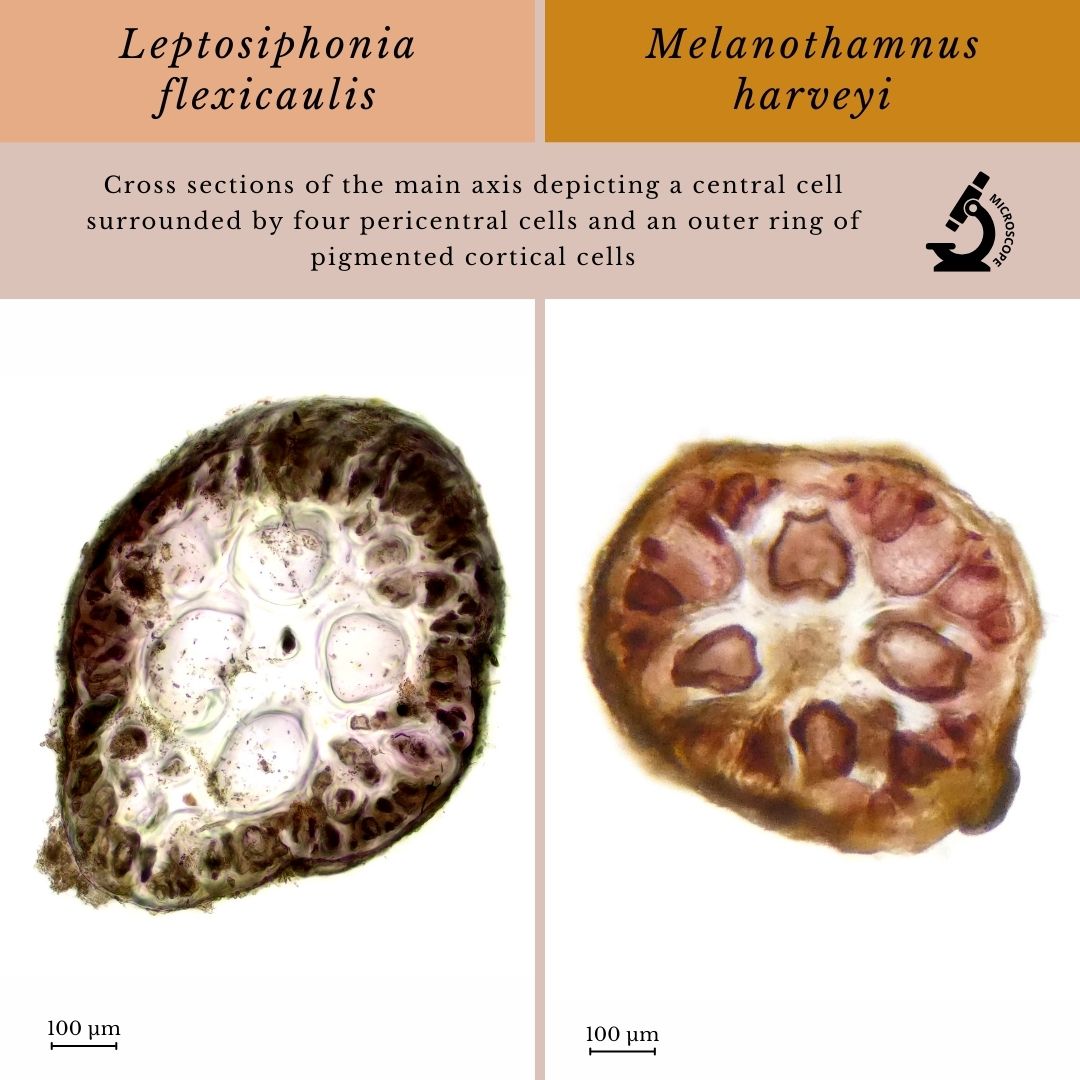
*Polysiphonous: having a cellular structure in which a central siphon cell is surrounded by a ring of pericentral cells of the same length.
S E A W E E D
Leptosiphonia flexicaulis
Melanothamnus harveyi
Text by
Jordan Chalfant
Photos by
Jordan Chalfant
& Amanda Savoie
Design by