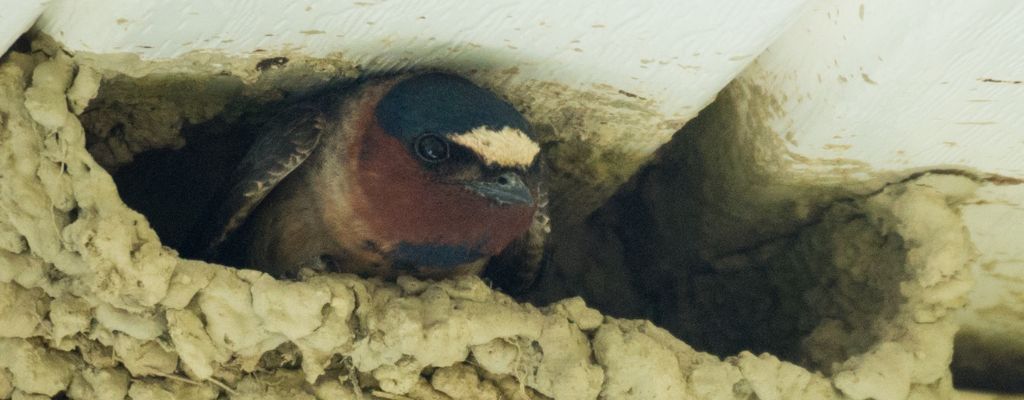
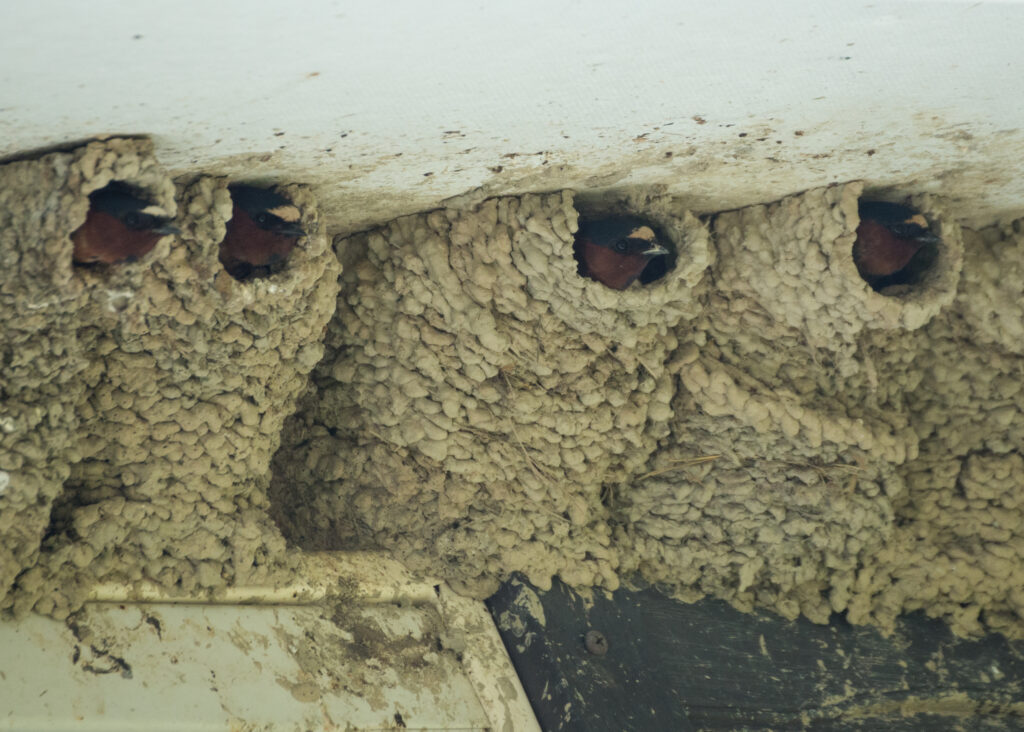
Recent information suggests that Cliff Swallows are decreasing in Maine. Consequently, Cliff Swallows are listed as Species of Greatest Conservation Need in the Maine Wildlife Action Plan. Although likely due to a culmination of many issues, the loss of nest sites to invasive species have been identified as a contributing factor to this species’ decline in other regions of the country. Fortunately, recent studies have revealed that Cliff Swallows will readily make use of artificial nests when provided at existing and historic colony sites. These artificial nests can be maintained to prevent use by invasive species while also providing suitable nesting sites year after year.
Cliff Swallows are vulnerable to threats like pesticide pollution and competition with invasive European House Sparrows. Although highly tolerant of humans, their willingness to form colonies on or near human structures can result in conflicts ending in their eviction. Understanding the issues which negatively impact this species will require a better understanding of the species’ distribution during the breeding season and their breeding behavior at nesting sites.
Volunteer Resources
Want to contribute to this project? MNHO and our partners are seeking volunteers to help report Cliff Swallow breeding observations throughout the state to guide future project initiatives. You can help by contributing observations of breeding swallows, swifts, and martins to the MDIFW’s Nest Quest portal.
Click the links below to view the nest monitoring data sheet and handbook:
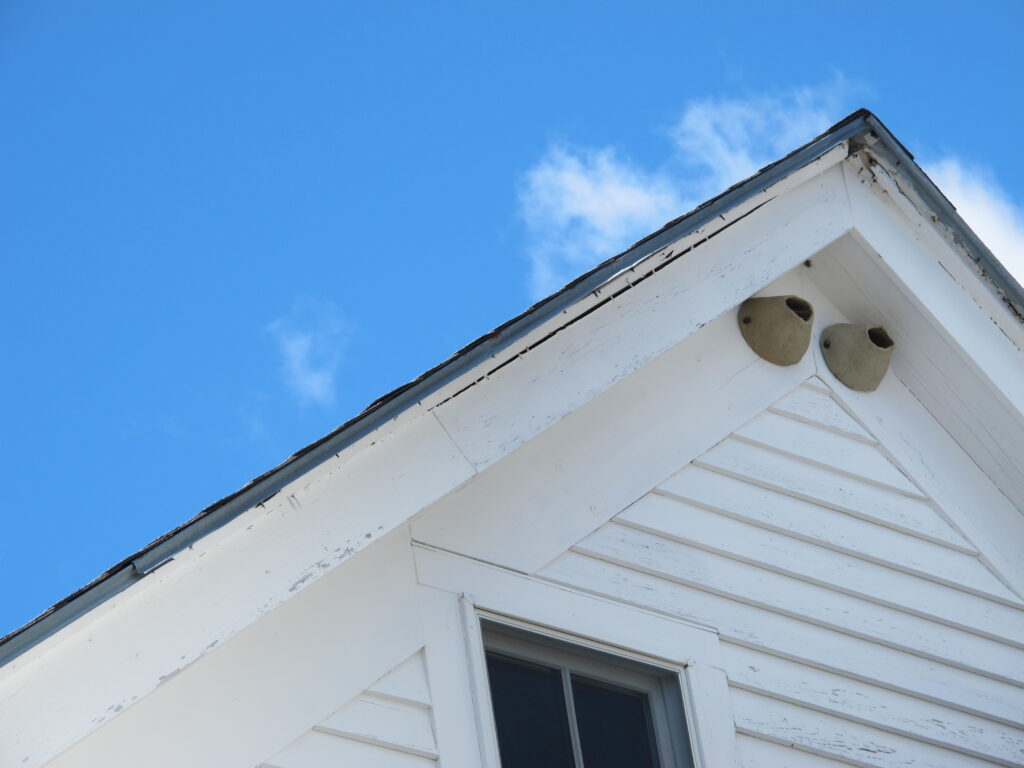

Join the Project
Report Cliff Swallow breeding observations throughout the state!
Time/Skill Required
No set time commitment.
Identify Cliff Swallow nests and breeding behavior.
Submit your observations to the MDIFW’s Nest Quest portal.
Project Collaborators
Maine Aerial Insectivore Monitoring and Stewardship Initiative (Maine AIMS)
Project Supporters
This project was funded
in part by the Maine Outdoor Heritage Fund, in which proceeds from the sale of a dedicated instant lottery ticket (currently Leap for Loot) are used to support outdoor recreation and natural resource conservation. For more information about MOHF, go to www.maine.gov/ifw/mohf
Stay Connected
Follow the progress of this project through our newsletter or on social media
Related Content
-

Tree Swallow Nest Boxes
Like many other aerial insectivorous birds, Tree Swallows are declining throughout their northeastern breeding range. While still widespread in…
-
Midcoast Kestrel Project
In his 1949 book, Maine Birds, biologist Ralph S. Palmer described the American Kestrel— then called the “Northern Sparrow…