Nature Notes: A Maine Naturalist Afield
Host: Logan Parker
Producer: Glen Mittelhauser
In this episode, Logan introduces Maine’s rare pitch pine–scrub oak barrens, explaining how glacial sands, fire, and other disturbances shaped these unusual habitats and how development and fire suppression have contributed to their decline. He also reflects on how his nightjar research led him into these ecosystems, which support several rare species despite their limited extent.
Transcript
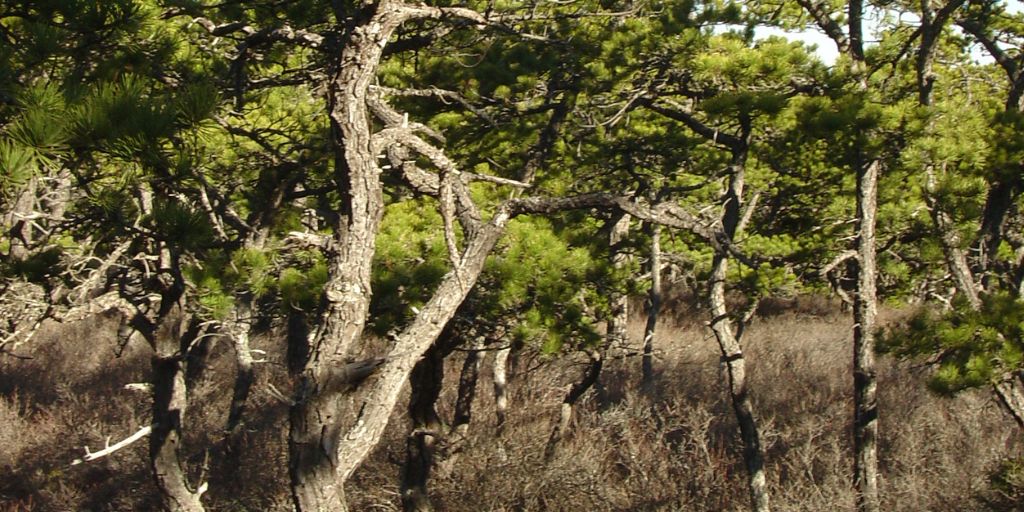
When one thinks of landscapes that define the State of Maine, I imagine most would think of our vast swaths of northern forest spotted by remote ponds where loons call long after the sun goes down. Or perhaps you would think first of the hundreds of miles of dynamic coastline, waves crashing on stony shores strewn with rockweed, the outlines of islands peaking above the horizon. Few, I think, would picture dry expanses of sand, fire scarred pines, and thickets of impenetrable scrub oak associated with Maine’s pitch pine-scrub oak barrens. Although diminished from their historic extents, the state can still count a handful of scattered barrenlands among its diverse landcover types. While these areas might not impart so distinct an impression on most observers as our iconic northern forests and extensive coasts, their contributions to the state’s ecological tapestry warrant our interest and appreciation.
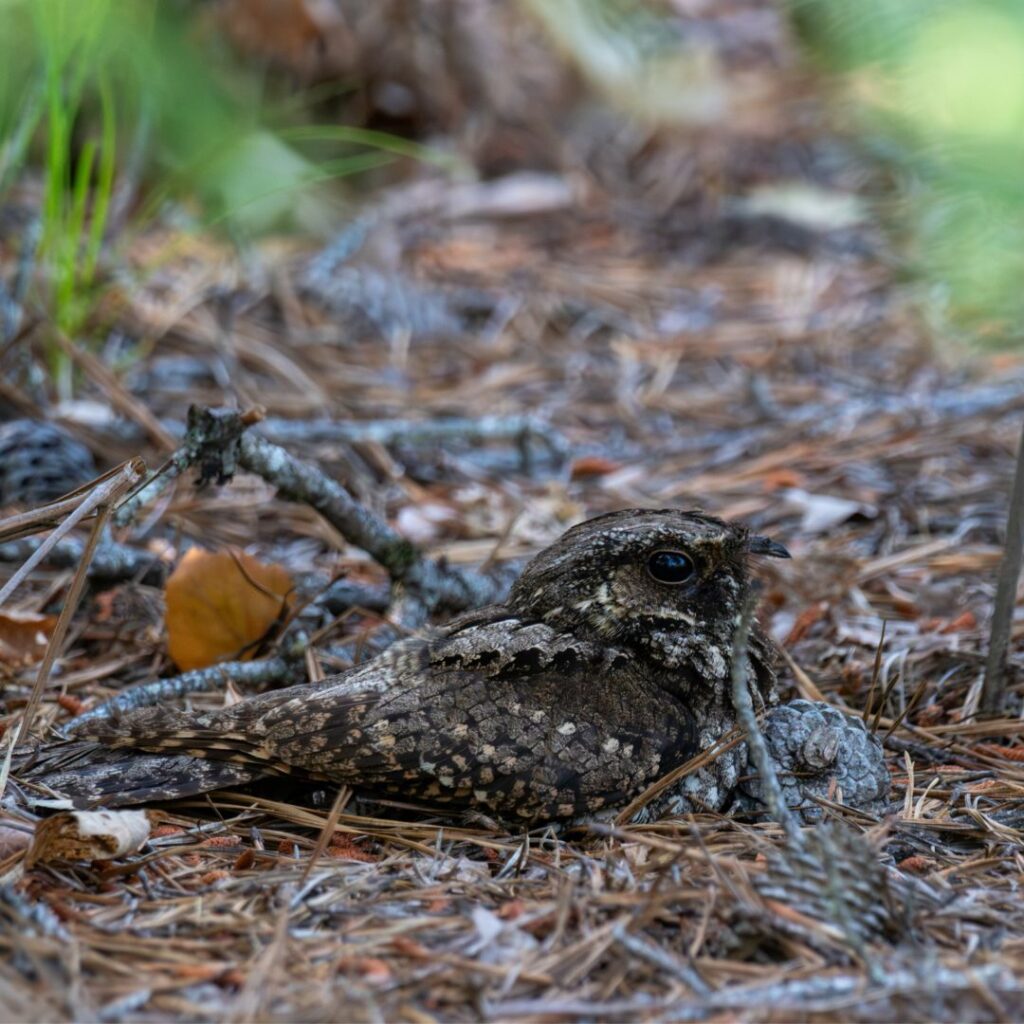
My relationship with the state’s barrenlands was born of my research efforts focused on Maine’s nightjars. While Eastern Whip-poor-wills and Common Nighthawks have disappeared from habitats across much of the state, they have remained locally abundant in many of Maine’s barrens. As a consequence, I’ve come to find myself spending a considerable amount of time within these rare and unusual habitat areas. In doing so, I’ve become quite fascinated with the assemblage of life found within these natural communities.
The northernmost examples of this community on the continent, Maine’s pitch pine-scrub oak barrens are found primarily in pockets of the state’s southwestern quarter. Notable examples include the Fryeburg Barrens in Oxford county, Jugtown Plains in Cumberland county, and Kennebunk Plains and Killick Pond Barrens in York county. Like the rest of the state, the creation of this habitat can be attributed to glacial activity and the materials left behind on the landscape. Sand, deposited during periods of glacial melt and northward retreat, is what eventually led to these landscapes earning the designation of “barren” in the contemporary period as the fast-draining, nutrient poor soils were regarded as unsuitable for most agricultural pursuits. In time, however, the sandy, acidic soils would be recognized as suitable for blueberry production with many barrenland converted to this use in the 20th century. The accumulated sand has also come to be viewed as a valuable resource with many pits opening to extract and sell sand for use in construction and manufacturing.
Disturbance remains a defining feature and requirement of barrenlands. Wildfire, windthrow, and tree clearing have all served as the periodic disturbances necessary for Maine’s pine barrens to maintain their foothold on the landscape throughout history. Fire has long been used by the state’s inhabitants to clear vegetation and modify the landscape, a practice still in use today in blueberry production and within conserved barrenlands. Wildfire, however, has largely been suppressed within the state with the last significant wildfire (known as the Great Fire) taking place in 1947. Following a period of prolonged drought, October fires burned more than 125,000 acres of York and Oxford counties, burning 5 of the 8 largest barren sites documented in the state in the process.
Strange as it would seem, a lack of disturbance, including fire, would spell the end of Maine barrens through the slow, prolonged process of mesophication, the succession process by which sun-loving, fire-adapted plant species are gradually replaced with more shade-tolerant vegetation. Conversely, these habitats are vulnerable to fragmentation and loss through development and sand extraction. Maine’s pine barrens occur within the most developed and densely populated portions of the state and many areas have already been fragmented or replaced by residential and commercial development. Through the combined action of mesophication, sand extraction, and development, Maine has already lost more than 50% of its historic pine barrens.
As a consequence of these and other pressures, Maine pitch pine scrub oak barrens are among the rarest habitat types in the state. Although fragmented and accounting for a small percentage of the state’s total landcover, these areas are significant contributors to Maine’s biodiversity with several rare plants and animals residing within these scattered mosaics of open areas and young woodlands. These habitats also provide a number of benefits to more widespread species, many of which are declining. In next week’s episode, we will begin to explore some of the members of the natural community assembled within these important ecological areas.
Related Episodes
-

1/26/25: Late Autumn Sulphurs
Late autumn isn’t usually a time associated with butterflies, yet a few hardy species persist despite chill and frost.
-
1/4/26: Maine’s Pine Barrens, part 2
In this episode, Logan explores the plant communities of Maine’s pitch pine–scrub oak barrens, from fire-adapted pines and dense…
-
1/11/26: Maine’s Pine Barrens, part 3
In this episode, Logan shares nighttime experiences studying whip-poor-wills in Maine’s barrens, describing the shifting soundscape, dense scrub oak…