How to Tell Apart Mini-guide
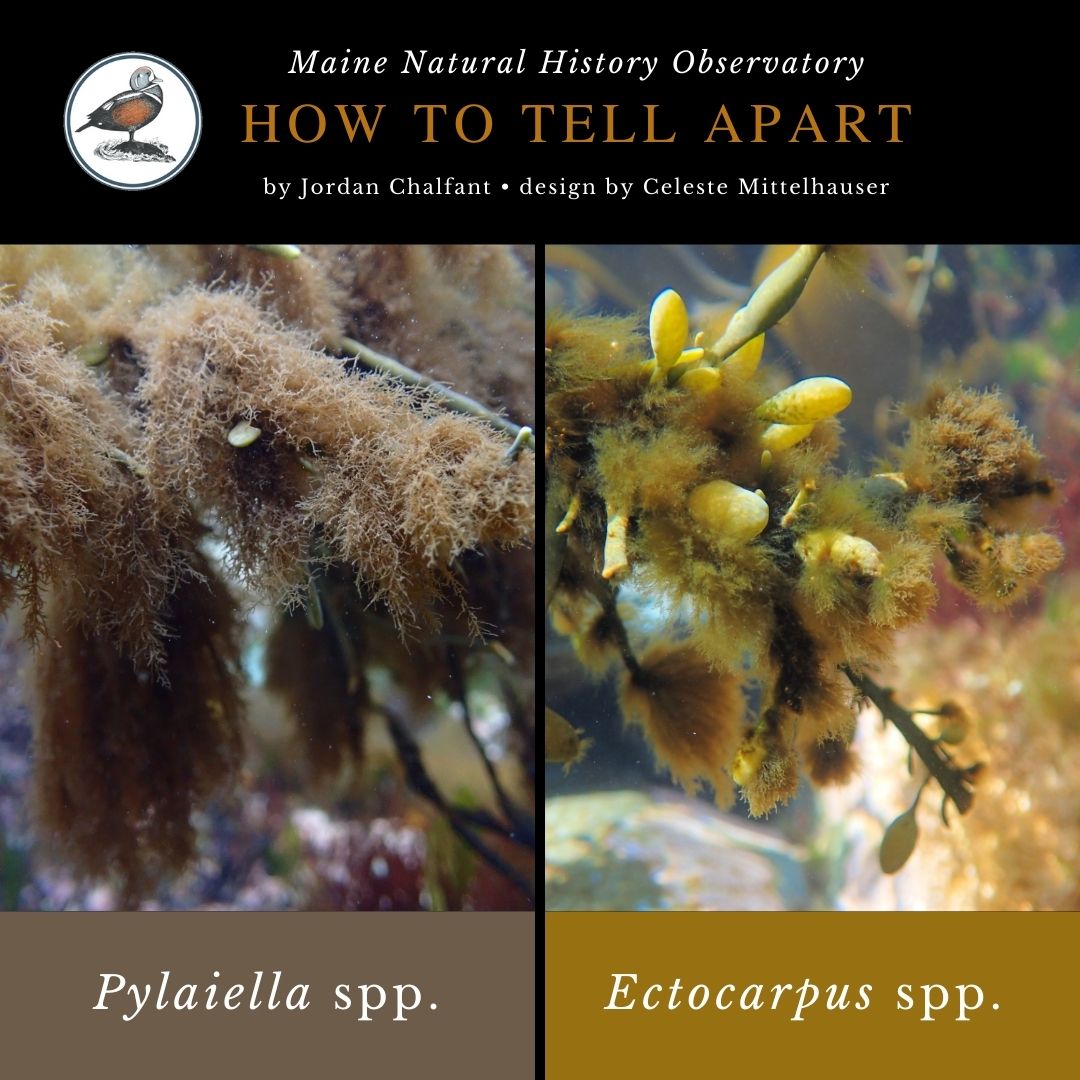
Pylaiella spp. vs. Ectocarpus spp. in Maine
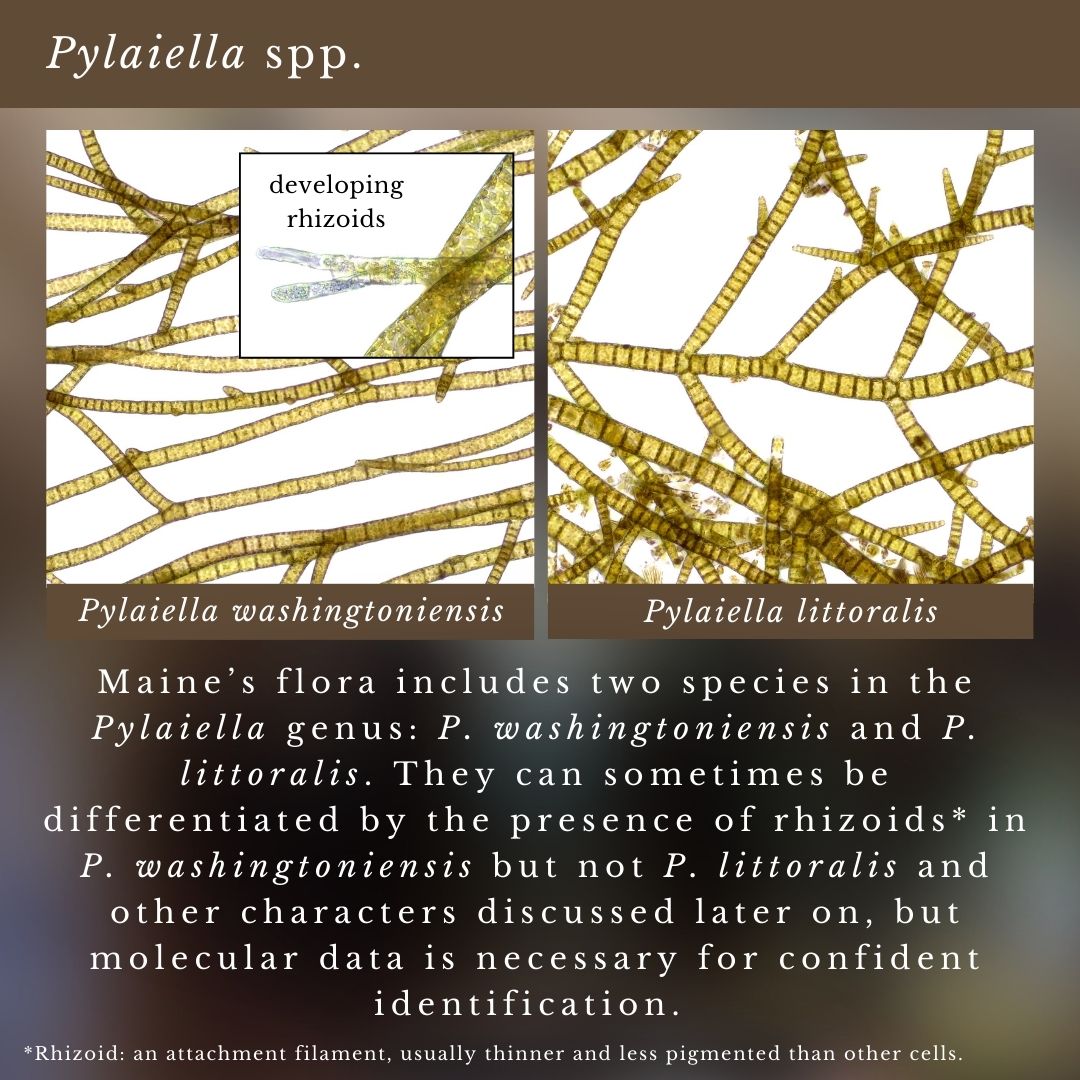
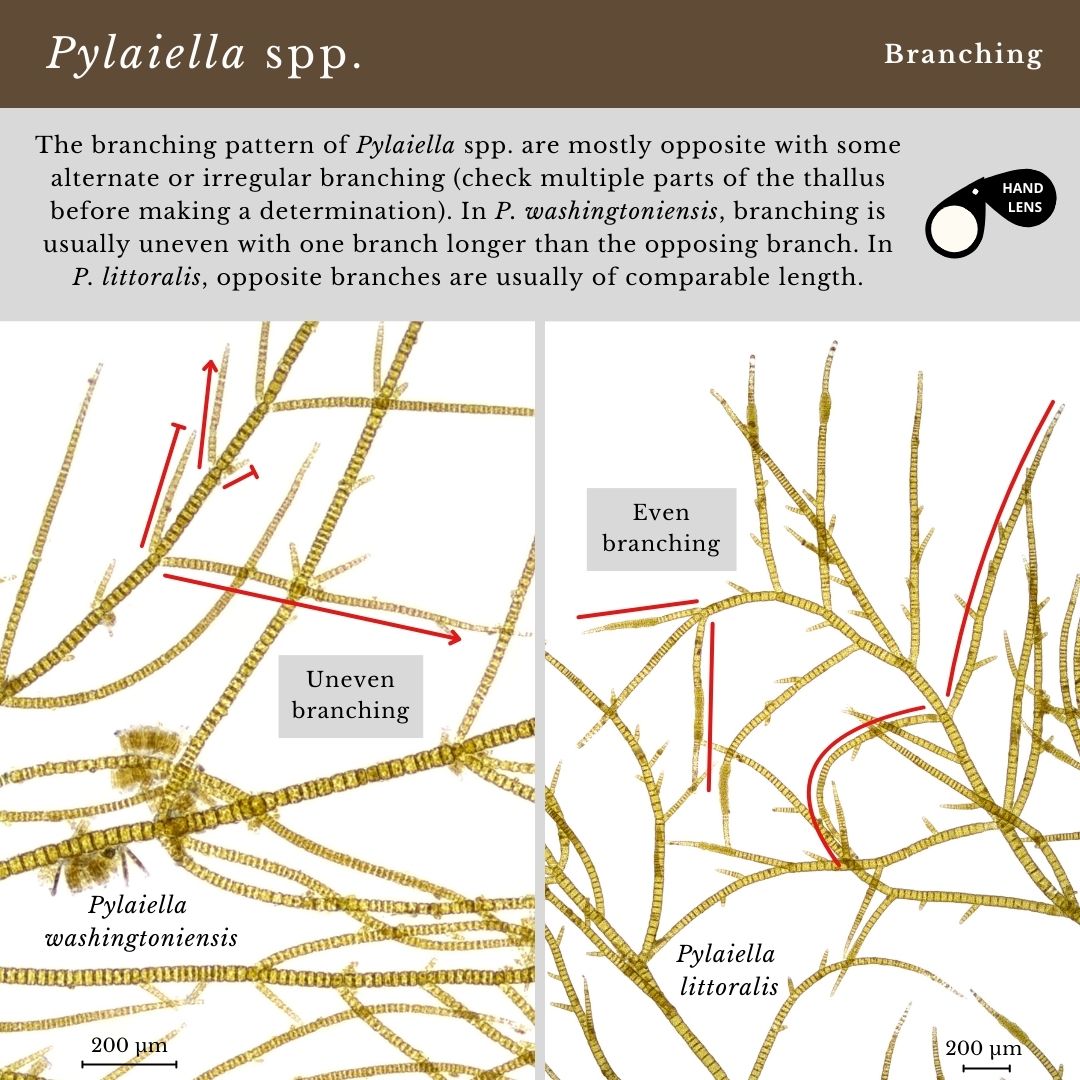
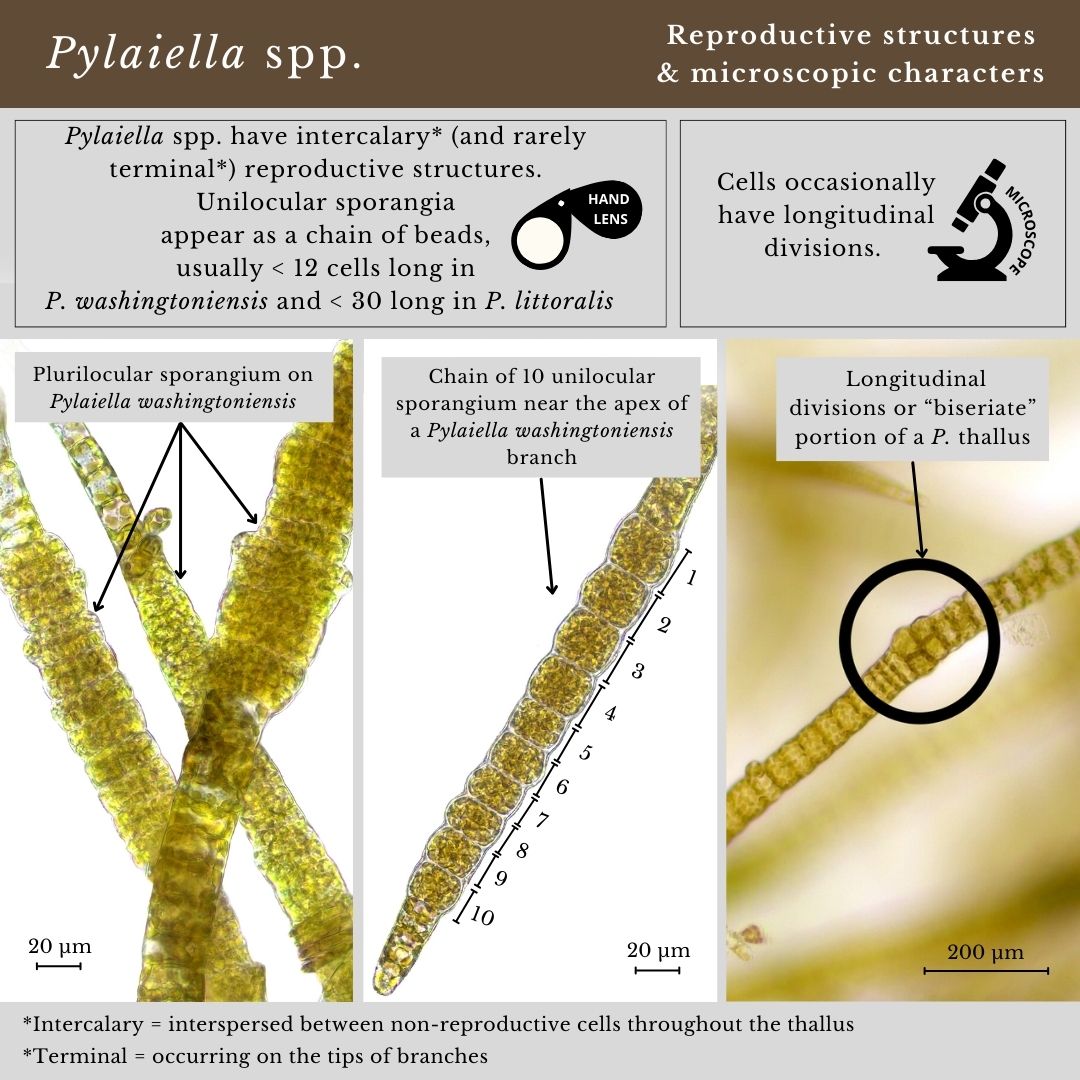
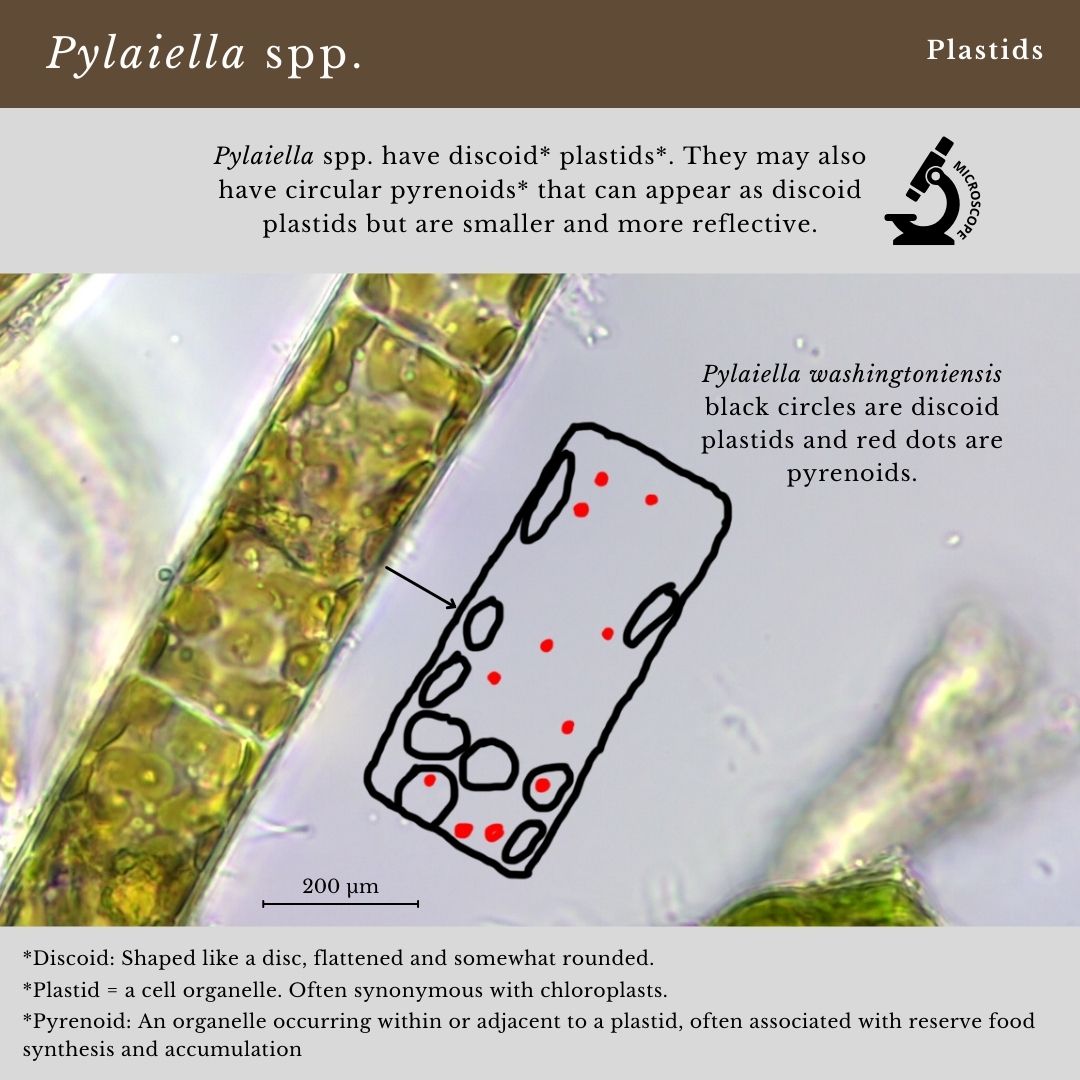
Maine’s flora includes two species in the Pylaiella genus: P. washingtoniensis and P. littoralis. They can sometimes be differentiated by the presence of rhizoids* in P. washingtoniensis but not P. littoralis and other characters discussed later on, but molecular data is necessary for confident identification.
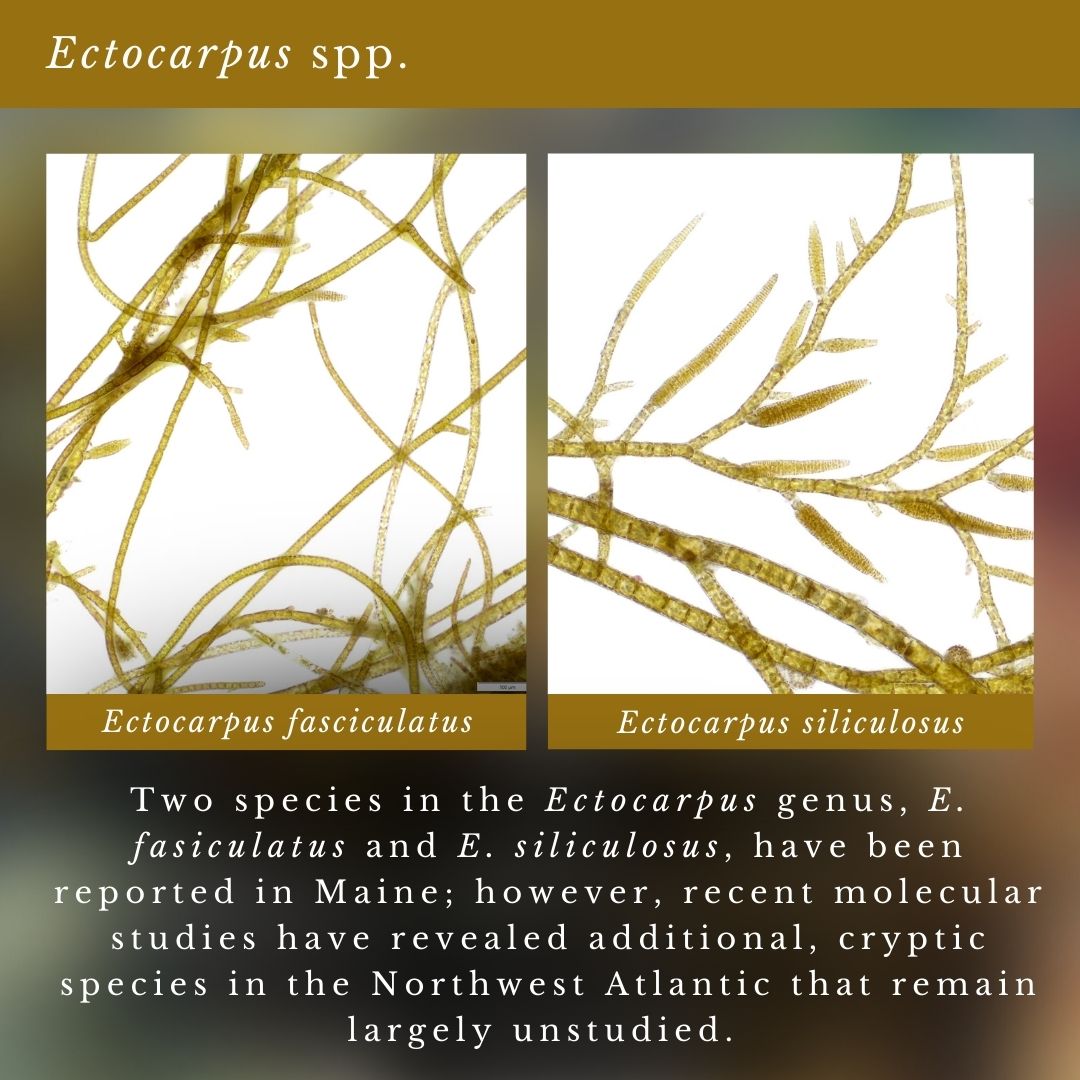
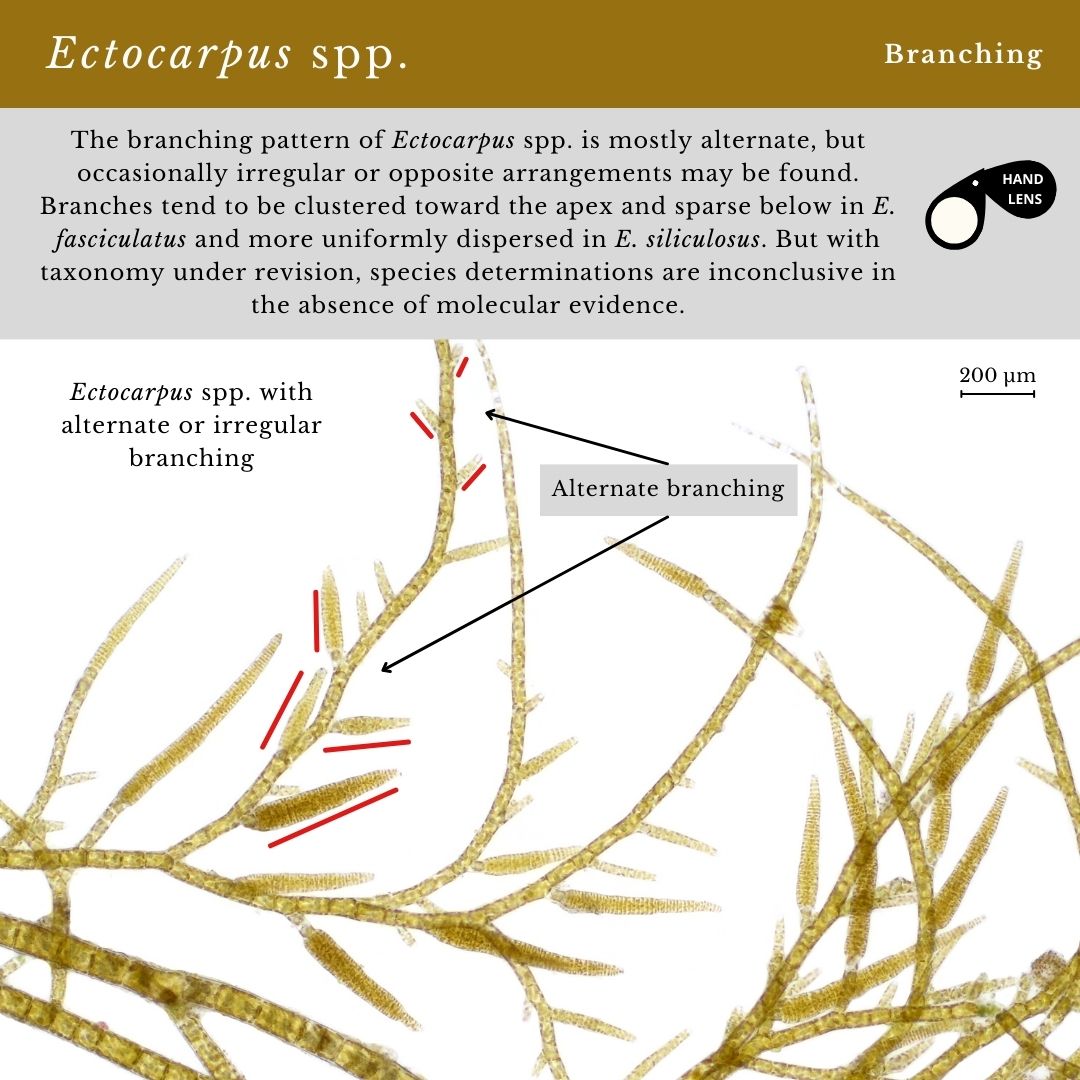
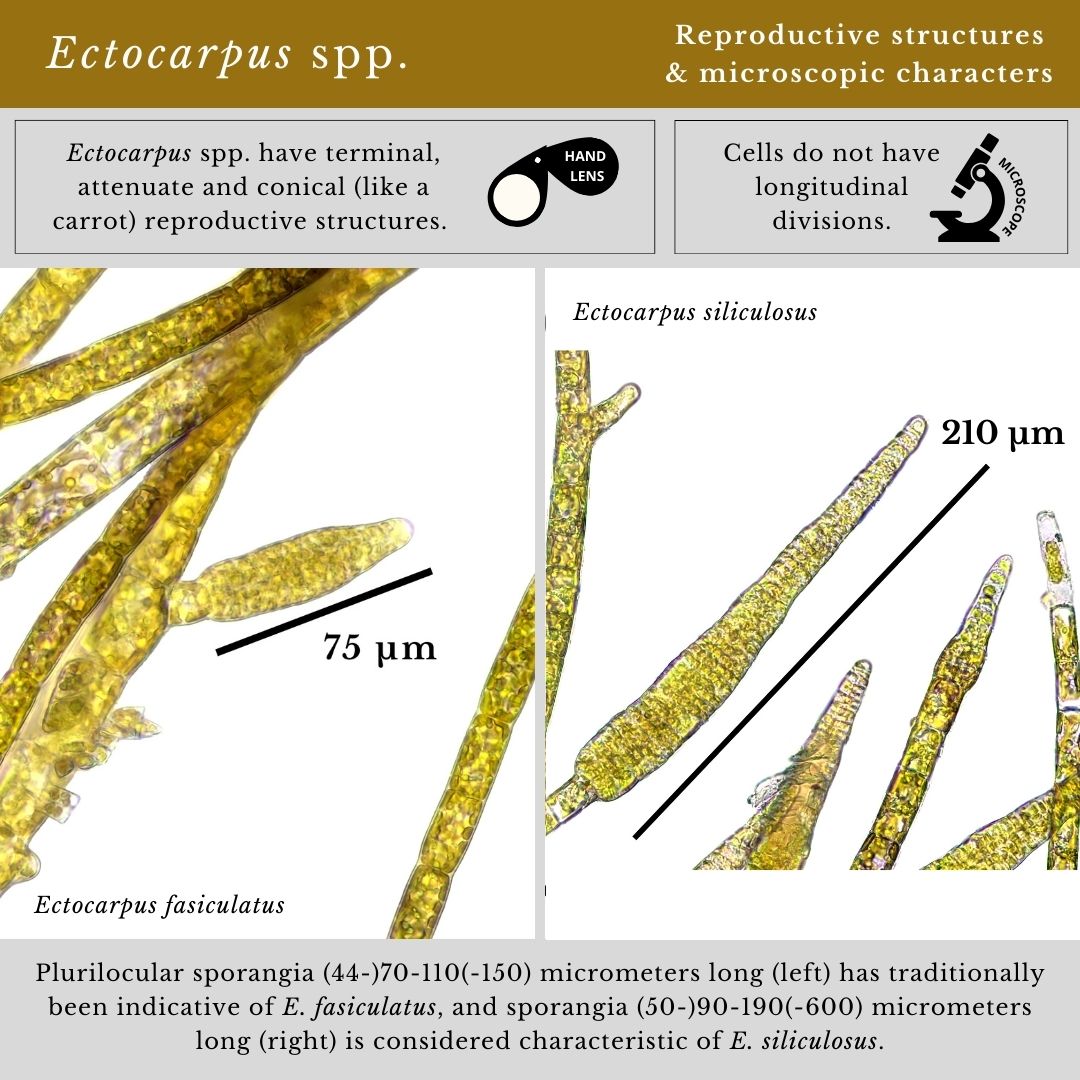
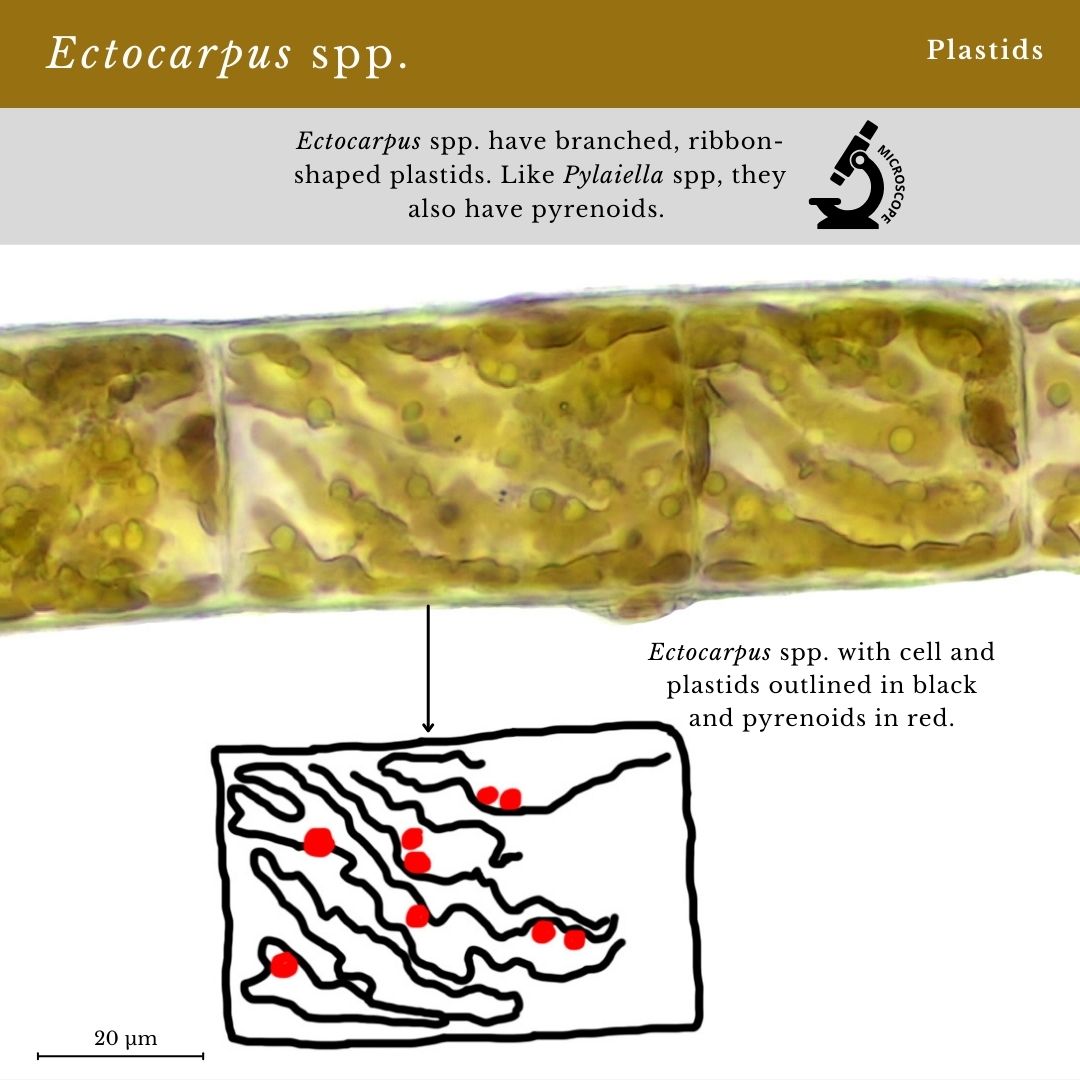
Two species in the Ectocarpus genus, E. fasiculatus and E. siliculosus, have been reported in Maine; however, recent molecular studies have revealed additional, cryptic species in the Northwest Atlantic that remain largely unstudied.
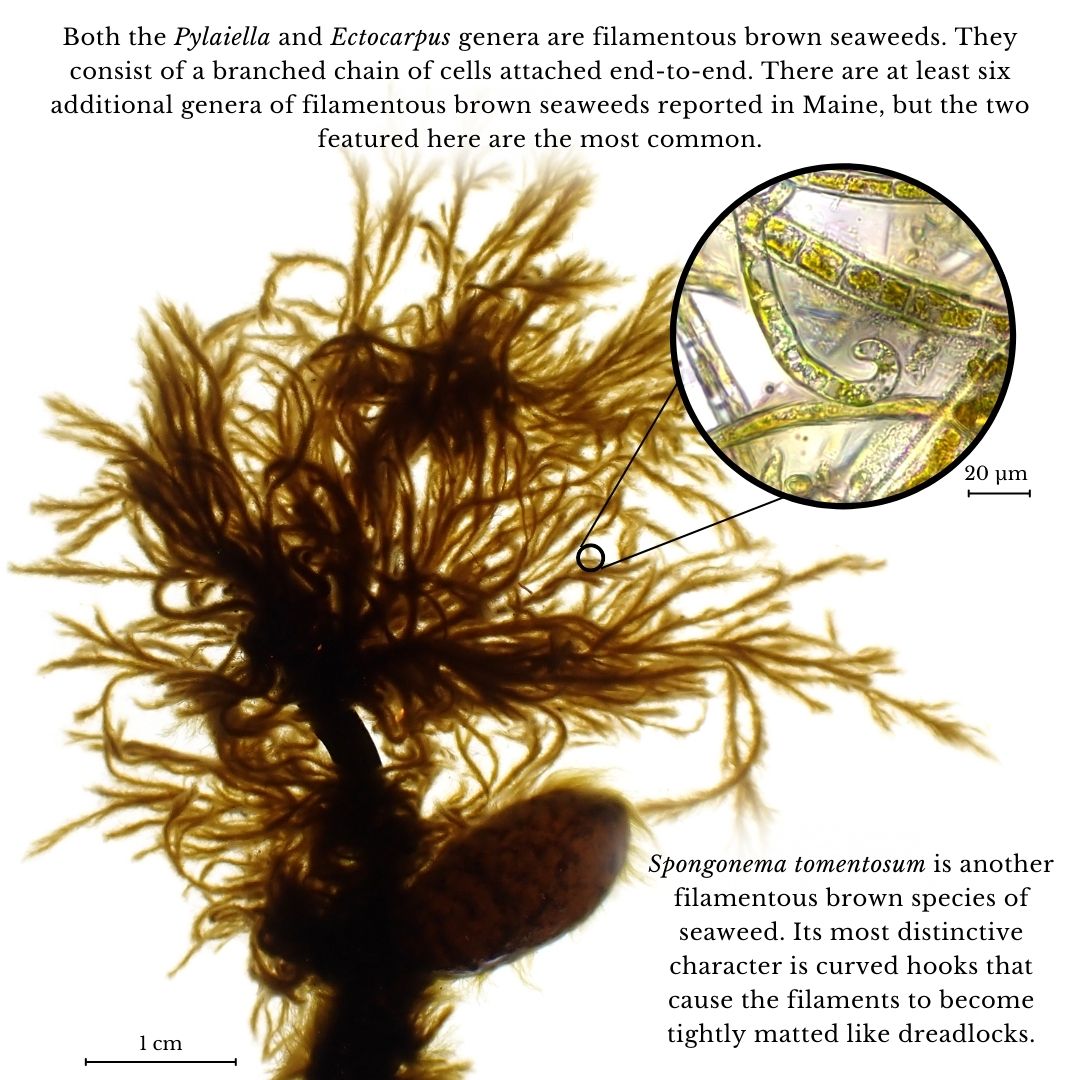
Both the Pylaiella and Ectocarpus genera are filamentous brown seaweeds. They consist of a branched chain of cells attached end-to-end. There are at least six additional genera of filamentous brown seaweeds reported in Maine, but the two featured here are the most common.
Spongonema tomentosum is another filamentous brown species of seaweed. Its most distinctive character is curved hooks that cause the filaments to become tightly matted like dreadlocks.
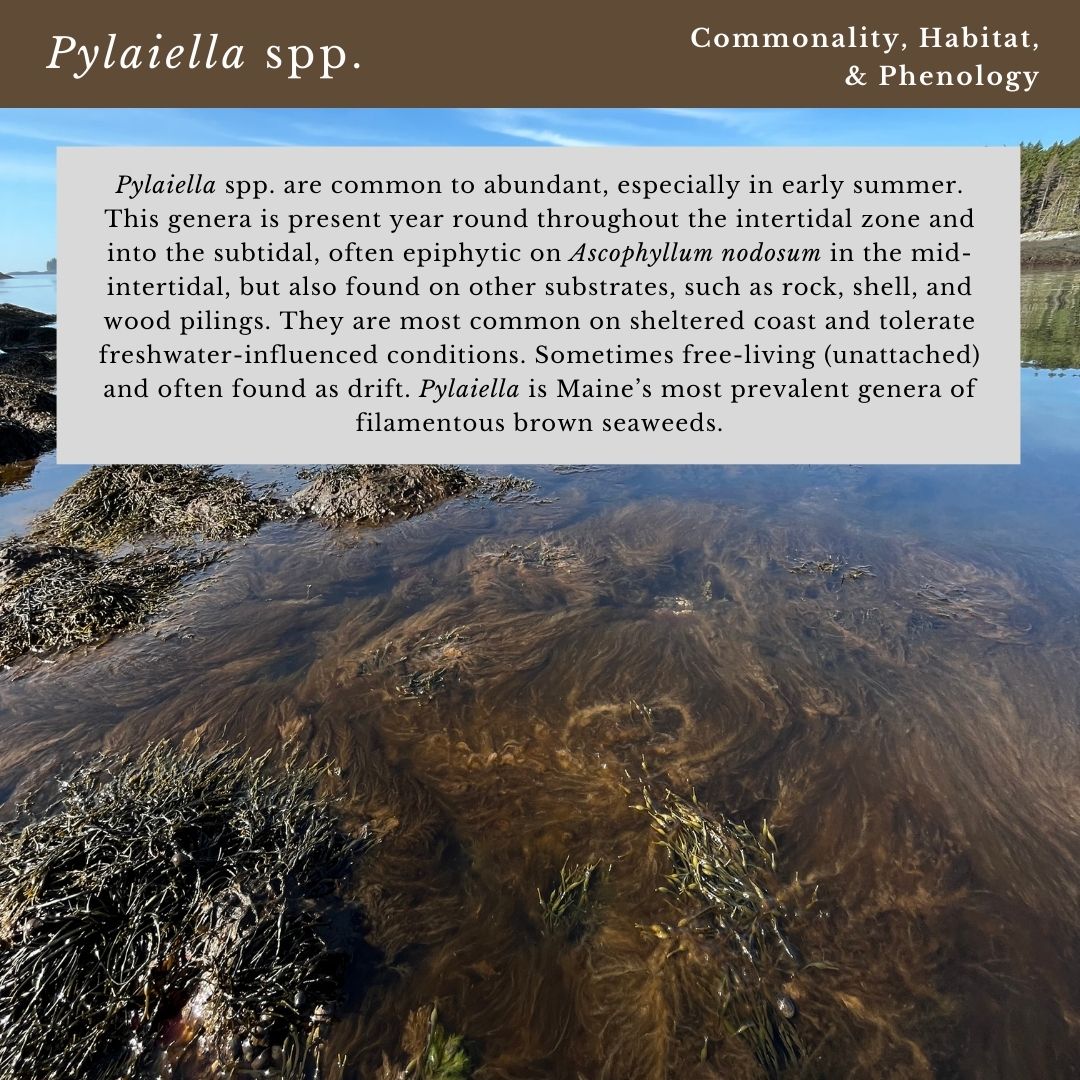
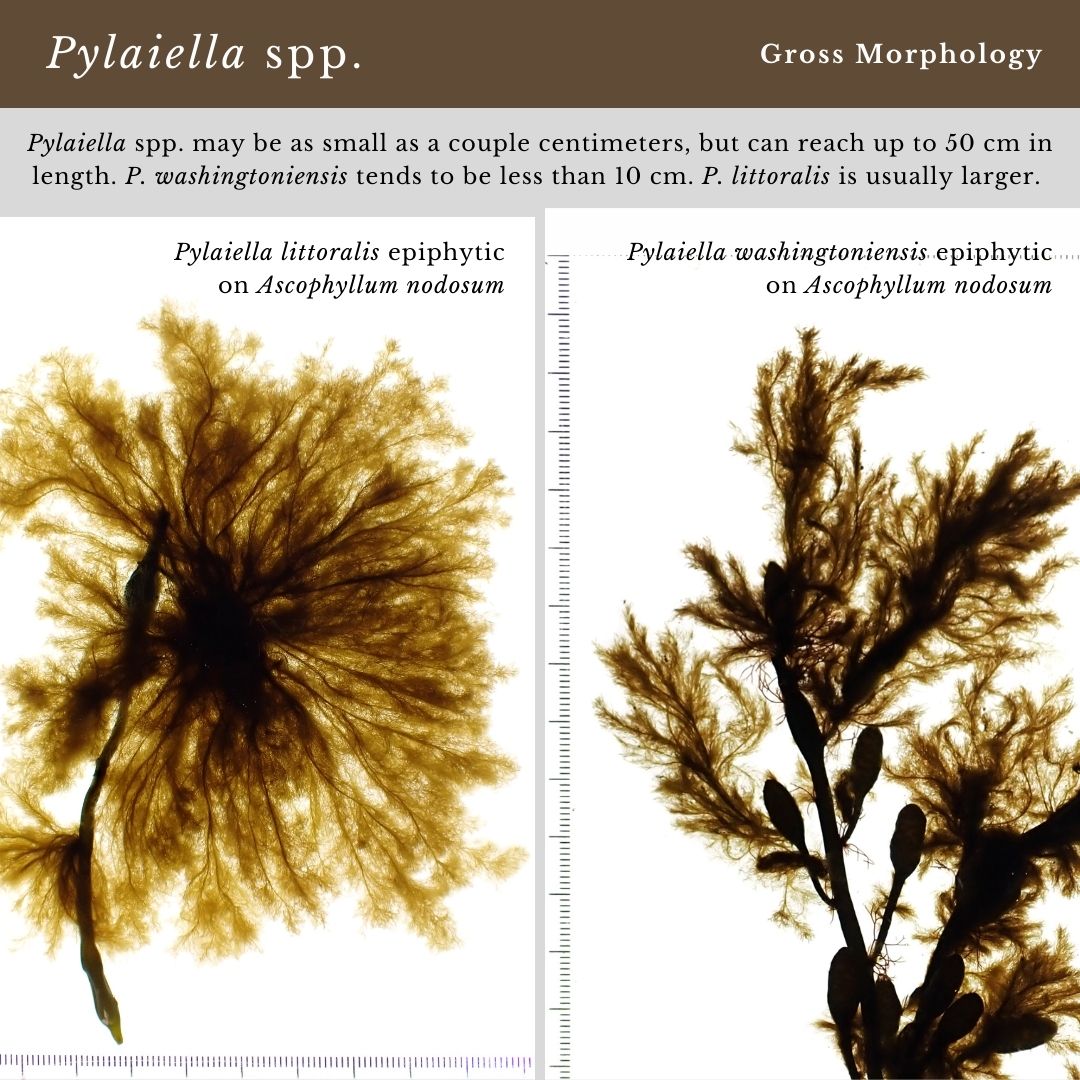
Pylaiella spp. are common to abundant, especially in early summer. This genera is present year round throughout the intertidal zone and into the subtidal, often epiphytic on Ascophyllum nodosum in the mid-intertidal, but also found on other substrates, such as rock, shell, and wood pilings. They are most common on sheltered coast and tolerate freshwater-influenced conditions. Sometimes free-living (unattached) and often found as drift. Pylaiella is Maine’s most prevalent genera of filamentous brown seaweeds.
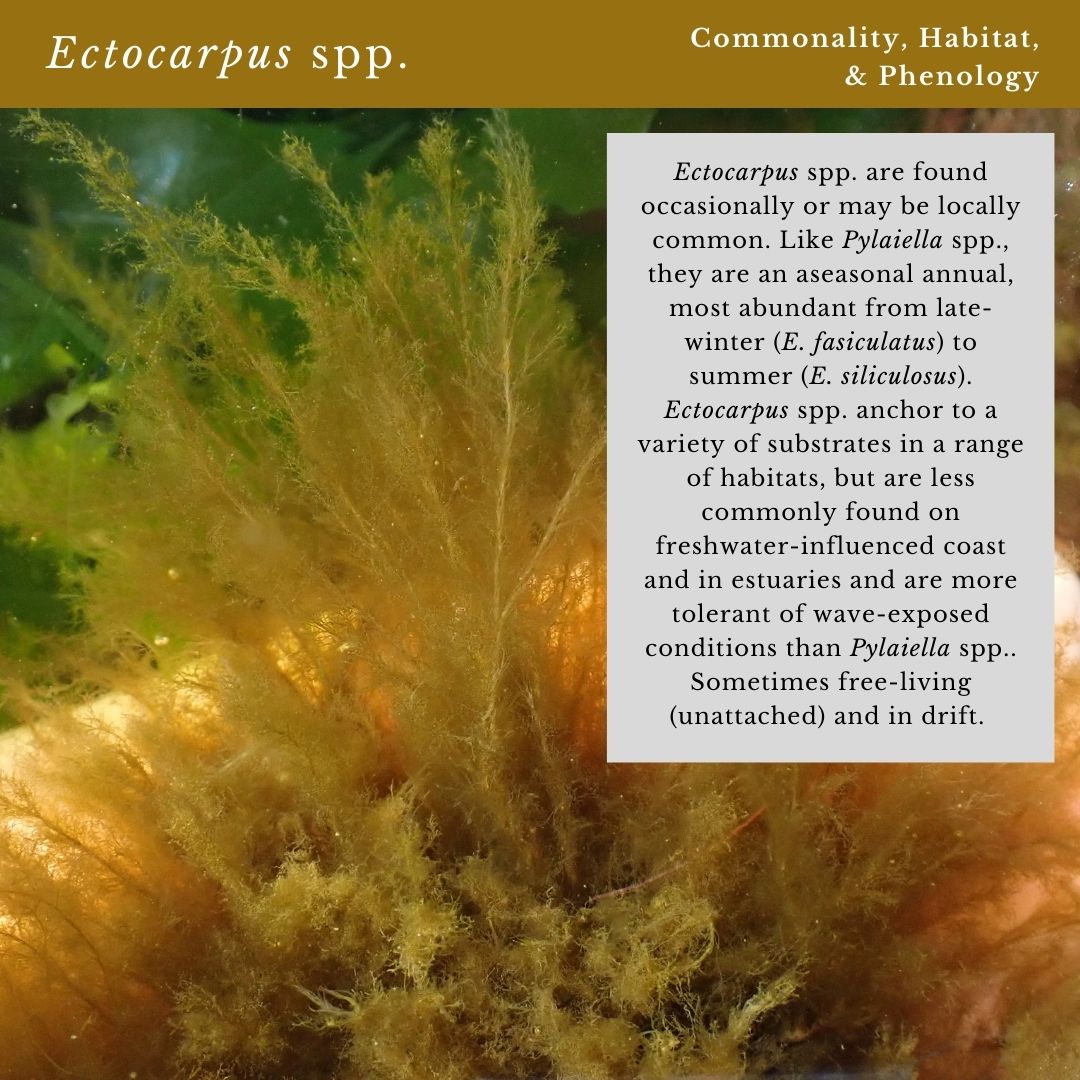
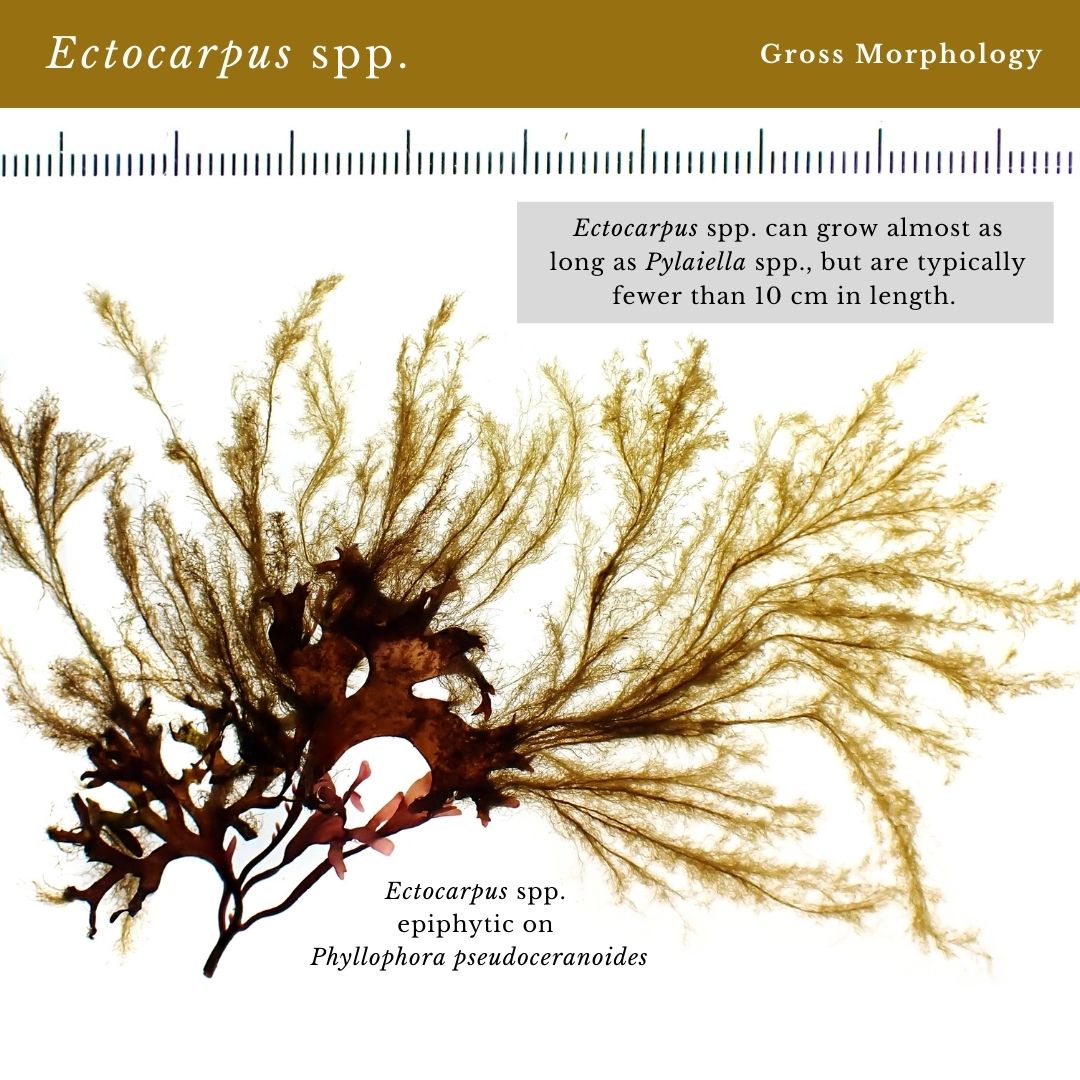
Ectocarpus spp. are found occasionally or may be locally common. Like Pylaiella spp., they are an aseasonal annual, most abundant from late-winter (E. fasiculatus) to summer (E. siliculosus). Ectocarpus spp. anchor to a variety of substrates in a range of habitats, but are less commonly found on freshwater-influenced coast and in estuaries and are more tolerant of wave-exposed conditions than Pylaiella spp.. Sometimes free-living (unattached) and in drift.
*Rhizoid: an attachment filament, usually thinner and less pigmented than other cells.
S E A W E E D
Ectocarpus spp.
Pylaiella spp.
Text by
Jordan Chalfant
Photos by
Jordan Chalfant
Design by