
by Logan Parker – 16 June 2026
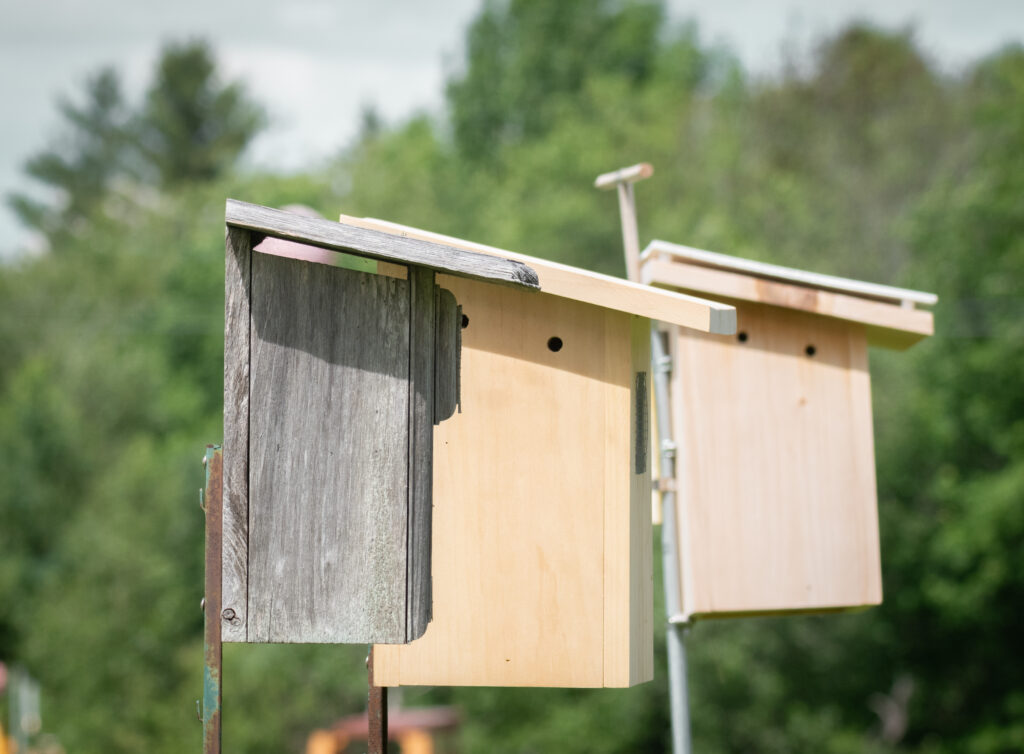
This year, MNHO staff and volunteers are field testing a modified Tree Swallow nest box design to assess how altering our design may help declining aerial insectivores contend with more extreme climate conditions. The results of these efforts will guide the future direction of our efforts targeting the species.
Although Tree Swallow declines are not as pronounced as seen in other Maine swallows, this widespread species has undergone significant declines in recent decades. Results from Maine Breeding Bird Survey data suggests Tree Swallows have experienced an annual decline of 5.4% since 1983. Reduced insect availability, habitat change, contaminant exposure, and shifting spring climate conditions likely affect reproductive success. Nest box programs are a primary management tool for this species, providing many useful insights into breeding activity and outcomes, yet conventional boxes often expose nestlings to thermal stress under increasingly variable temperatures.
Tree Swallows nest in open areas and thus nest boxes are often placed in locations subject to direct sunlight. This can subject eggs and nestlings to high temperatures and lead to nesting failure. This issue is exacerbated by the increased frequency and intensity of hot spells associated with climate change. Working with Mara Silver at Swallow Conservation, MNHO staff modified our nest box design guidance to incorporate a wider floor plan to permit increased air flow and the addition of a white PVC panel on the roof to serve as a heat shield. Eight of these modified boxes were deployed in areas of suitable habitat near our Palermo field office and at a handful of sites in Southern Maine monitored by MNHO volunteers. Many of the boxes installed this spring are currently occupied by nesting Tree Swallows.
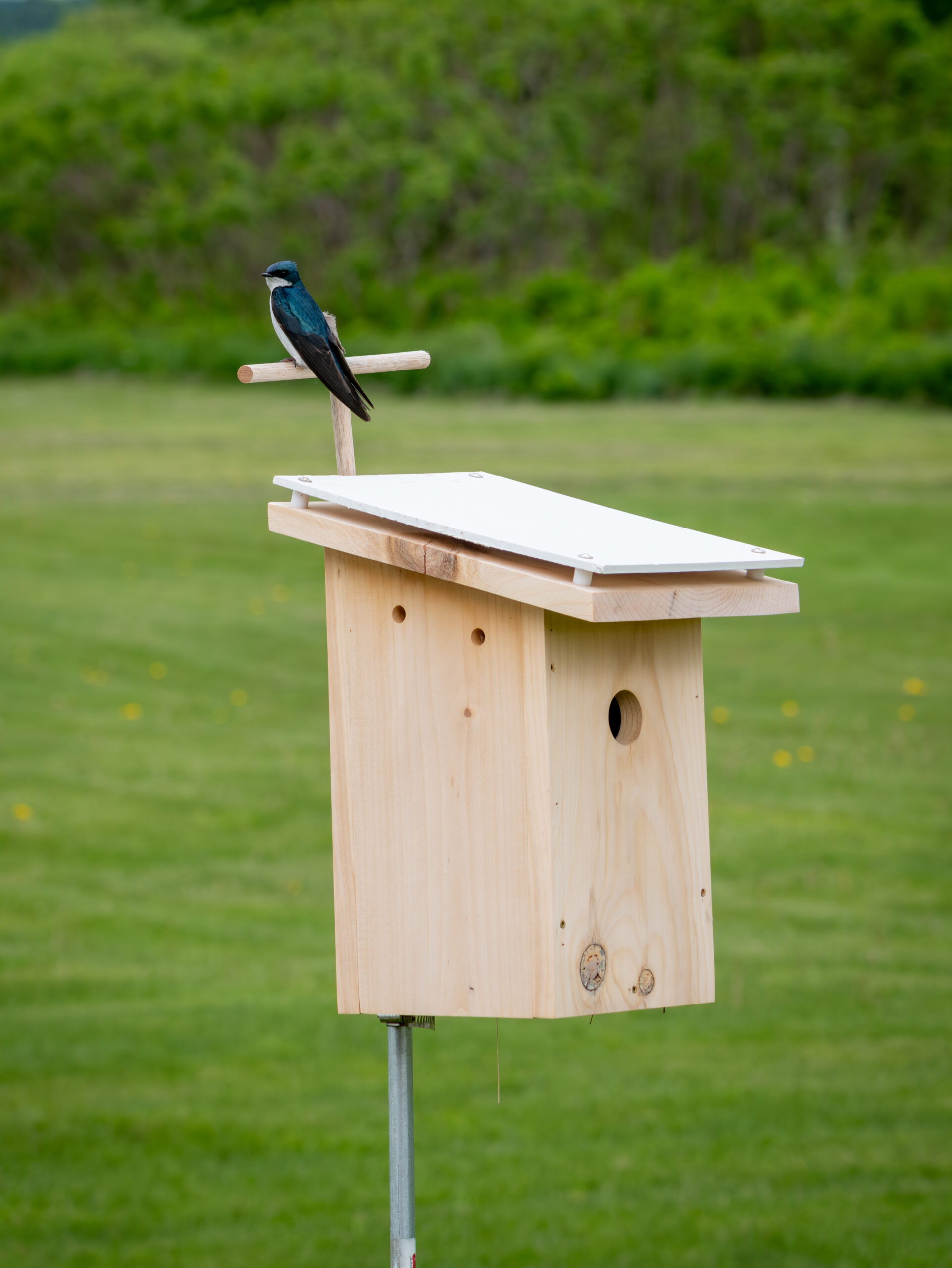
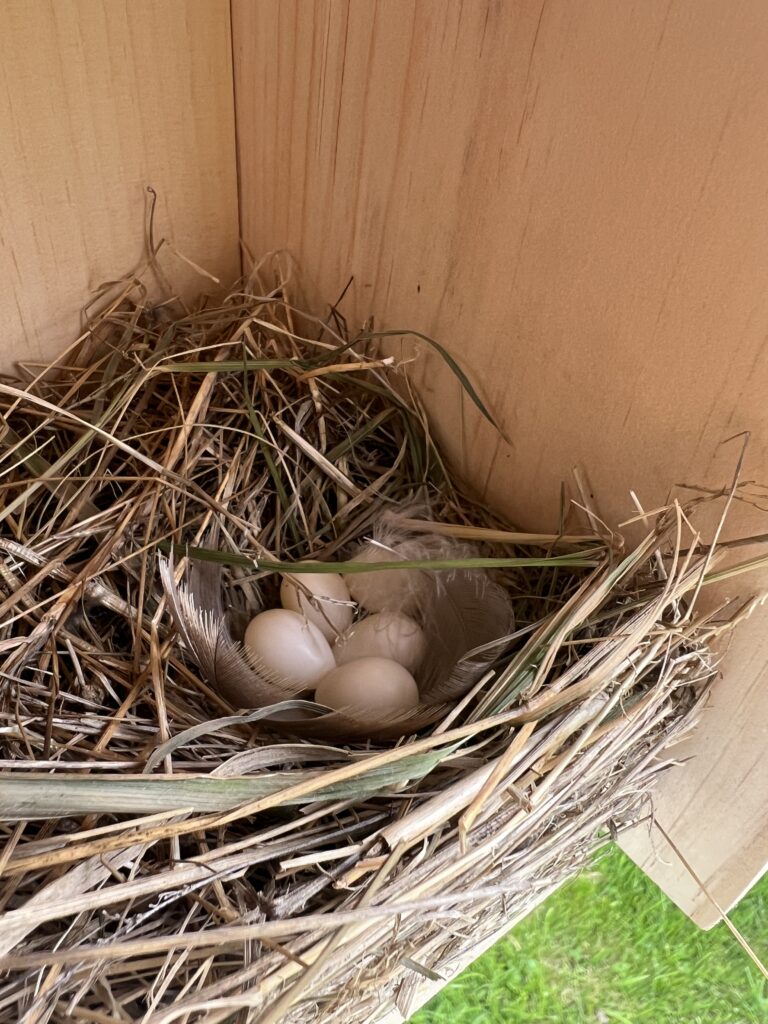
In addition to monitoring the outcomes of nesting efforts in these pilot boxes, MNHO Ecologist Logan Parker is assessing the effectiveness of these modifications by recording the temperature of a modified nest box occupied by nesting Tree Swallows and comparing these to two other nest boxes deployed on site: one nest box that incorporates the larger floor plan, but lacks a PVC heat shield and another conventional store-bought nest box that has been previously used by Tree Swallows for nesting. Preliminary results are promising. The larger, heat shield-equipped nest box has averaged ~4-5°F cooler than the conventional nest box during hot weather.
MNHO will use the results of this year’s monitoring efforts to inform the direction of next year’s expansion of our Tree Swallow nest box monitoring project. Thanks to the continued support of the Industries Program at Maine DOC, we anticipate having several Tree Swallow nest boxes available for volunteers ahead of the 2027 breeding season. These boxes will be available this fall (more details about reserving a box will be announced later this summer).
This research project is being conducted in collaboration with the Maine Department of Inland Fisheries and Wildlife and Swallow Conservation. Our efforts this year were made possible by the Maine Outdoor Heritage Fund and by the many private landowners who permitted us to conduct monitoring efforts on their properties this year. We look forward to sharing the full results after the conclusion of this year’s efforts.