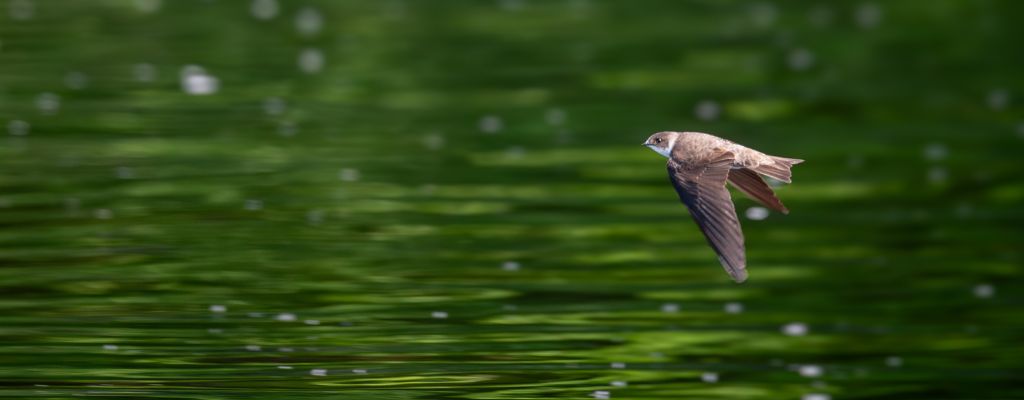
MNHO is excited to announce the launch of a new research project: the Maine Riparian Swallow Survey. The primary focus of this effort will be to document Bank Swallow distribution, abundance, and habitat use along Maine’s waterways. Beginning in 2026, MNHO staff and our project partners will conduct pilot survey efforts to inform the development of a statewide, community science survey effort. These efforts are being conducted in collaboration with the Maine Department of Inland Fisheries and Wildlife (MDIFW) and Swallow Conservation as part of the Maine Aerial Insectivore Monitoring and Stewardship (Maine AIMS) initiative.
Why Bank Swallows?
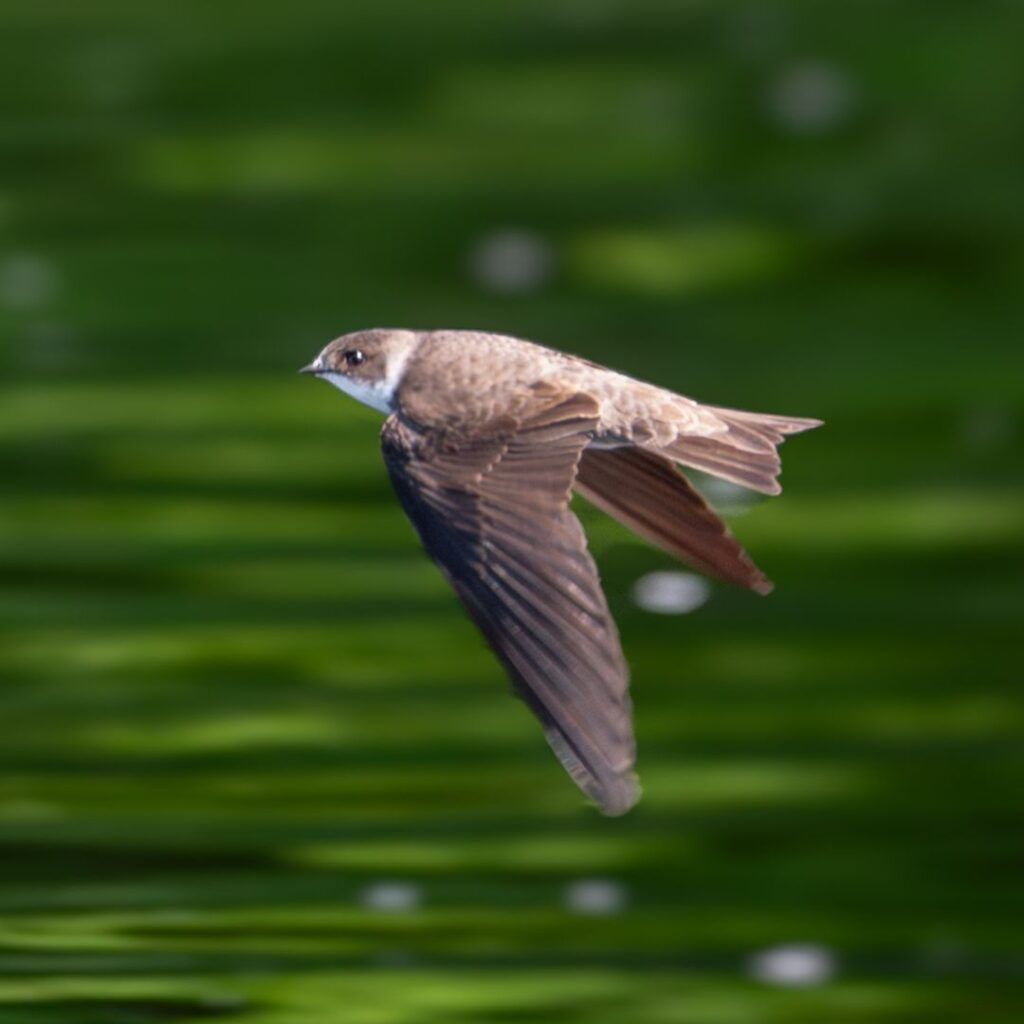
Bank Swallows (Riparia riparia) are a widely distributed aerial insectivorous bird species long documented nesting in colonies in banks along watercourses. As evidenced by the Maine Bird Atlas (2018 – 2022) and USGS Breeding Bird Survey, many of Maine’s aerial insectivores have experienced significant declines over recent decades. Bank Swallows, in particular, have experienced steep declines and were state listed as Threatened in 2023 and identified as a Priority 1 Species of Greatest Conservation Need by Maine’s 2025 State Wildlife Action Plan. Targeted research on the distribution, status, and threats facing Maine’s Bank Swallow population is urgently needed to inform the management of the species. In response to these developments, and building on work led by MDIFW, MNHO is coordinating targeted research and outreach efforts focused on Bank Swallows and other declining aerial insectivores.
Why along waterways?
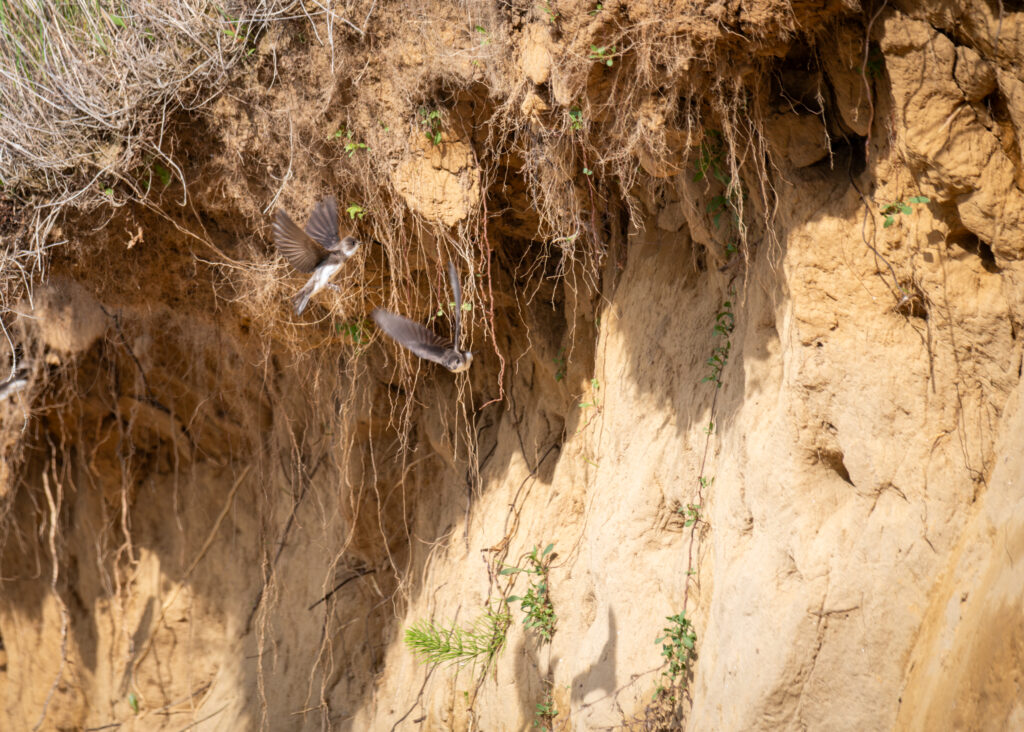
Bank Swallows are often associated with human-altered environments, in particular sand and gravel pits. Although the steep embankments found in these man-made habitats can and do attract Bank Swallow colonies, they are a relatively “new” development on the landscape. The species has a much longer history associated with the eroded banks and shorelines of waterways. Results from the recently completed Maine Bird Atlas and recent habitat suitability assessments conducted by MDIFW have already confirmed Bank Swallow colonies nesting in natural riverbanks. These findings make clear that identifying the conservation landscape for Bank Swallows in Maine is now a critical next step. In particular, there is an urgent need to determine the availability, distribution, and current use of natural riparian nesting habitat, which has historically been the species’ primary breeding substrate.
How can I help?
Structured survey efforts were completed by project staff in 2026. The results of these preliminary efforts are currently being used to develop a statewide, community science-based monitoring effort (coming in 2027). You can sign up for updates or register to take part in the project here (link to the form). Members of the public can also support these ongoing efforts by contributing observations of breeding swallows, swifts, and martins to the MDIFW’s Nest Quest portal.
Donations to MNHO can be directed to support these efforts by either selecting “Maine Riparian Swallow Survey” (online) or by designating “Maine Riparian Swallow Survey” with mailed contributions.
Resources for recruited volunteers
If you have already been recruited as a volunteer, you can access the survey materials below.

Join the Project
Report aerial insectivore breeding observations throughout the state!
Time/Skill Required
No set time commitment.
Identify swallows, swifts, and martins displaying breeding behavior.
Submit your observations to the MDIFW’s Maine Nest Quest portal.
Project Collaborators
Maine Aerial Insectivore Monitoring and Stewardship Initiative (Maine AIMS)
Project Supporters
Davis Conservation Foundation
Latest
Project Updates
Stay Connected
Follow the progress of this project through our newsletter or on social media
Related Content
-

Cliff Swallow Colony Monitoring
Recent information suggests that Cliff Swallows are decreasing in Maine. Consequently, Cliff Swallows are listed as Species of Greatest…
-
Midcoast Kestrel Project
In his 1949 book, Maine Birds, biologist Ralph S. Palmer described the American Kestrel— then called the “Northern Sparrow…
-
Riparian Swallow Surveys
MNHO is excited to announce the launch of a new research project: the Maine Riparian Swallow Survey. The primary…