15 October 2026
by Tracey and Coco Faber
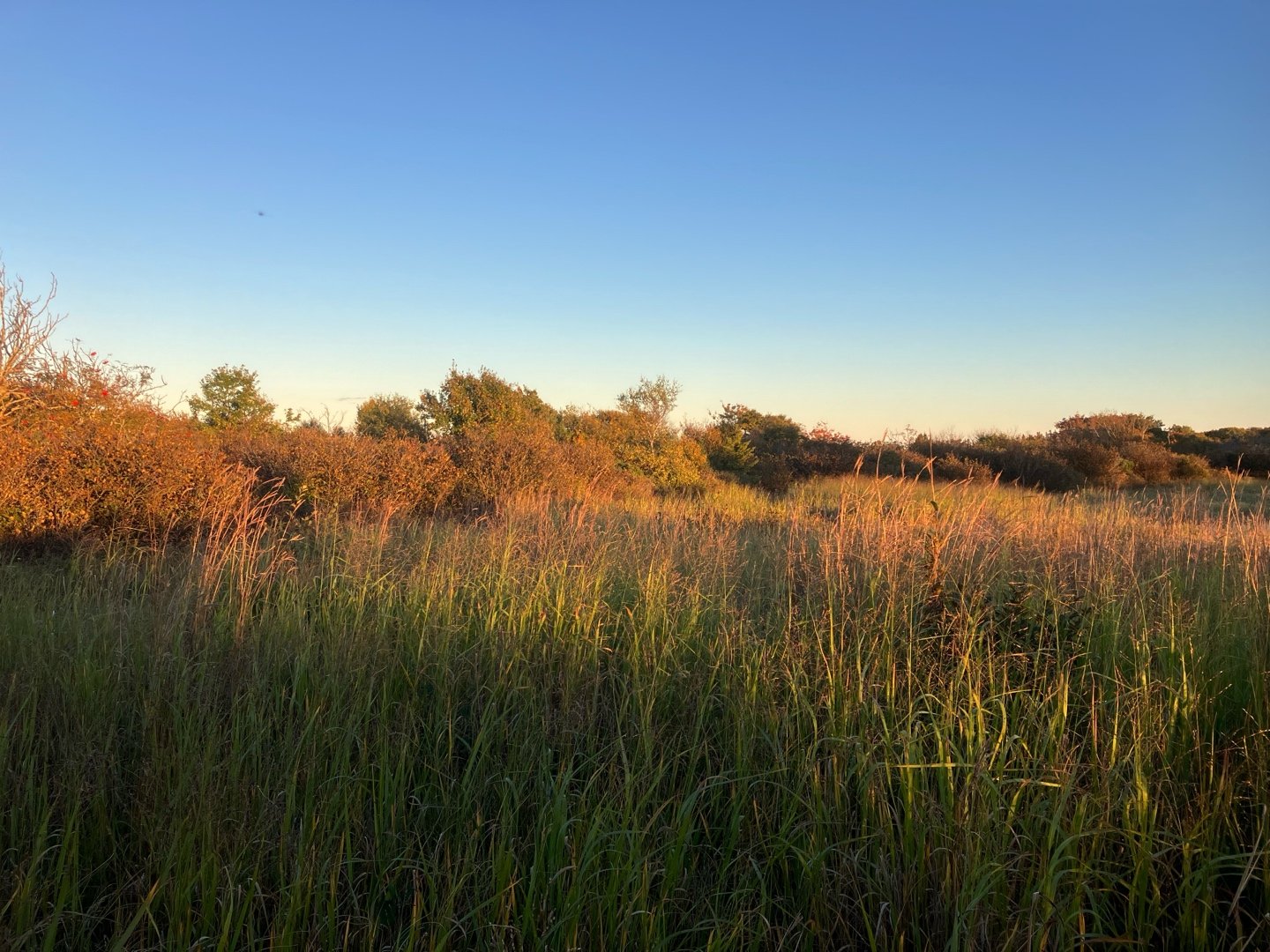
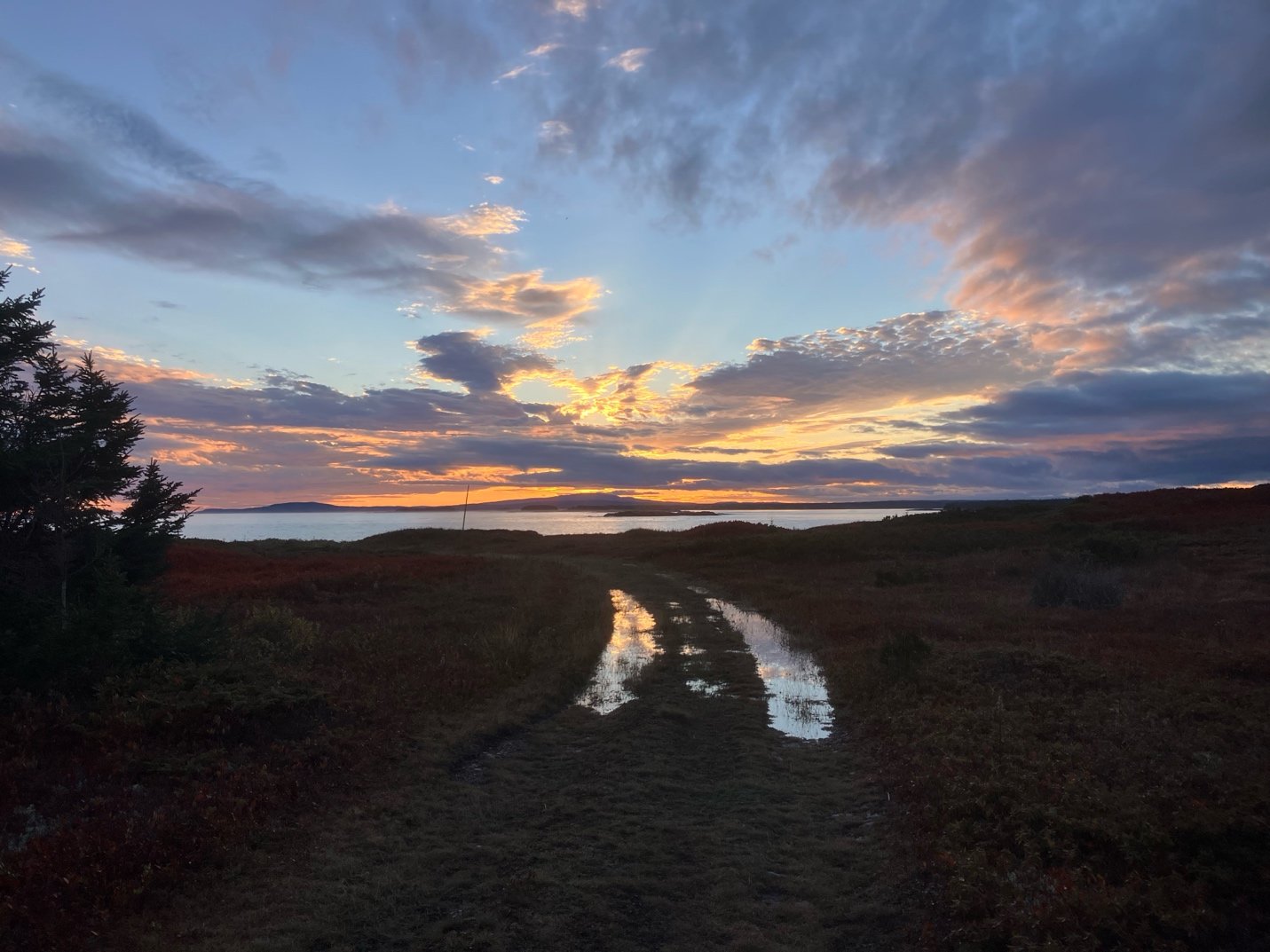
Every evening we drive down to our banding trailer, rolling along the two-track through open fields where White-tailed Deer raise their heads to watch us pass by and we sometimes pause for Porcupines to cross in front of us. When we reach the alder thickets, we watch Song Sparrows and Savannah Sparrows quickly disappear into the dense underbrush. The banding trailer is always a welcoming sight as we pull in, the higher grass of the field beyond it waving gently in the wind. The trailer is close enough to the water that Herring Gulls and Double-crested Cormorants sometimes fly overhead, and we can hear the ocean from our nets.
As we drive, we often listen to a song or two, and lately we have been singing along to Marty Robbins’ “Doggone Cowboy.” As the light fades, a few of the lyrics stick in my mind, as I too feel that “I’m kin to the rovin’ wind that brings the norther in,” and “the nights are often cold,” but “when I get done at night all the stars are big and bright.” We sure aren’t cowboys, but our nights are determined by the winds and the owls that ride them. While the nights with northern winds are cold, those are the nights that bring owls to our nets, especially when the skies are clear and the stars are big and bright!
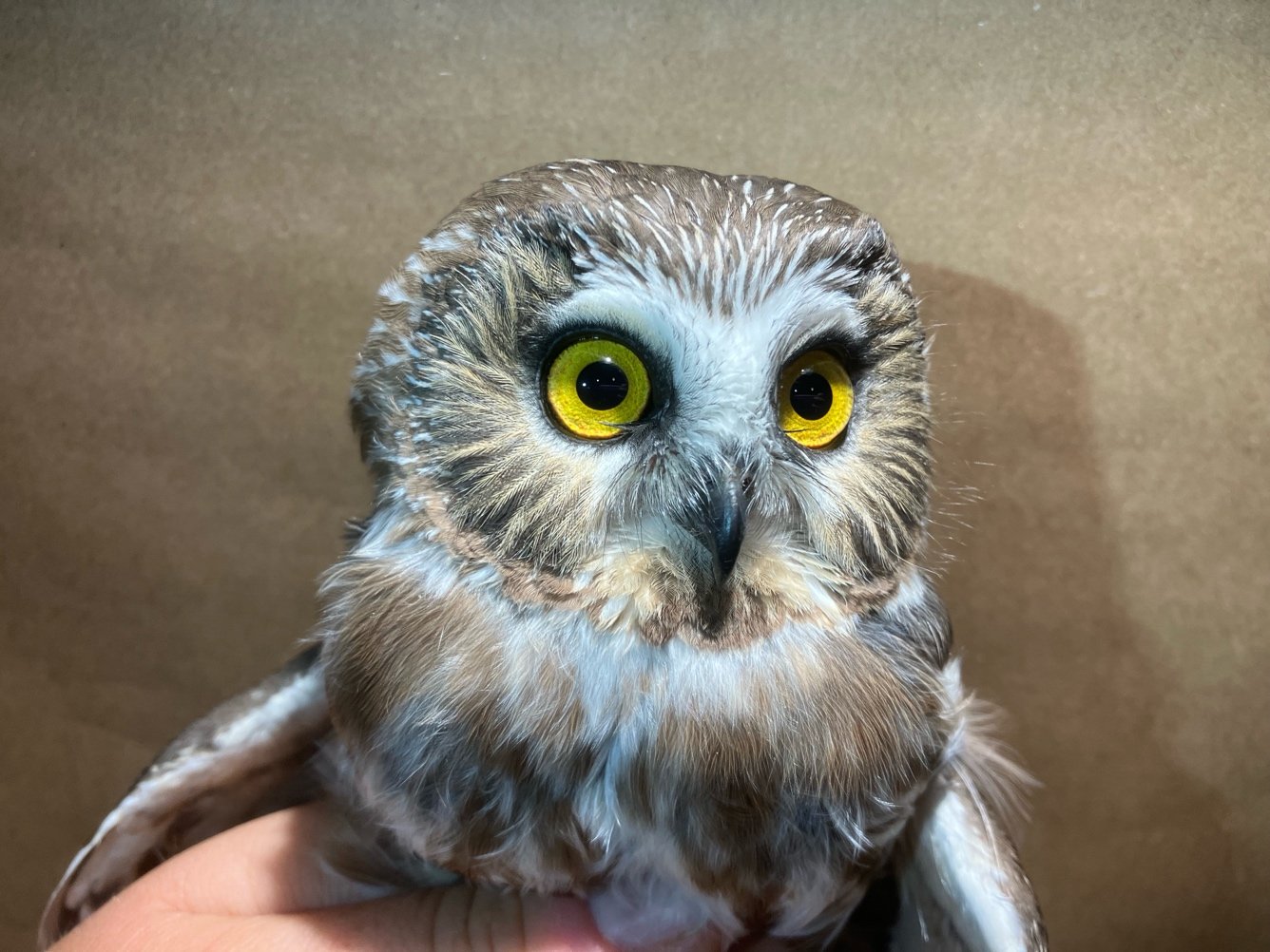
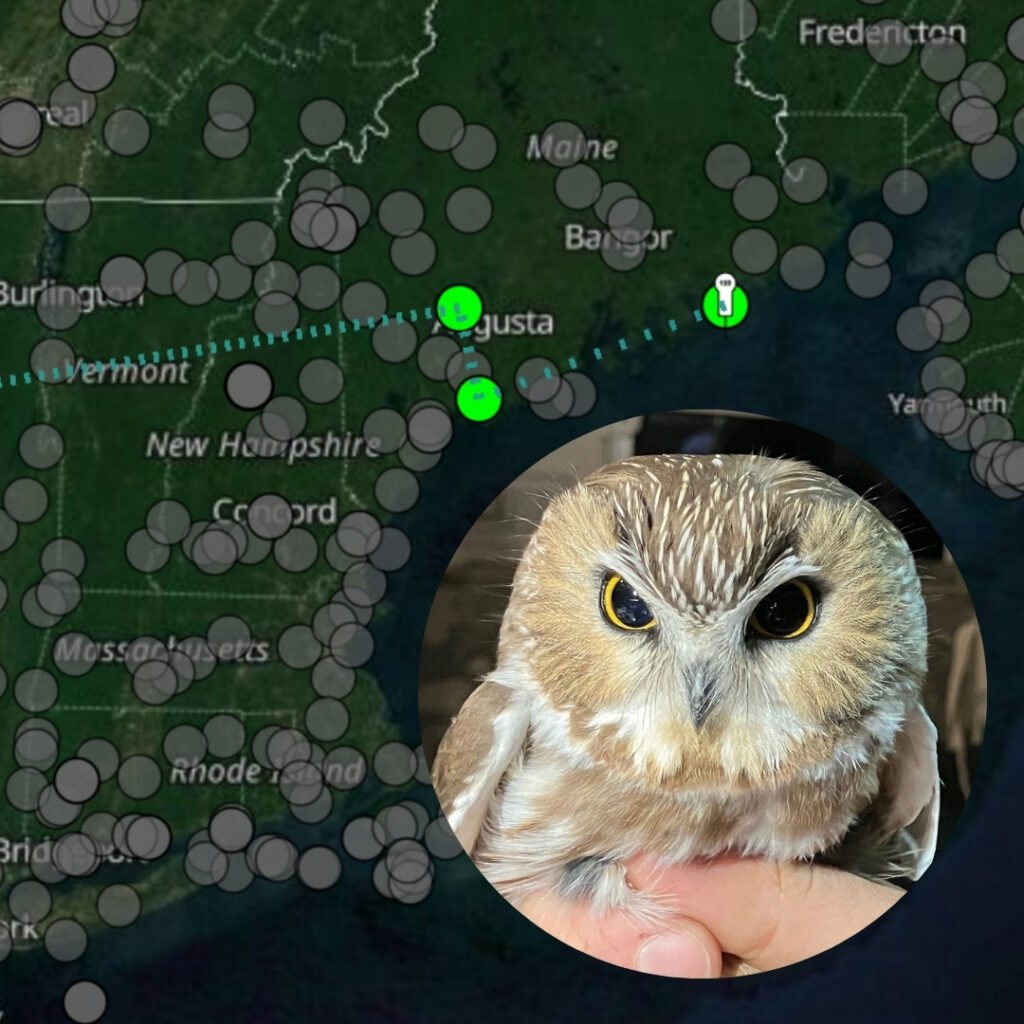
This year, the good nights have been few and far between, but every owl that we catch in the nets has brought us both joy and valuable data to add to our long-term dataset. Before releasing birds to continue on their migration, we take several measurements that tell us about their age, sex, and body condition. We also put a small, lightweight metal band around one of their legs. This band, with a nine-digit sequence that is unique to each bird, will tell us about how that bird has traveled and how old they are if they are recaptured at another banding station. Owl banding stations across the US and Canada are already recapturing birds newly banded this fall and in prior seasons, adding to our understanding of migratory movement patterns. We have caught one such “Foreign Recapture” so far this year, a two-year old bird who was banded last year as she flew through Pennsylvania on her way South.
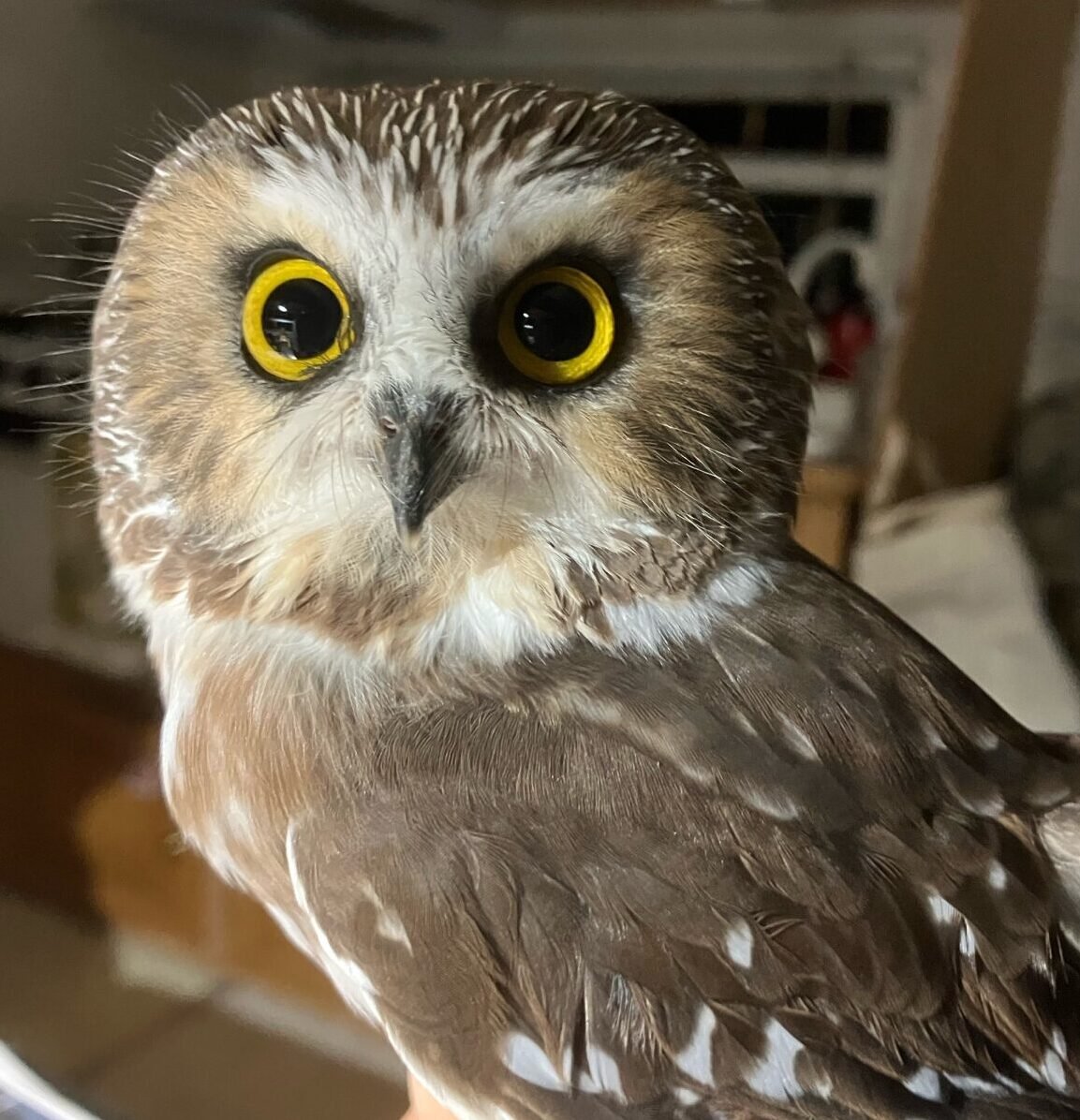
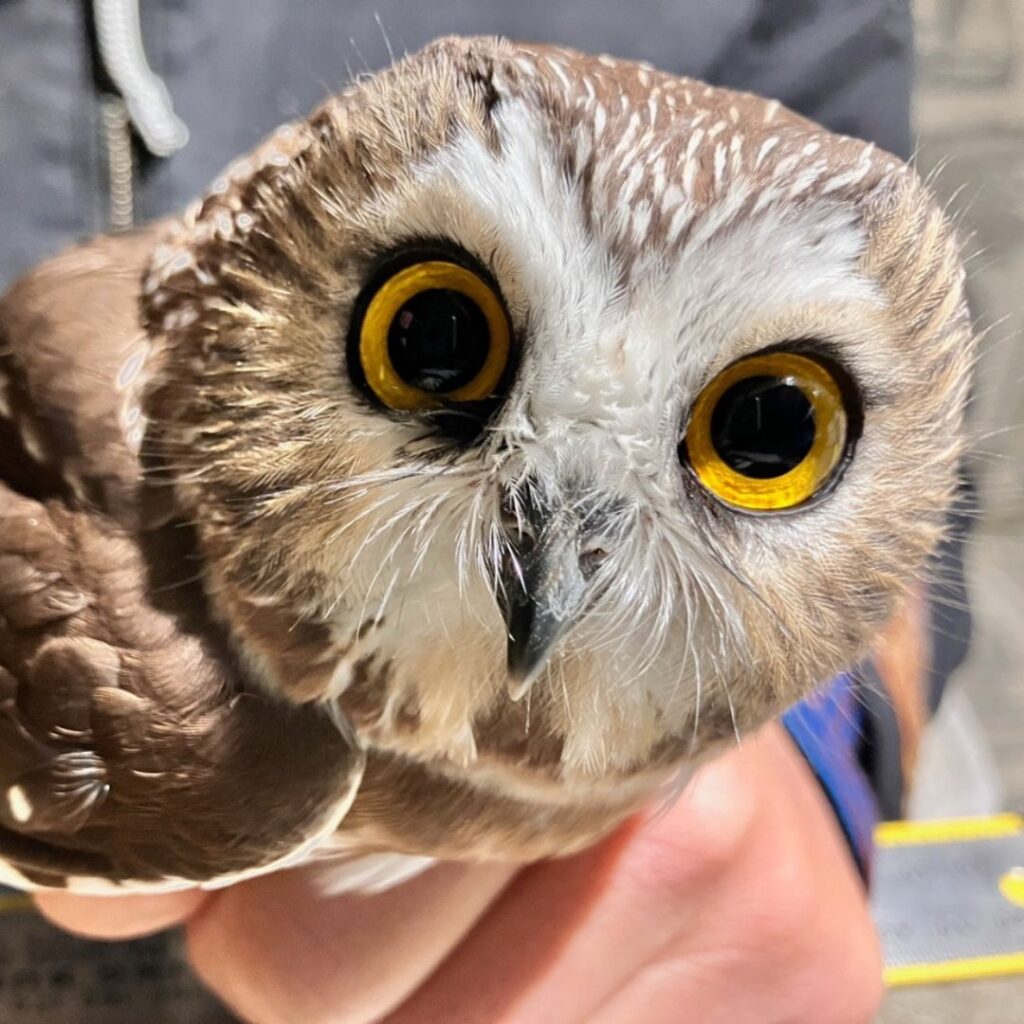
We anticipated catching fewer birds this year than the past couple of years, and so far our predictions have been borne out. The East Coast population of Northern Saw-whet Owls typically follows a four-year pattern, in step with the cycle of pine and spruce cone production. A boom year in cones allows for a boom in the rodent population, which supports a boom in Saw-whet chicks that occurs every four years. The last big year was in 2024, so we are now on year three of the current cycle. We expect to catch fewer birds overall, and for our big nights to be a less big. The weather has not been helping us so far either, with rain, high winds, and winds from unhelpful directions shortening many of our nights. On the majority of these nights, we have caught just one or two owls in our nets. We also expected that the owls we do catch may have had a tougher time feeding themselves. So far, many of their weights have been lower than those we saw last year. While we would love to only see fat birds, getting to note these differences between seasons is so valuable, and gives us some insight into what their breeding season was like.
We have had some excitement, though, with 28 birds captured on October 3rd and 40 birds on October 10th! On these nights, the woods have felt alive. While at the nets, we listen to the male breeding call that we broadcast on our audio lure to pull in curious Saw-whets, and sometimes we can hear those curious Saw-whets calling back. Their whinnies and squeaks can sound oddly similar to the noises that the Porcupines make, so we listen hard to pick out which calls are made by these little birds. There is a magic to hearing them calling through the trees, moving slowly closer and closer to the sound of the lure. The stars are indeed bright, and we can look up at them through the gaps in the trees as we listen and wait. When the Saw-whets do finally softly hit the nets, we can feel the warmth of their well-feathered bodies as we untangle them.
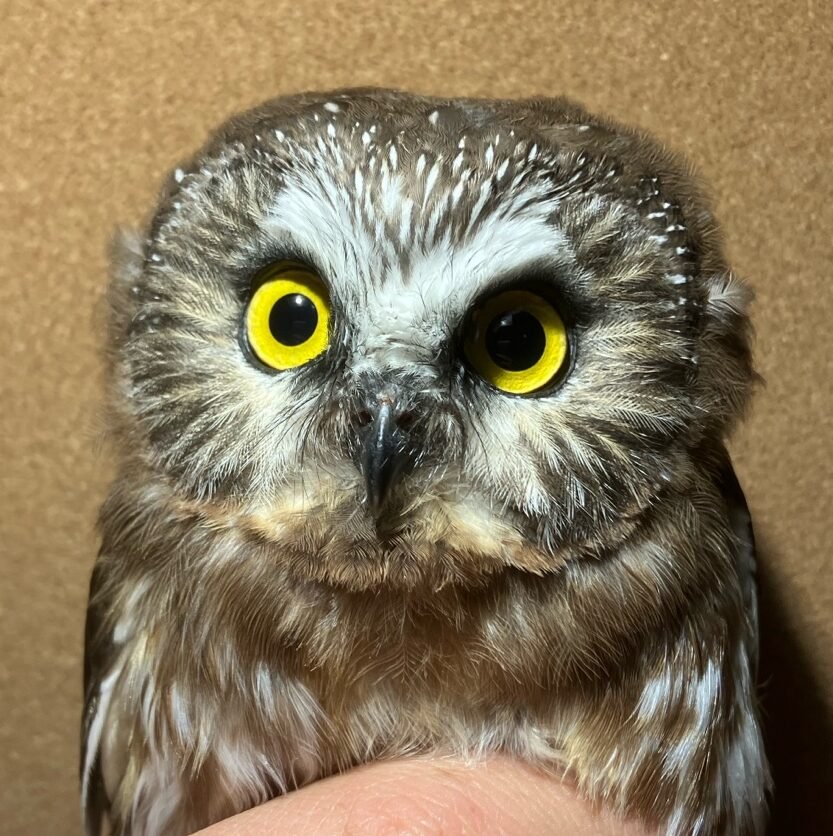
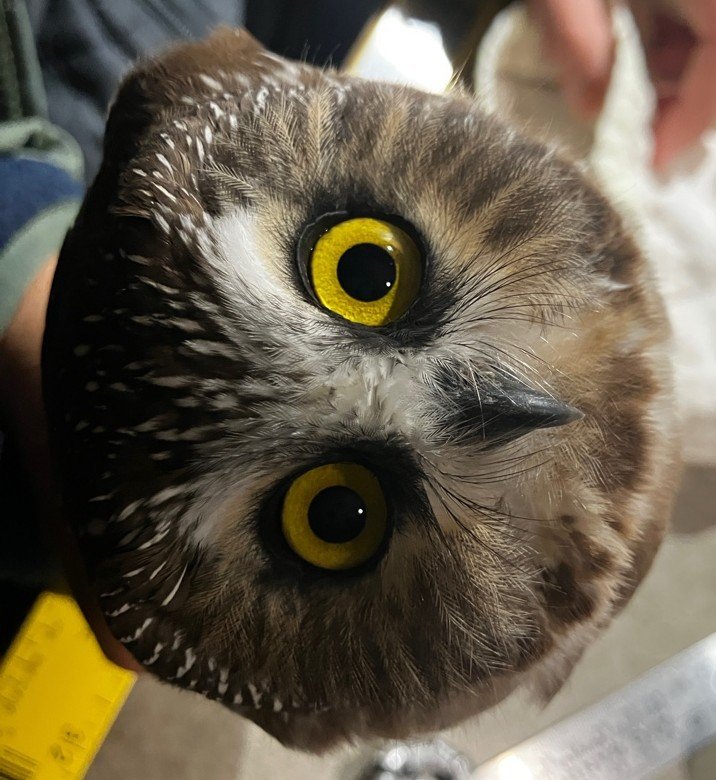
These bigger nights of activity are also a reminder of the importance of banding stations for monitoring Saw-whets. Saw-whets are difficult to detect, even though they are likely the most numerous species of owl in North America. Operating banding stations like ours are the best method we have to monitor population trends and identify the places upon which these diminutive owls depend.
Share
Related Content
-

Preparing for owls at the Petit Manan Monitoring Station
28 September 2026 – by Tracey and Coco Faber