by Logan Parker – June 2026
It’s mid-June on the Sandy River. Although the estival solstice has not yet come to pass, the season of plenty is well underway along this stretch of the river. The songs of Eastern Warbling Vireos and American Redstart hang in the air above every bend in the tannic watercourse. The stretch of the river on which I paddle is flat. Recent rains and the last of snowmelt from the western mountains conceal scattered boulders and logs beneath a mirrorlike surface. Appearing placid, a steady current flows beneath the reflected forms of silver maples, red maples, and ash. The leafy, outstretched tree limbs shade the banks and water edges. Spots of brilliant sunlight filter through breaks in the dense tree growth, a suggestion of the open landscapes laying beyond the riparian forest buffer. Making a careful inspection of the riverbanks, I slowly drift downstream. Blackened leaves somersault beneath the surface over the glittering, sandy bed that earned this river its contemporary name.
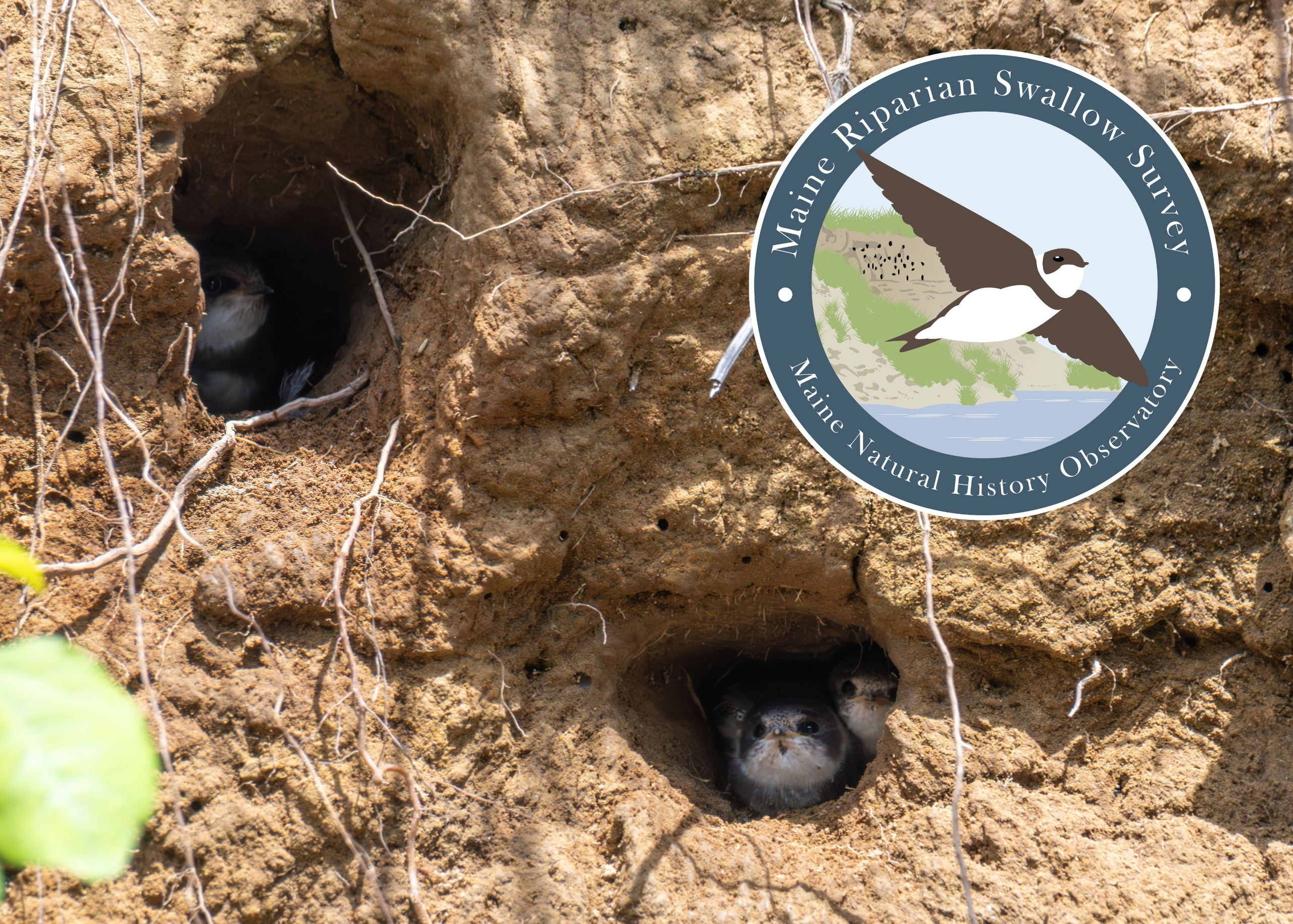
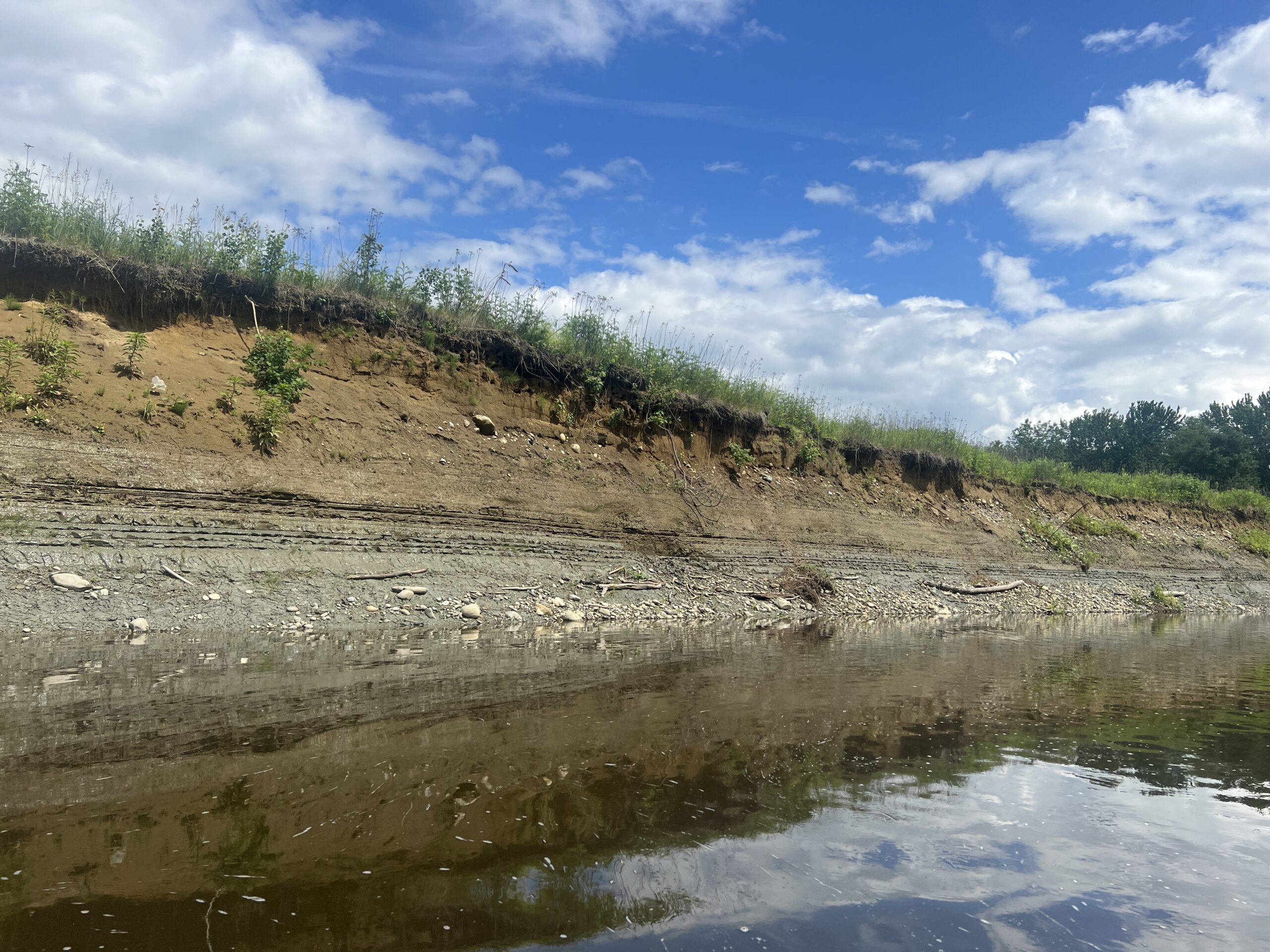
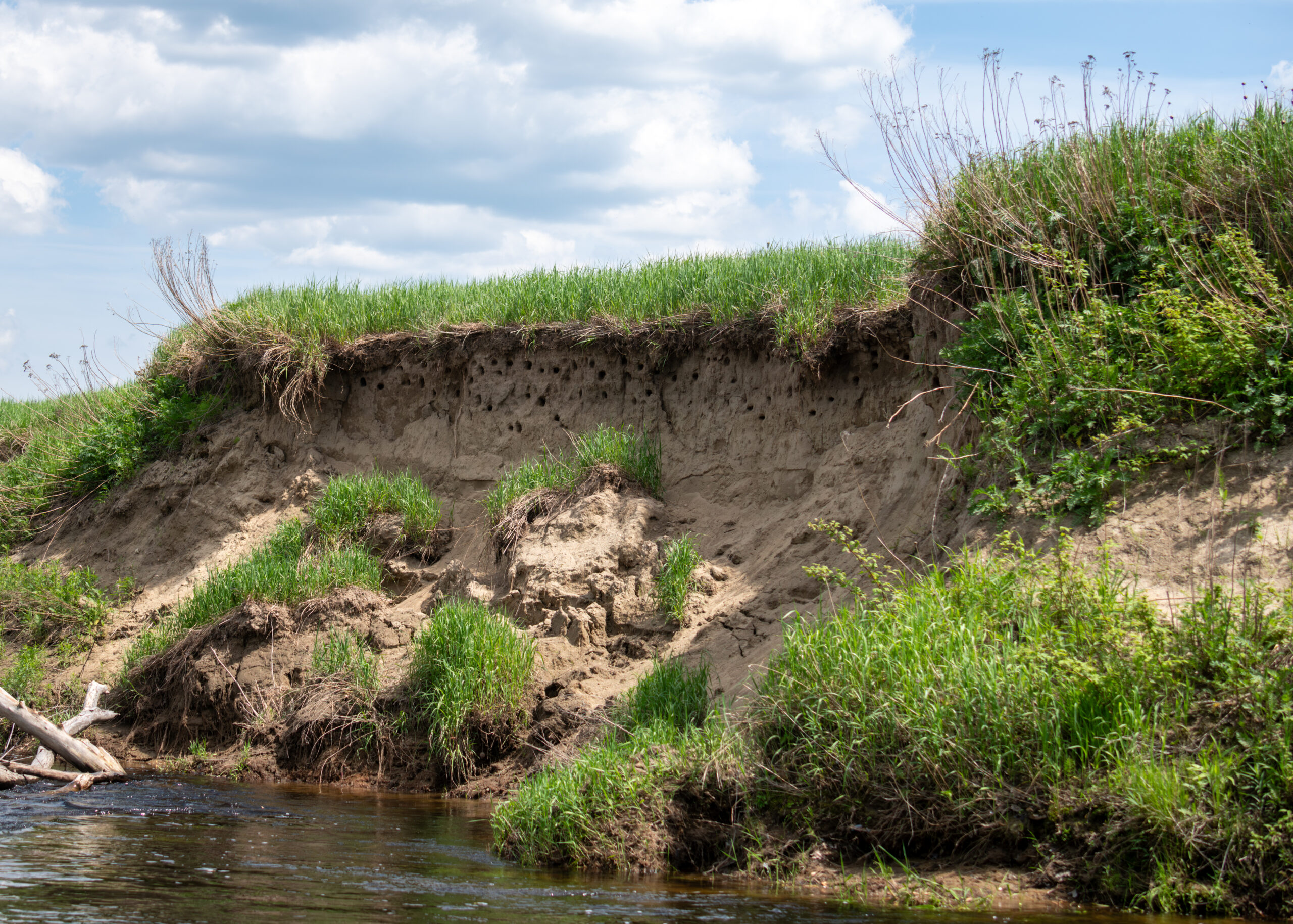
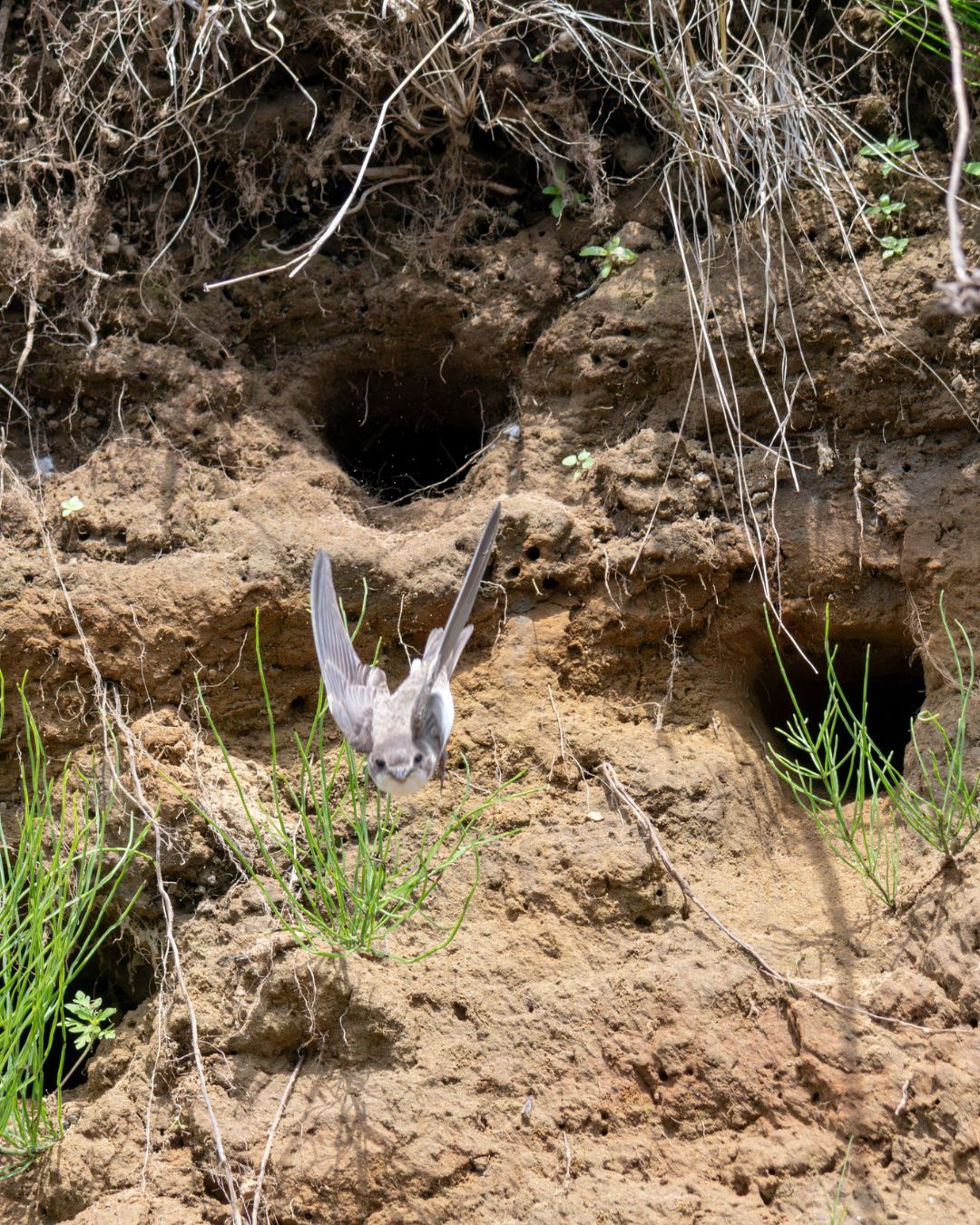
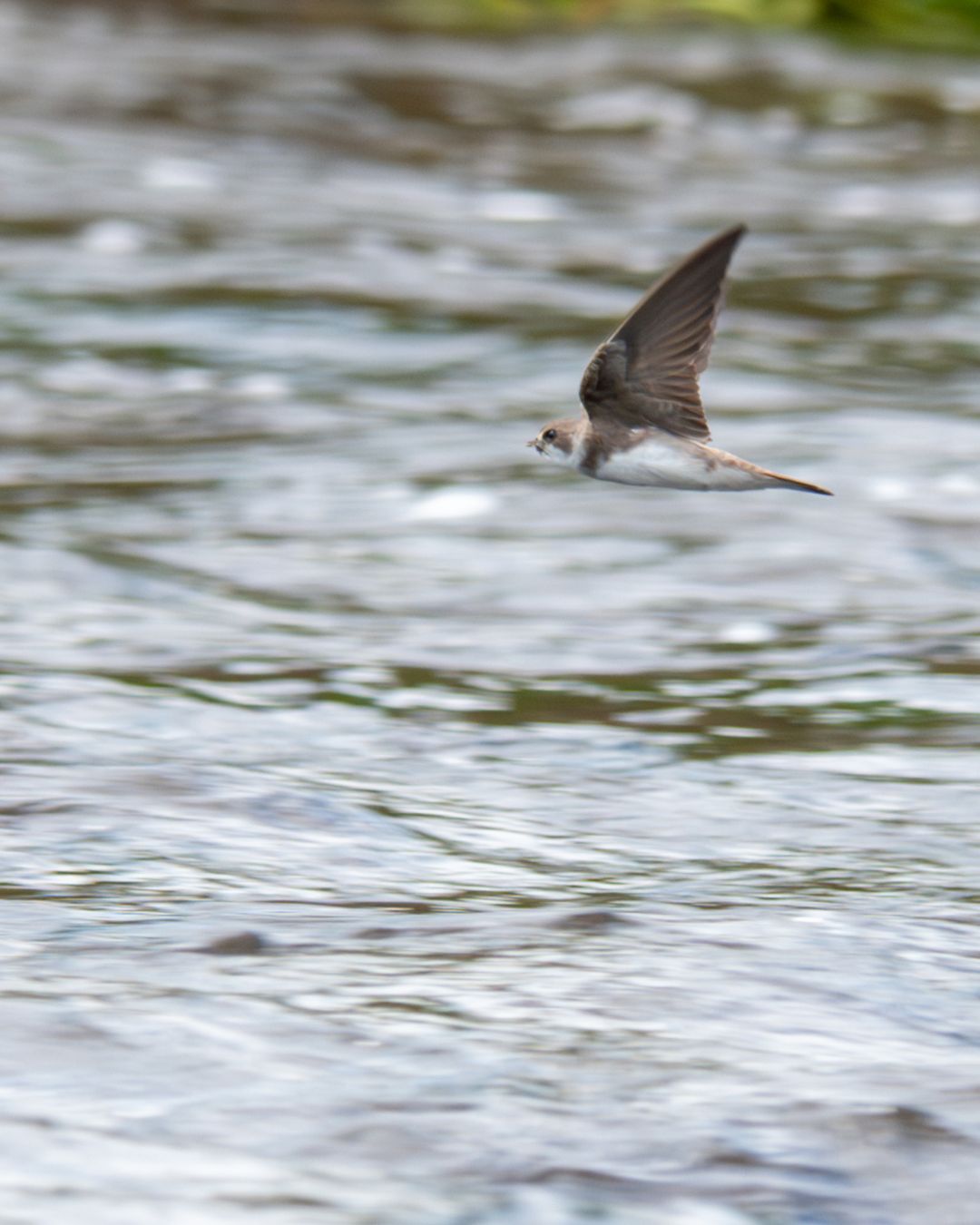
After rounding a bend in the river, I see a gap in the trees stretching along the right bank of the river for a hundred feet or so. Although I can’t quite see above the bluff, a singing Bobolink tells me there’s a pasture overlooking the river. Here the bank gradually grades down to the water’s edge, a condition that has permitted the growth of grasses and many small shrubs and young trees. Drifting onward, the lofty trees along the left bank give way to alders and sumacs before reducing down further still to grasses and wildflowers. Continuing around the bend, a sandbar rises from the water on the right while the opposing bank is sheer. Its exposed surface reveals layers of rusty red and orange sand stacked above a glossy gray foundation of clay. Just below the bank’s highest extent are a series of burrows excavated among and just below the fine, hairlike rootlets of grasses above. Although all is quiet, the well-trodden entrances into these inky black ovals suggest the occupants are likely close by. Sure enough, the silence is broken as soon as I’m discovered by some vigilant forager above. An alarm is raised and suddenly the sky is dotted with several dozen Bank Swallows each scorning me for floating too close for comfort. Drifting back, I mire my kayak on the sandbar and set to work counting and taking measurements of the colony.
Such scenes have become a regular part of the summer, during which I’ve been field testing protocols designed to assess the status, distribution, and habitat associations of Bank Swallows nesting along Maine’s watercourses as part of MNHO’s newest recent effort: the Maine Riparian Swallow Survey. Just last week, our fledging project hit an important milestone having conducted efforts of 50 survey units, each representing 5 miles of effort along the Androscoggin, Kennebec, St. John, Saco, and Sandy rivers. When I first set out on this pilot effort, there was some skepticism about whether or not our effort would find many Bank Swallows nesting along their traditional nesting habitat. The species has come to be strongly associated with human-altered environments, namely sand and gravel pits, where sand extraction often creates the sheer, sandy banks these birds require to nest. However, a chance discovery of a riparian Bank Swallow colony while paddling the Androscoggin during the recently completed Maine Bird Atlas (2018 – 2022) gave me the confidence to start to pull an effort together. I have since documented 31 riparian colonies as of the writing of this update with colonies found along each surveyed river system with some colonies supporting more than 100 birds.
This effort was prompted by steep declines of the species detected by the Atlas as well as the recent state listing of Bank Swallows as Threatened in 2023 and Priority 1 Species of Greatest Conservation Need by Maine’s 2025 State Wildlife Action Plan. Working with our partners at the Maine Department of Inland Fisheries and Wildlife and Swallow Conservation, we worked over the winter to develop targeted research protocols (based upon similar efforts underway in California) to collect critical insights on Maine’s Bank Swallow populations to inform the management of the species. In addition to collecting information on colony sizes and locations, we are documenting evidence of any threats posed to colonies including invasive species, predation, or habitat alteration.
I began conducting survey efforts in May when Bank Swallows were just returning to the breeding grounds and making their first visits to colony sites. As the months have past, I have had the opportunity to observe the phenological progression unfold at a variety of colony sites. Highlights included watching adults excavating fresh burrows along the Androscoggin, fluttering and digging at the bank’s sandy surface with their stout black bills. The anticipation for seeing the first young of the year grew as once I started spotting adults darting from burrows with white fecal sacks to deposit out over the water. Finally, in late June, I spotted my first fledglings perched on the branches of a tree that had collapsed some years back, an event that had evidently created the bank in which the young bird had hatched. While I’m still spotting activity at the colonies, most of this year’s young have taken wing and can be seen flying and foraging alongside the adults. Activity at the colonies will continue to wane in the weeks ahead as we conduct our final survey efforts of the season.
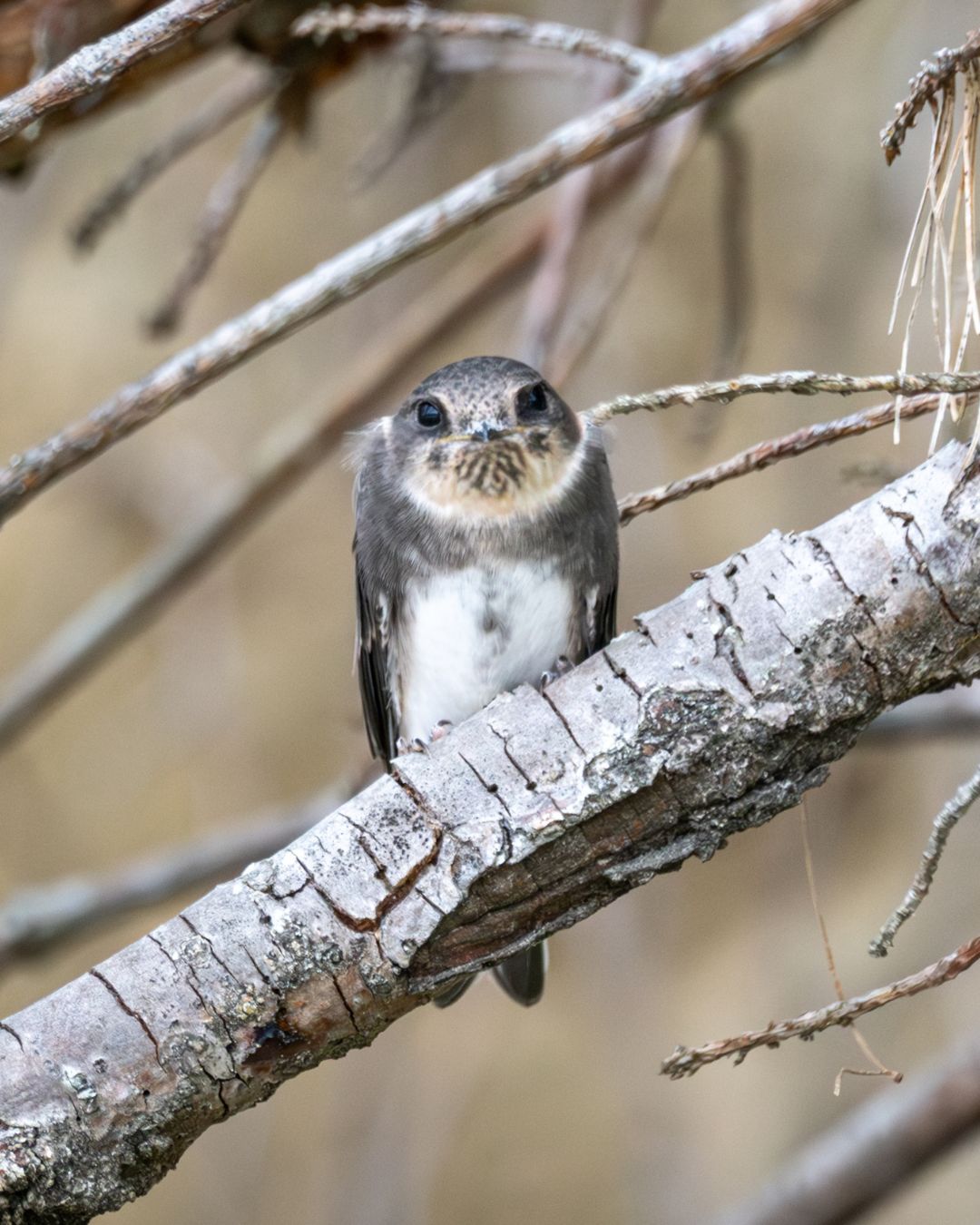
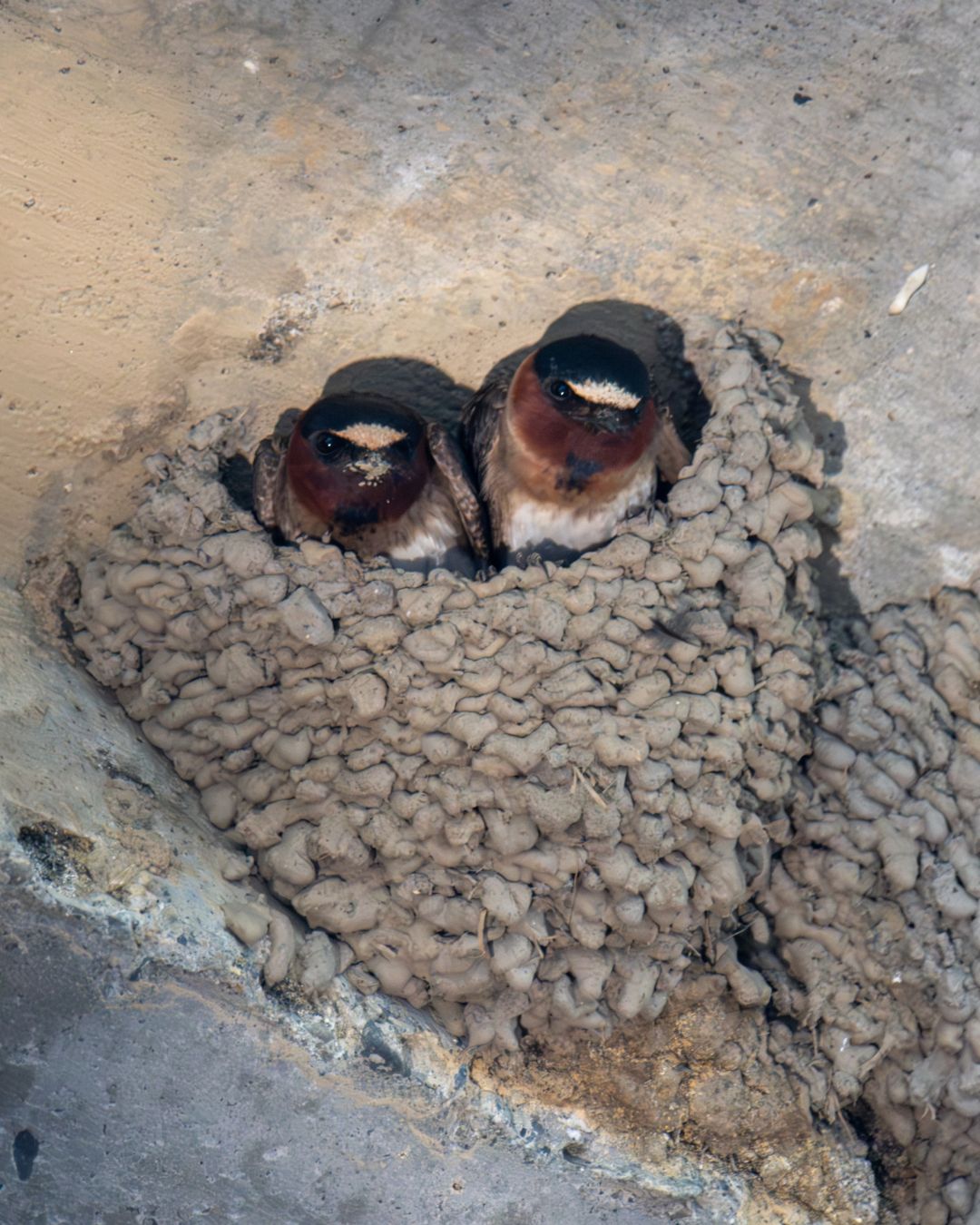
Bank Swallows are just one of Maine’s declining aerial insectivores. Recent evidence has found that nightjars, swifts, and other swallow species have also exhibited notable declines in the state in recent decades. Although this effort is largely focused on Bank Swallows, our efforts along Maine’s riverways have also provided valuable observations of Cliff Swallows, Barn Swallows, and Northern Rough-winged Swallows. These observations are being shared with our conservation partners through the Maine Nest Quest project, another recently launched effort being conducted in collaboration with MDIFW and Swallow Conservation as part of the Maine Aerial Insectivore Monitoring and Stewardship initiative. While conducting surveys, I documented colonies of Cliff Swallows and Barn Swallows breeding on and beneath bridges, including at previously undocumented locations. Northern Rough-winged Swallows, which frequently nest in the abandoned burrows of Bank Swallows and Belted Kingfishers, have been a regular feature during these survey efforts. In recent weeks, congregations of young Rough-wings could be observed perching in groups along the waterways and chasing their parents to beg for food on the wing.
This season’s pilot was as much about assessing the effort’s design as it was about expanding our knowledge of Bank Swallows in Maine, and while it can surely be viewed as successful, there is so much we could not have learned about how to conduct such efforts without a season dedicated to putting concepts into practical application in the field. This autumn, we will take stock of all that we have learned while traversing hundreds of river miles to develop additional resources and make improvements to the project ahead of the launch of the community science-driven effort we will launch next spring. Over the next year, we will work to build a network of birders, paddlers, anglers, and naturalists to expand our reach on Maine’s rivers, streams, and lakes while helping us gather insights as part of this new and critically important swallow monitoring effort. Opportunities to sign up to participate in the project will be announced later this year.
We are grateful to the Maine Department of Inland Fisheries and Wildlife and Davis Conservation Foundation for their generous support of our efforts to conduct this pilot field season. We look forward to our continued collaborations with MDIFW and Swallow Conservation on this and other projects focused on Maine’s aerial insectivores. We are excited to engage with additional project collaborators during subsequent field seasons. Special thanks to Saco River Canoe & Kayak, Hallee Pottle, and Steve and Micheal Parker for assistance with shuttling this season.
Do you know of any Bank Swallow colonies or locations of other breeding swallows or swifts? If so, consider helping us map the distribution of Maine’s aerial insectivores through the Maine Nest Quest project. Sharing an observation only takes a few minutes using the online form. Submitting a report requires answering a few simple questions about the colony location and features, species present, and the number and condition of observed nests.