2 November 2026
by Tracey and Coco Faber
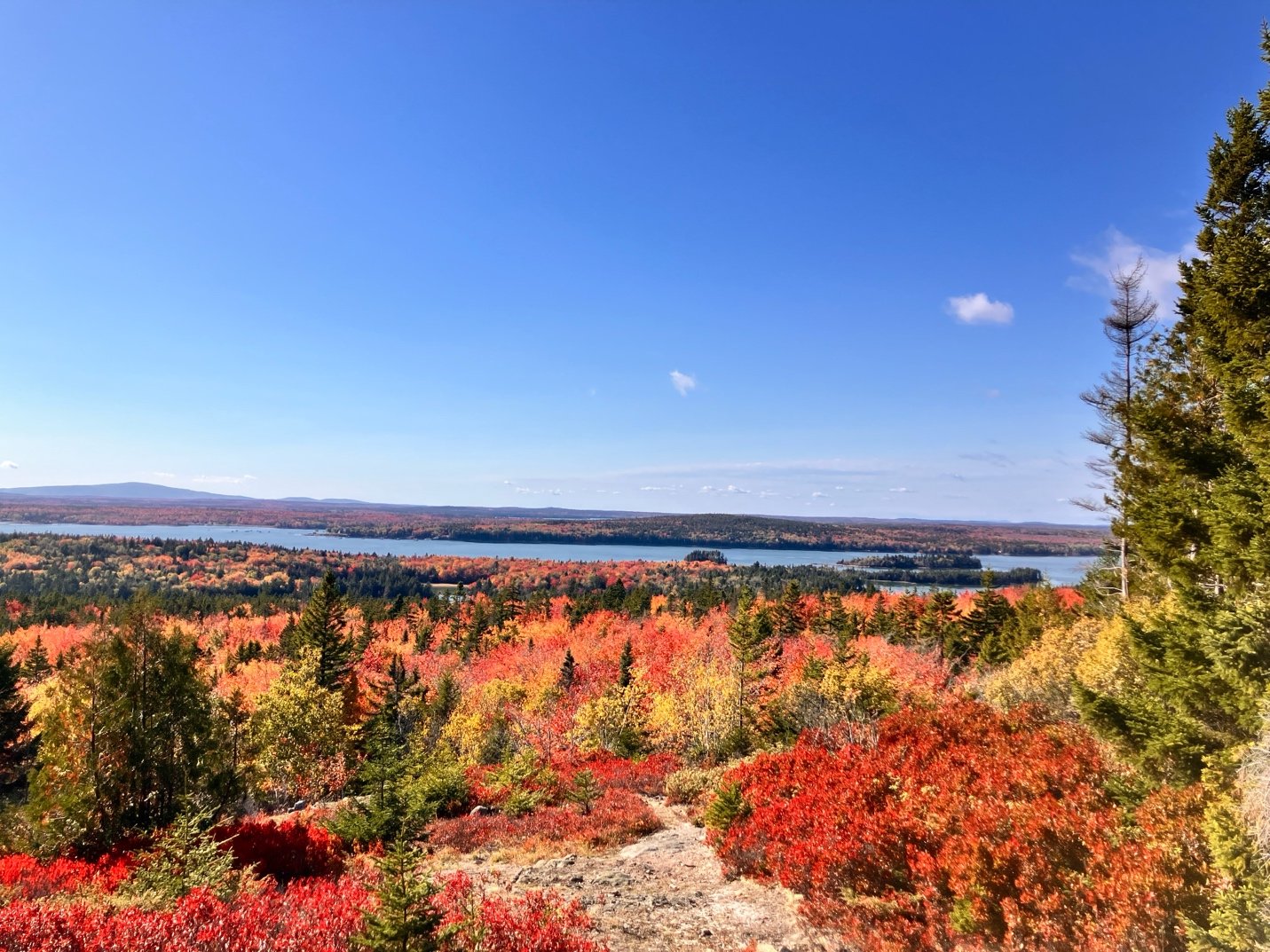
The high winds of October have blown the jewel-toned leaves from the maple trees and birches along our net lanes, and the gentler breezes from the northwest have carried owls our way. Fall is drawing to a close, and with stick season comes the end of owl migration in Maine. We are beginning to prepare the banding station for its own overwintering and reflecting on the nocturnal experiences and warm little saw-whets of 2026. Avian and human visitors alike brought us joy, interesting conversation, surprises, and bill clacks. While we haven’t been able to get everyone we would’ve liked out to the station, we did have 50 volunteers and visitors throughout the season who made all of the work and owl appreciation possible.
Exciting Human Happenings
While our most numerous visitors on a given night are usually owls, we did have a few nights that were busier with people. In mid-October, the crew and host of Maine Public’s Borealis outdoor program interviewed project staff and filmed owl banding. We appreciated their ability to film within the confines of the banding trailer, their enjoyment of the owls, and learning more about all of the interesting projects, places, and people they document. All of their episodes are available on YouTube, and it will be fun to see professional footage of our birds! In late October, we had a visit from the Downeast Audubon Young Birder’s Club. We caught a few owls during their visit and got to share about avian fieldwork and owl banding.
Forecasting Owls
One of our favorite pastimes during the banding season is checking the weather forecasts and making predictions about which one will be more accurate and how conditions will impact the movement of owls. After three years at the point, countless hours of speculation, conversations with other owl banders, and a bit of background reading, we think we know a little about what is going to happen each night. Some nights, like one in mid-October with a forecast for low northwest winds and dark skies, when conditions are perfect during peak owl migration, are an easy bet. But a late October night with an early rising full moon after a day of strong winds leaves more room for chance. With promising conditions on the nights of October 23rd and 24th, after northwest winds too strong to open on the 22nd, we predicted a slow trickle of birds increasing throughout the night on the 23rd, leading to a bigger push on the 24th. Instead, we caught 8 birds in the first hour and a half on the 23rd, early enough in the night for us to conclude those individuals likely arrived in the area the day before and hunkered down. Then our captures dropped off sharply, and on the 24th, we caught just 4 birds throughout the night. It can be challenging to take into account all of the different factors at play and how many owls are moving. The mystery of what may happen on any night of the season keeps us seeking the thrill of the unknown.
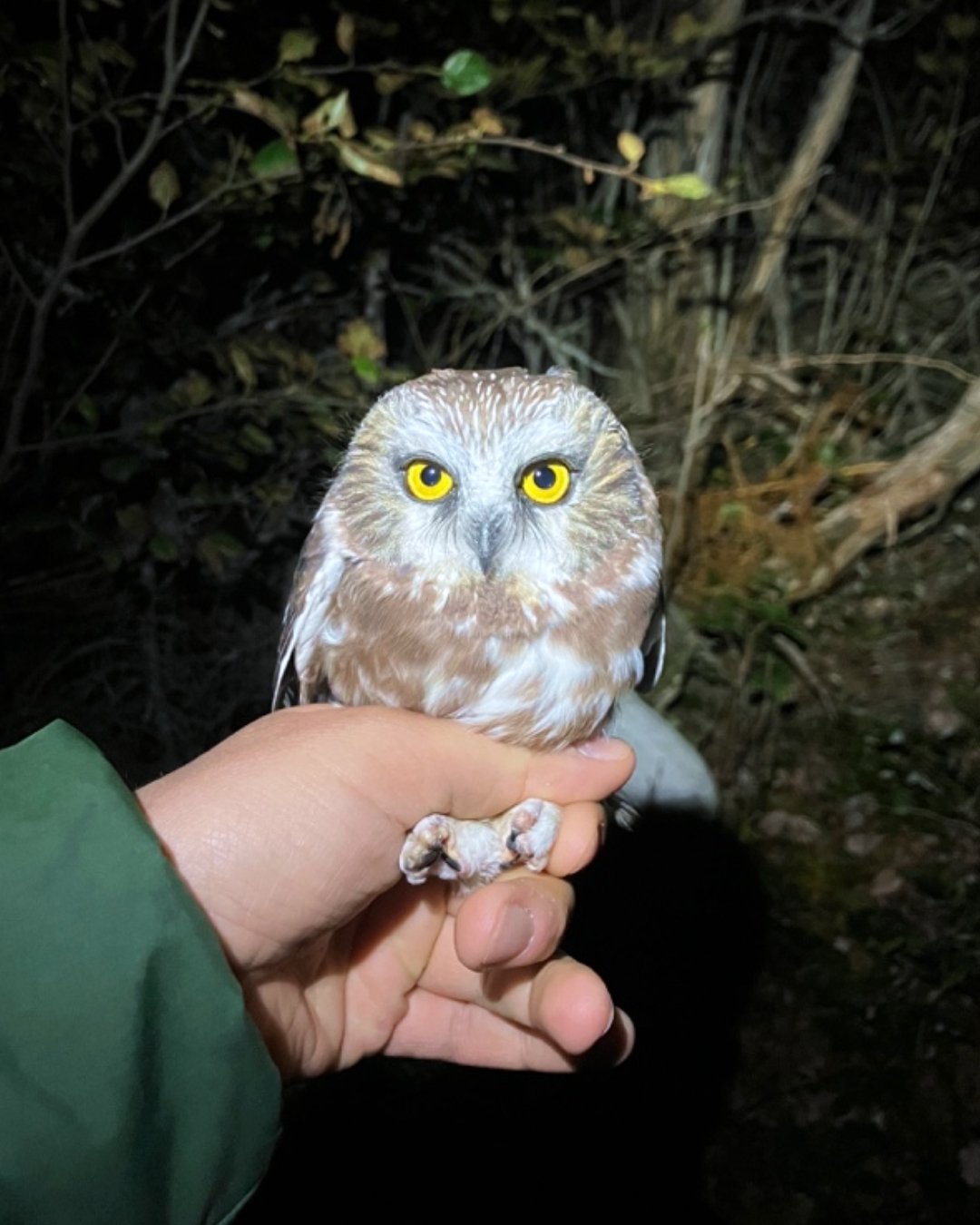
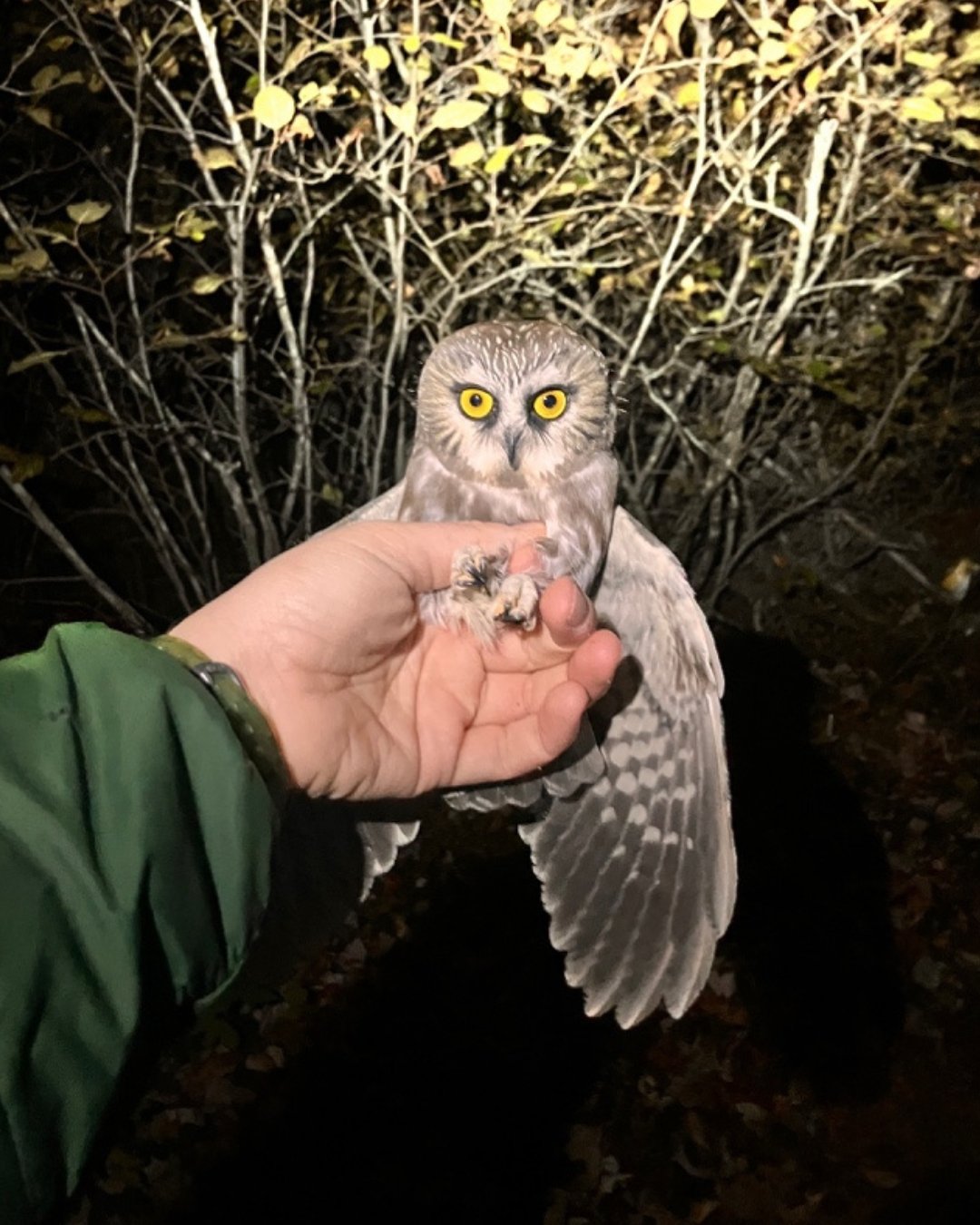
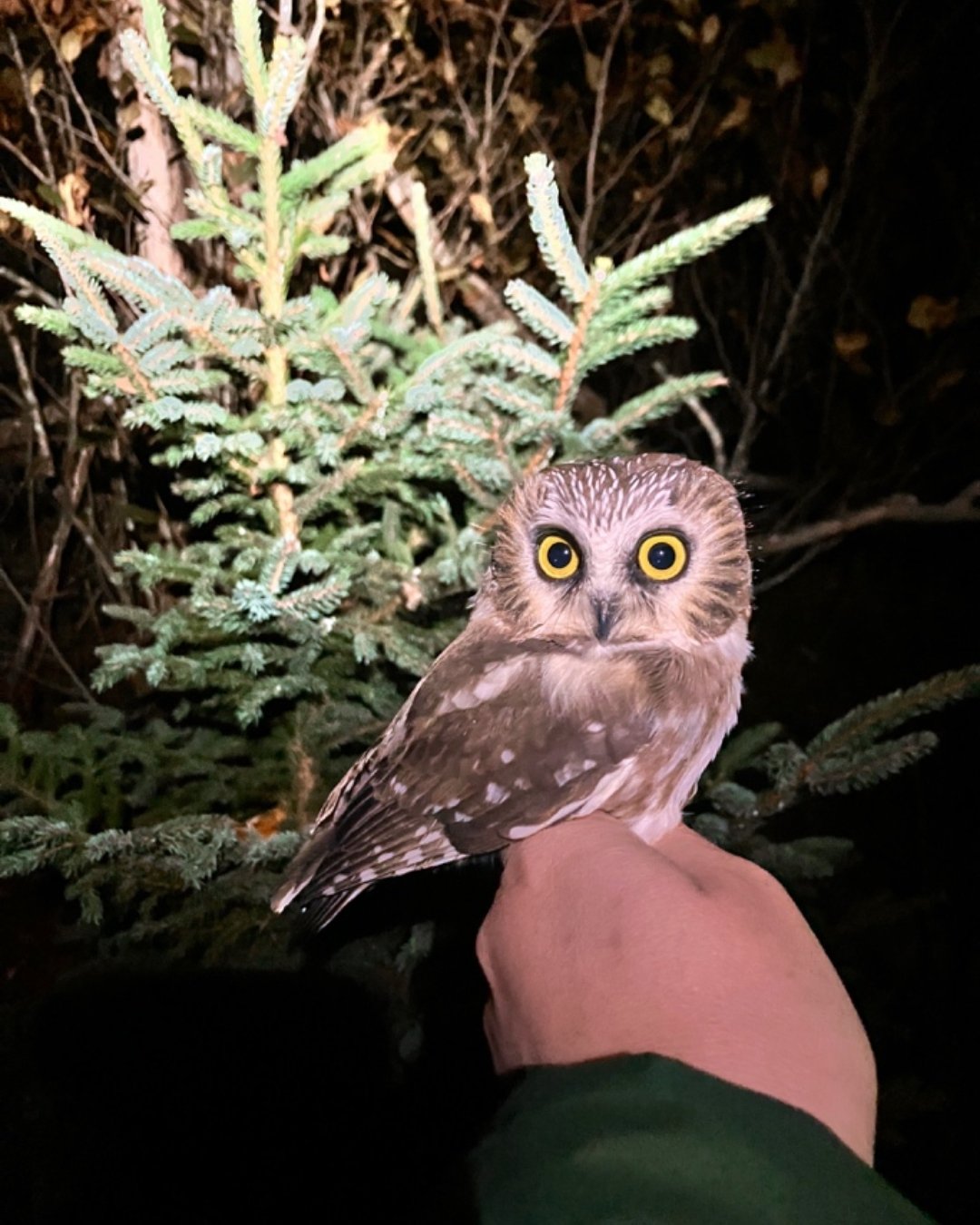
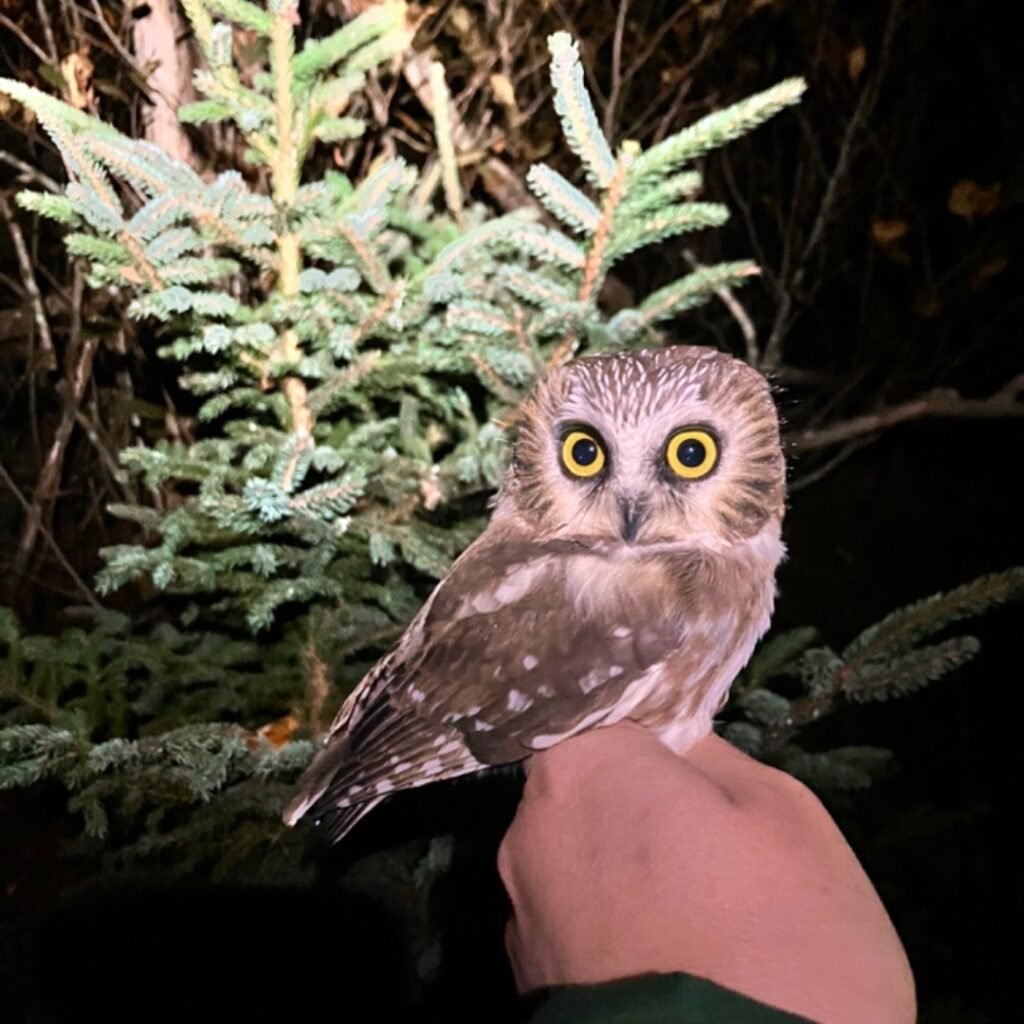
Three Northern Saw-whet Owls immediately post-extraction from the nets.
Little Owls
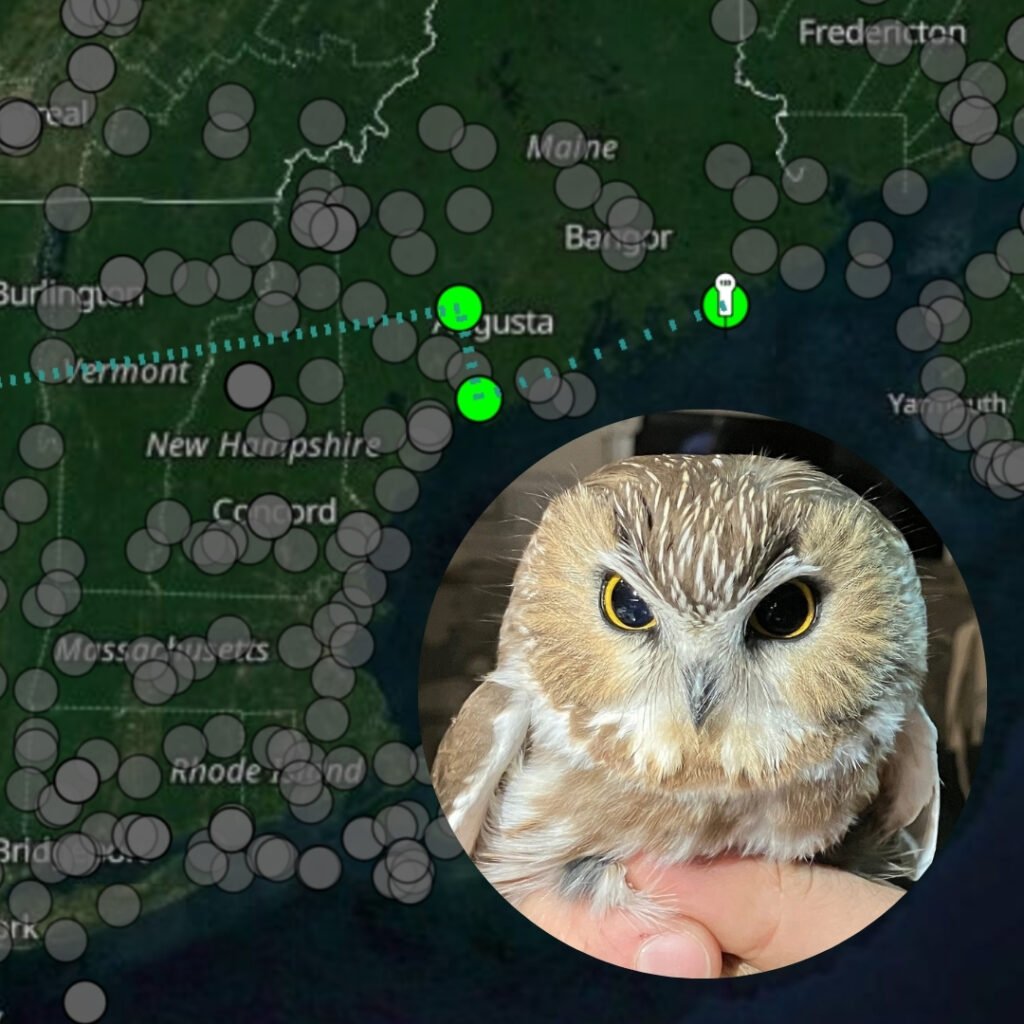
As of October 31st, our season total stands at 199 Northern Saw-whet Owls and 2 Barred Owls. We hope to catch just one more saw-whet in the next few days if the weather allows. A nice round 200 birds would also tie our final count with that of our dear friends and former Petit Manan owl banders who just finished the fall banding season at Whitefish Point in Michigan. While we would’ve been thrilled to encounter Boreal and Long-eared Owls this season, both a rarity for our station, we were very glad that our upper Midwest pals got to catch one of each right before their season ended. You can read about their experience here. The first adult saw-whet we caught, a two-year-old banded in Pennsylvania last fall, was the only bird who hit our nets already wearing a band. Stations farther south of us are still banding, and some have only just opened, so hopefully as the owls keep moving other stations will capture birds we banded. We did hear from banders at a station in the Berkshires of Massachusetts who caught a bird we banded last fall as a hatch year. An adult female we tagged in 2024, who is at least 5 years old this year, was recaptured in eastern Pennsylvania in mid-October. She weighed within one gram of her original capture, though she has surely gained and lost weight many times in the intervening cycles of migration, overwintering, and breeding. We learn a lot about migration patterns and survival from banding and recapturing birds. There is also a particular joy and thrill to knowing that an individual bird has made it
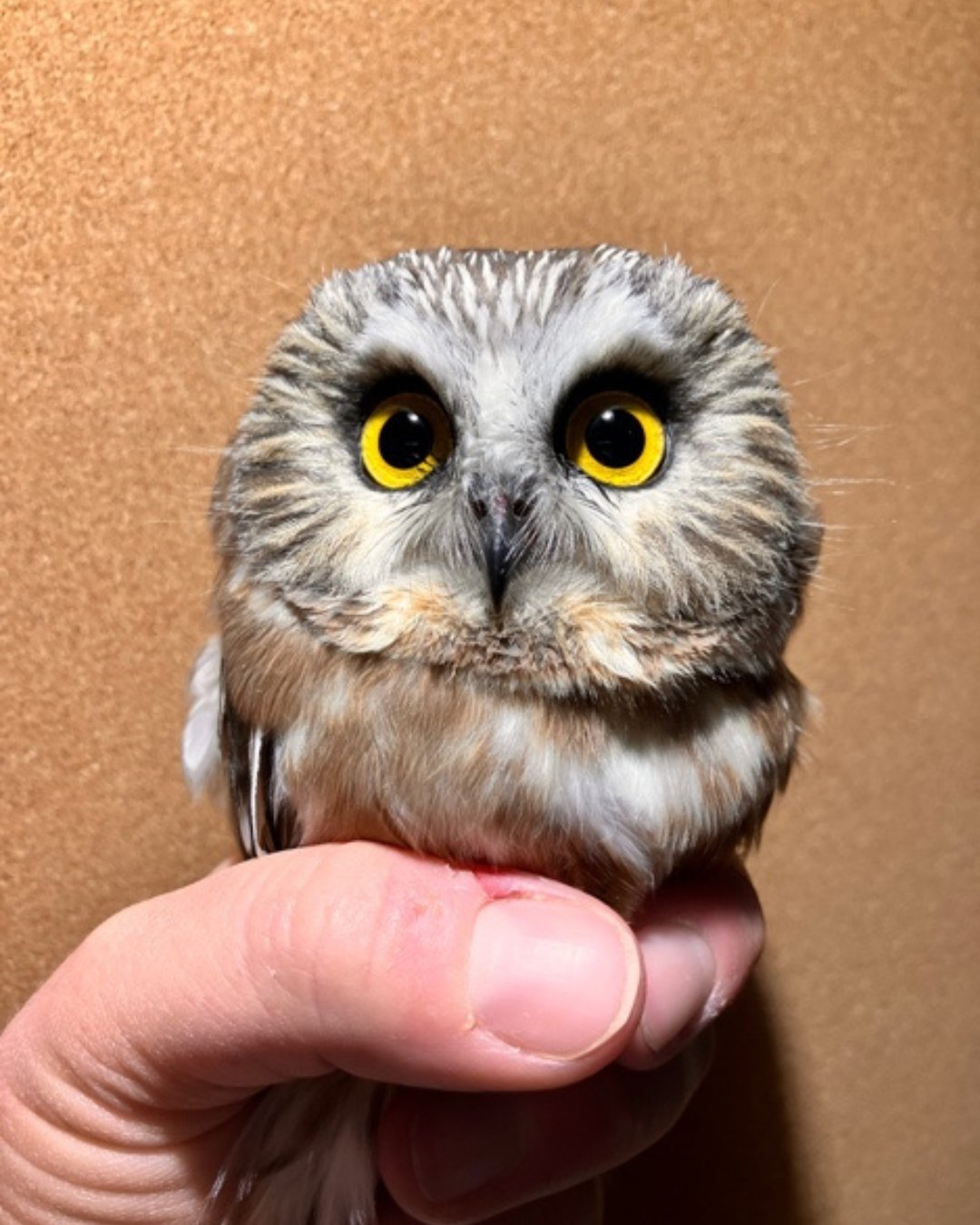
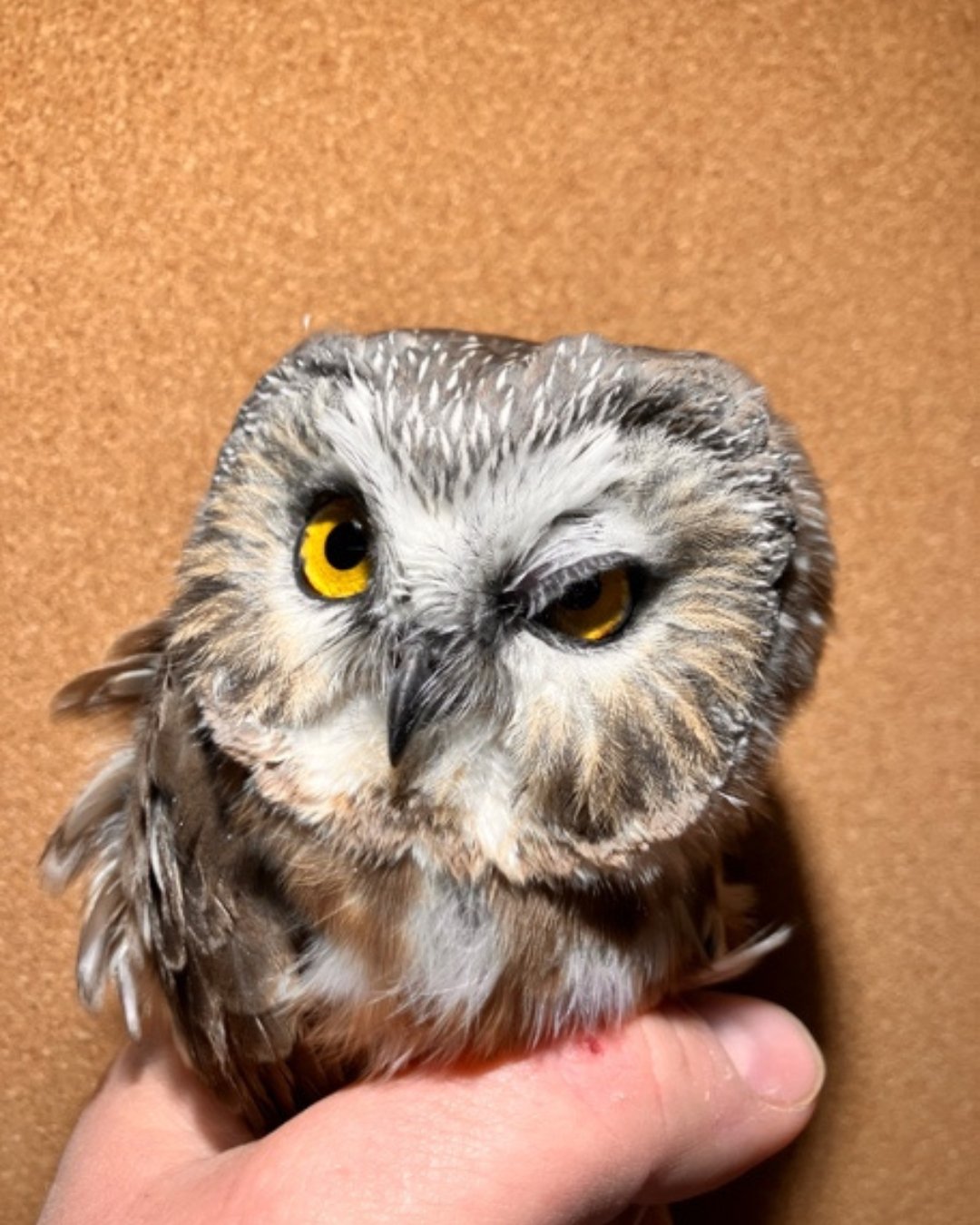
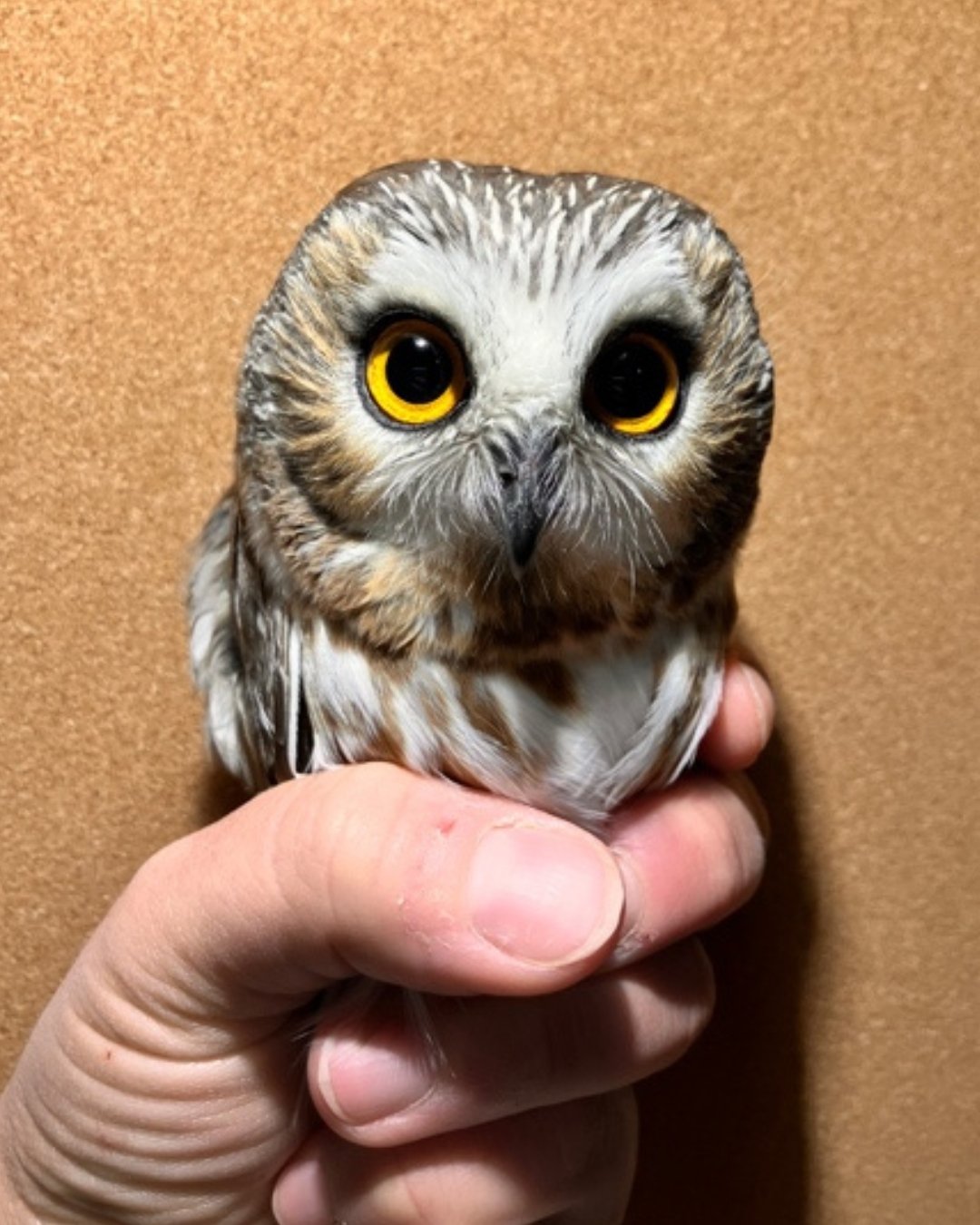
Some of the most charming Saw-whet faces of the season.
Big Owls
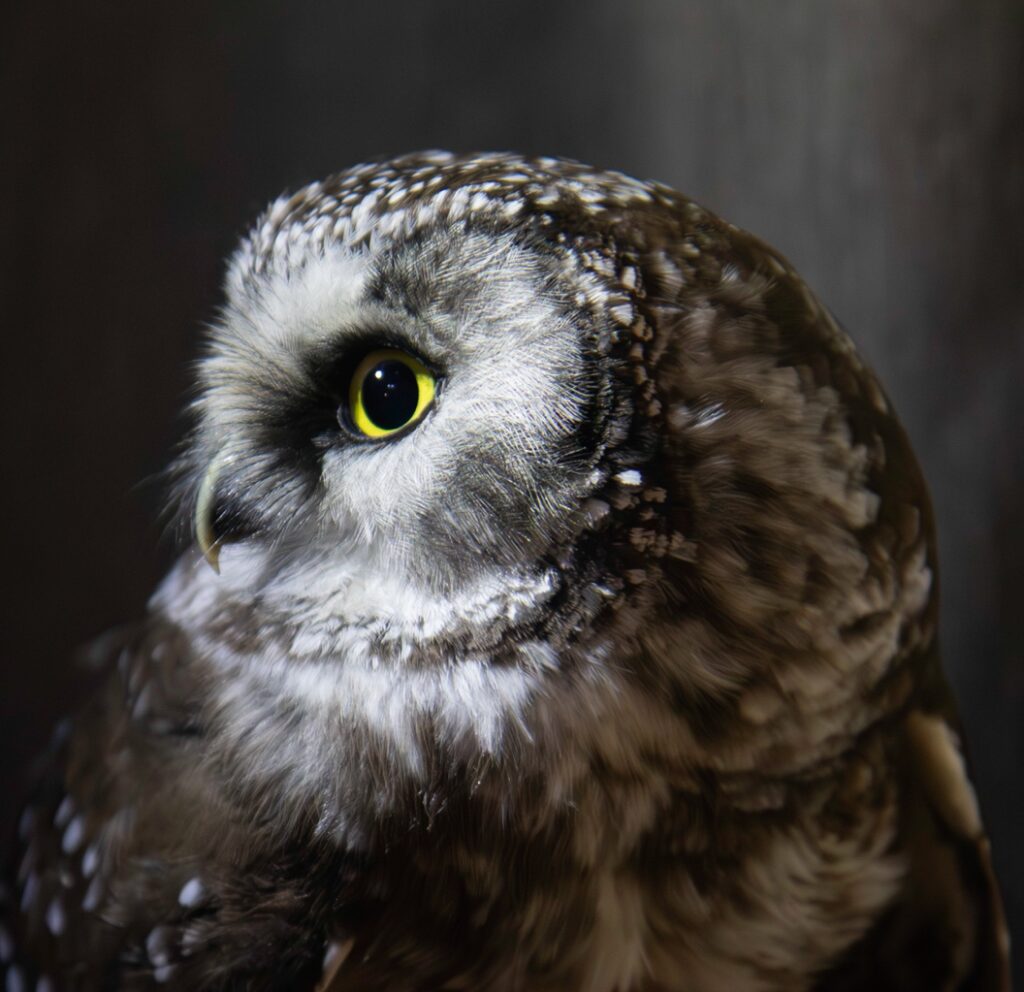
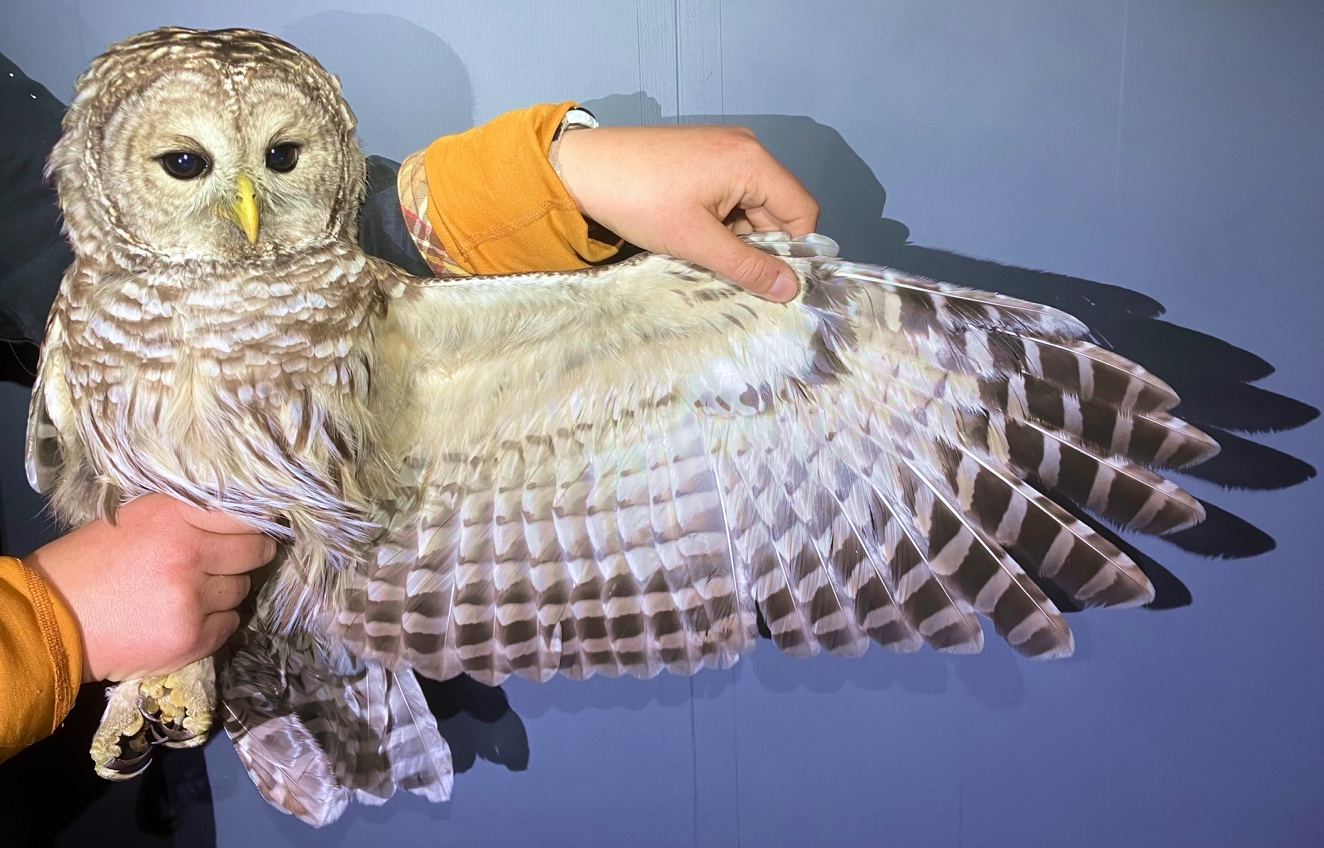
We love saw-whets deeply, and each one is a charming individual, but these diminutive owls are dwarfed (and sometimes eaten) by their larger cousins. We are awed when we get to capture, handle, and band an owl that weighs over six times our average saw-whet, with a wingspan to match. While the needling talons of a “footy” saw-whet can prick you into frustration, the feet of a Barred Owl have much higher consequences, and we take extra care with these powerful predators. Like most of our saw-whets, the two Barred Owls we caught this season were both hatch-year birds, dispersing in the fall. With strong, deep wings, Barred Owls are able to fly in higher winds, and both birds hit the nets on nights when we weren’t catching many saw-whets. We love the big, seal-like eyes and hefty yellow bills of these brown and white beauties.
Share
Related Content
-

The 2026 Season Draws to a Close
2 November 2026 – Update from the Petit Manan Owl Monitoring Station
-
Preparing for owls at the Petit Manan Monitoring Station
28 September 2026 – by Tracey and Coco Faber