28 September 2026

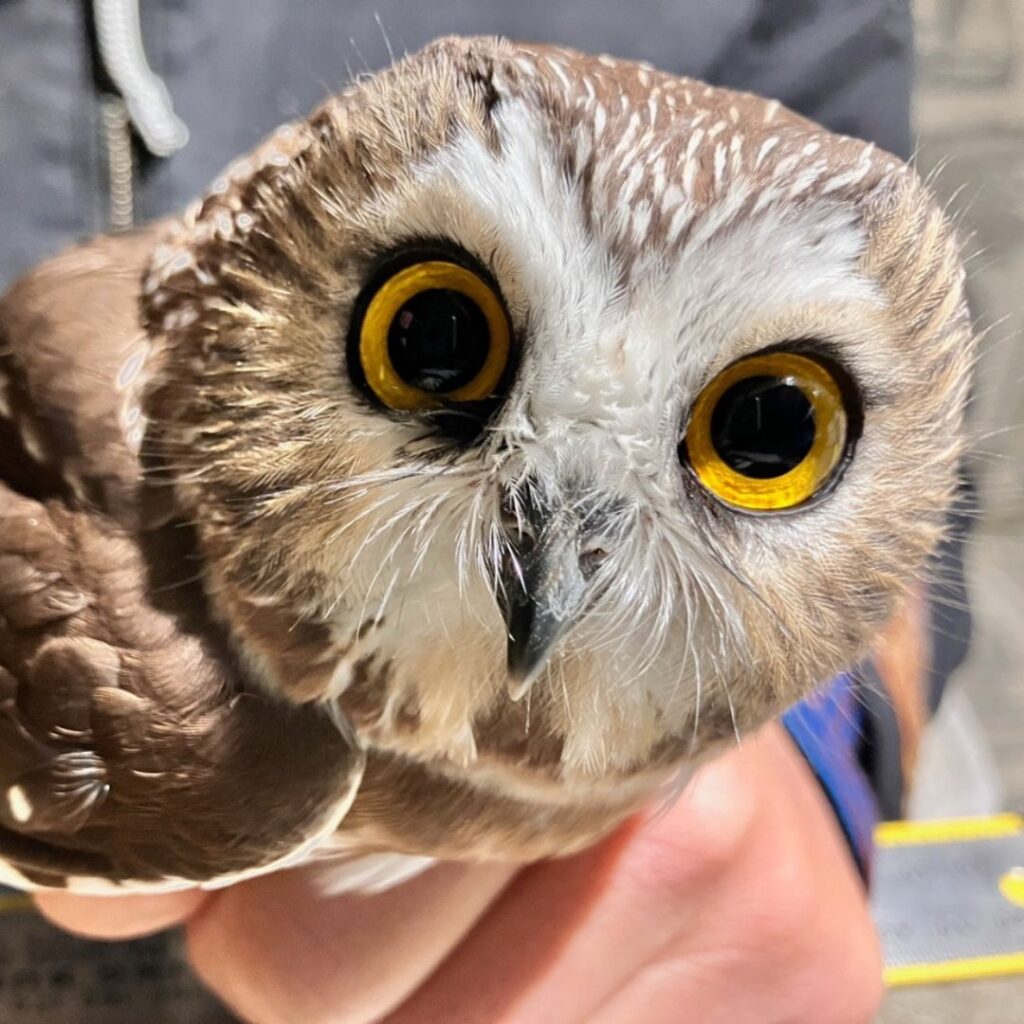
We are glad to be back at Petit Manan Point as the resident banders for fall owl migration banding in 2026. We each led field crews on Maine’s seabird nesting islands over the summer, and as the terns departed, the alcids moved offshore, and the breeze turned cool, we both started to think of Saw-whets. Our hearts have been captured by these diminutive birds, with their asynchronously blinking eyes, densely feathered legs, and warm bodies. These past few days we have been busy preparing the station for the first night of good weather, and appreciating the other wildlife in the area, from warblers and gulls to porcupines.
Predictions for 2026:
Fall has come to the Northeast with a nor’easter that pushed heavy winds across the coast and poured rain on landscapes left dry by a hot summer. The weather drama of these past few days has delayed us opening the nets at Petit Manan Point. We are looking ahead to nights of low winds and clear skies and hoping to encounter Northern Saw-whet Owls in the coming week as they begin to move off their breeding grounds.
In the Northeast, Saw-whet productivity (the number of chicks who fledge from each nest) tends to follow the four year cycle of conifer mast years. A mast year means good food for small rodents the following spring and summer, and an abundance of prey allows Saw-whets to lay more eggs and raise more chicks. As a result, we expect to catch many hatch-year birds the year after a mast year, and fewer each subsequent year. 2026 is the third year after a mast year, so we expect to catch a higher percentage of adults, and fewer birds overall. But the number of birds we catch depends greatly on the weather–will the winds push birds our way or carry them farther inland? The excitement of the season is in finding out what the nights will bring! We will share more as banding gets underway and the nights grow cold.
Updates on Motus Tagged Saw-whets:
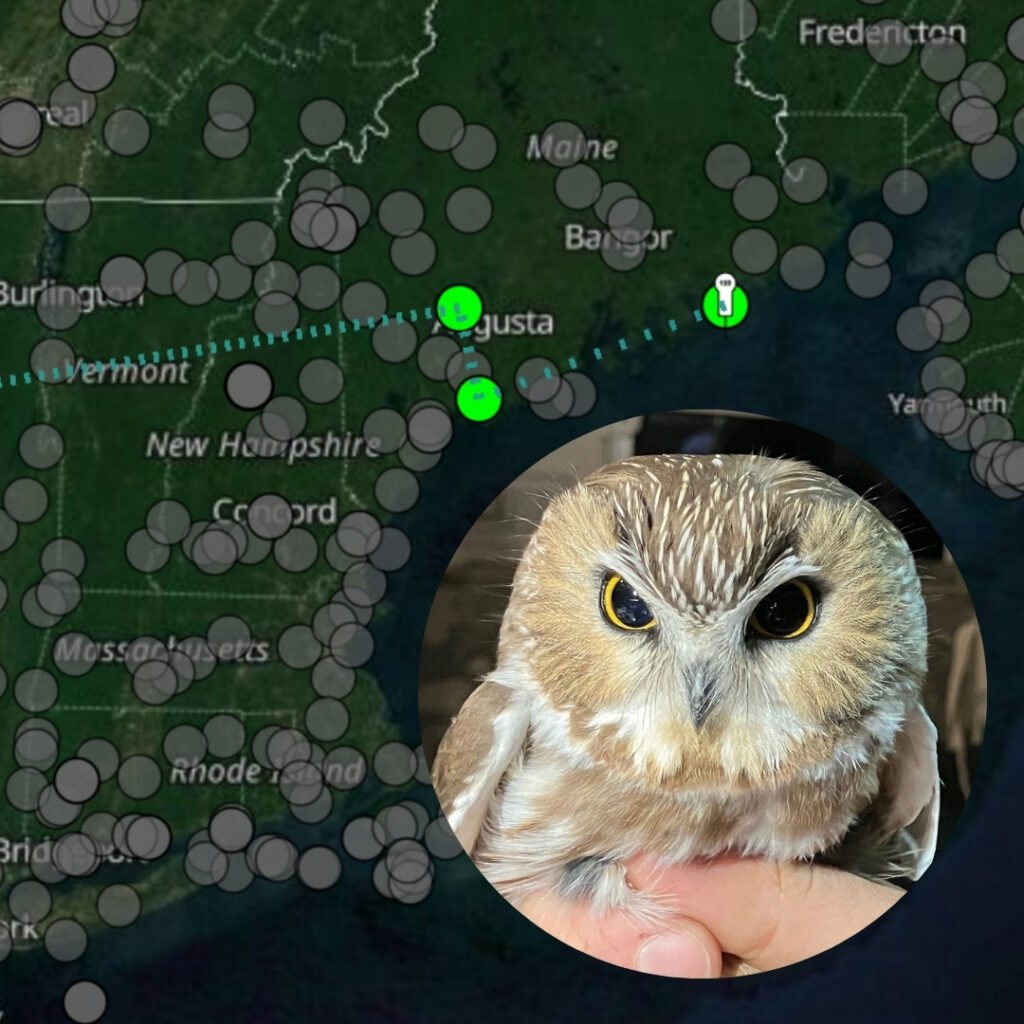
We do have updates to share about several birds banded at Petit Manan Point in 2024 and 2025. These birds were given VHF nanotags as part of the Northern Saw-whet Owl Migratory Connectivity project led by Aaron Coolman. During the past two fall banding seasons, we deployed tags that can be detected by stations in the Motus network on 30 adult Saw-whets, including 6 males and 24 females. The four birds shown here all went to the North of Lake Erie in 2025, and two have been picked up back in the Northeast in the spring and summer. These maps, available on the Motus website, show straight lines between Motus stations where birds were detected, so we can see where they started and where they ended up, but not necessarily what more detailed routes they followed. You can explore more maps of tagged birds’ movements here.
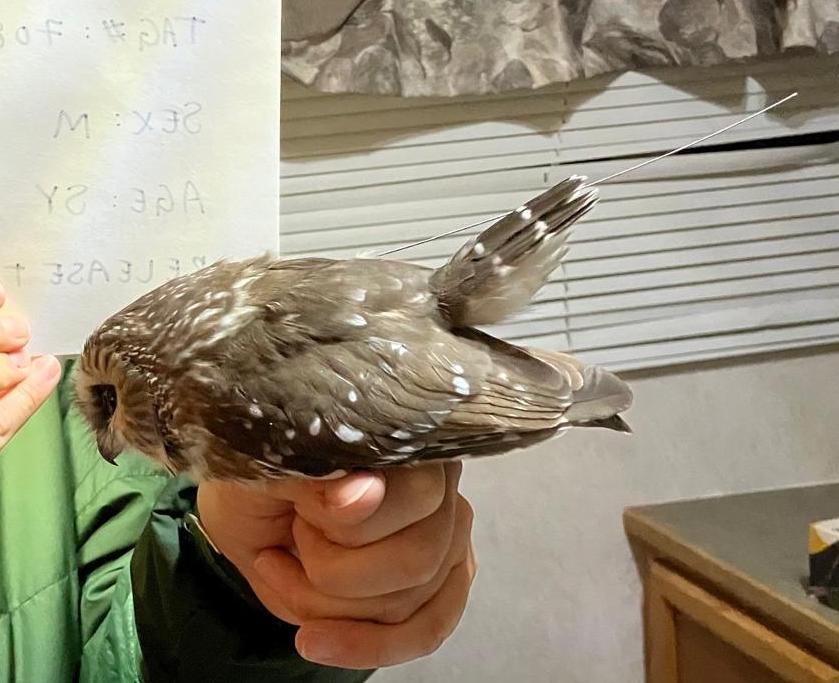
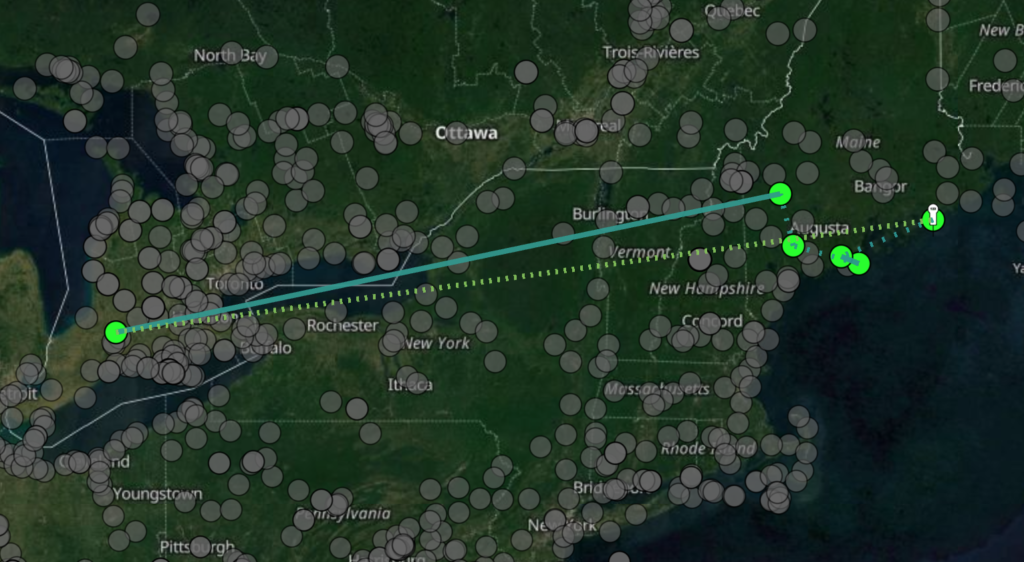
This bird was tagged on October 3rd, 2025. She traveled down the coast of Maine, then headed west, making her way from southwestern Maine to north of Lake Erie in just two days. On March 11th, she passed by Petit Manan Point again, likely on her way to breed.
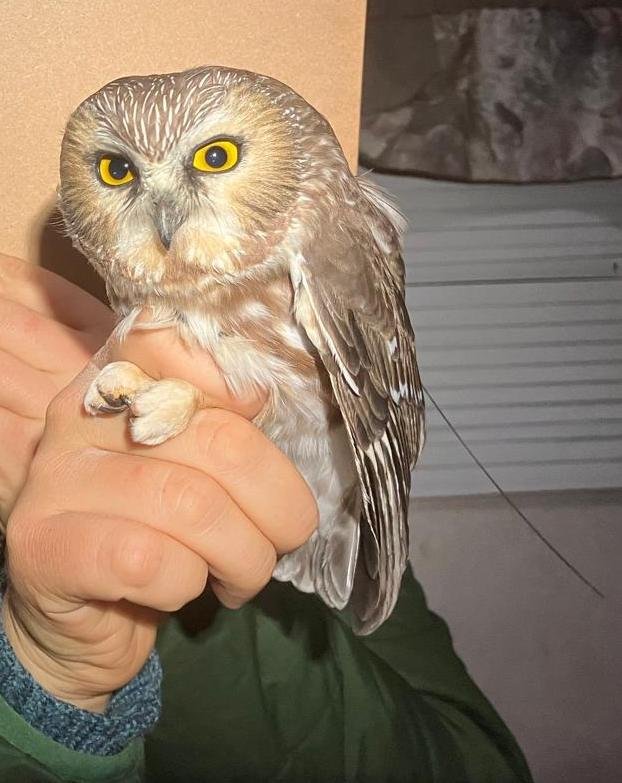
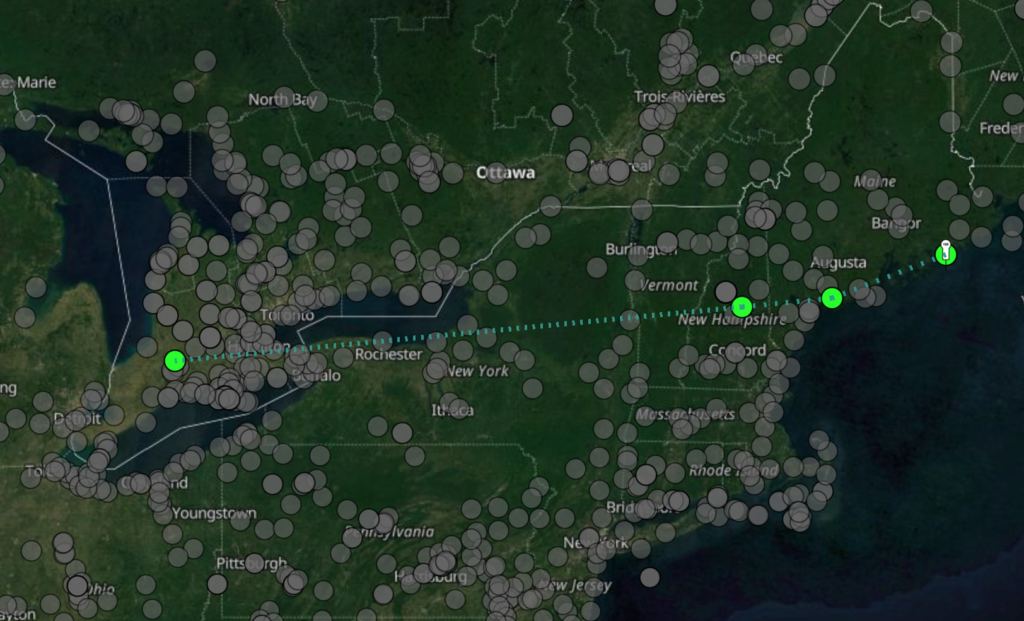
This female, tagged on October 10th, 2025, was picked up north of Lake Erie 2 weeks later.
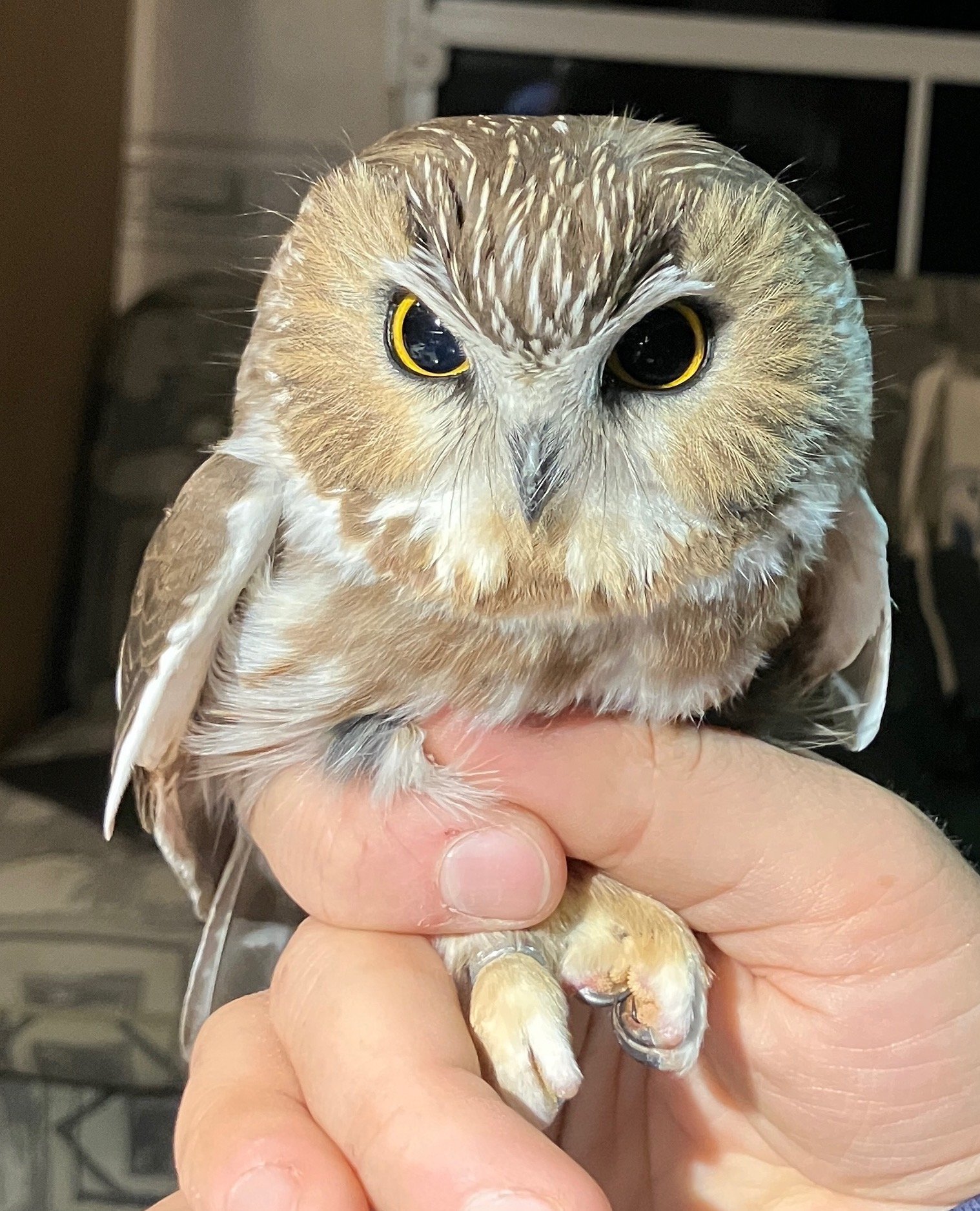
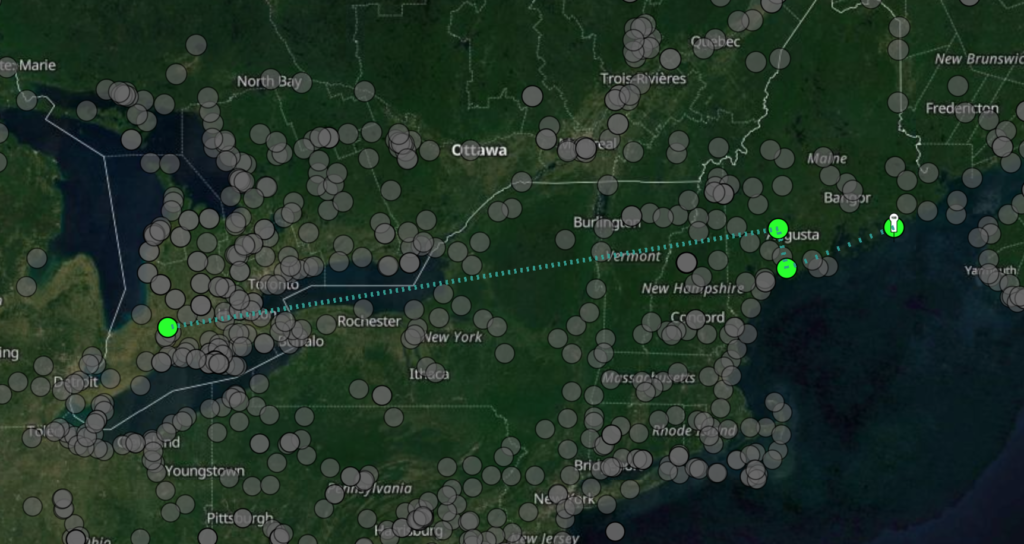
This two-year old male, tagged on September 28th, 2025, also went west during the fall. His tag was picked up north of Lake Erie as well, with his last detection there on November 3rd.
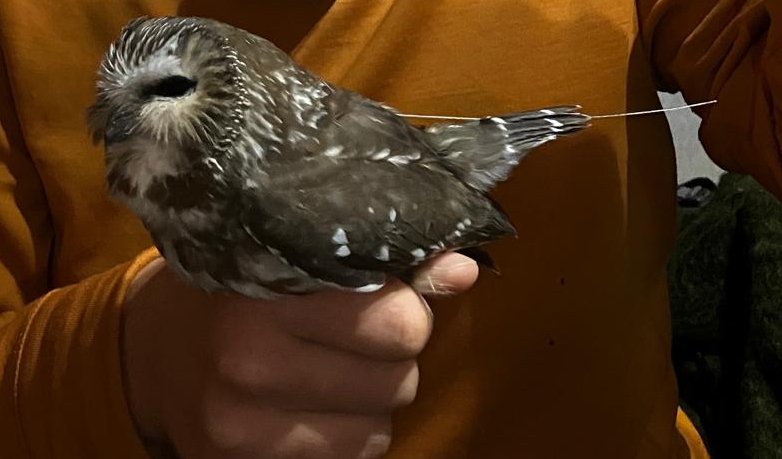
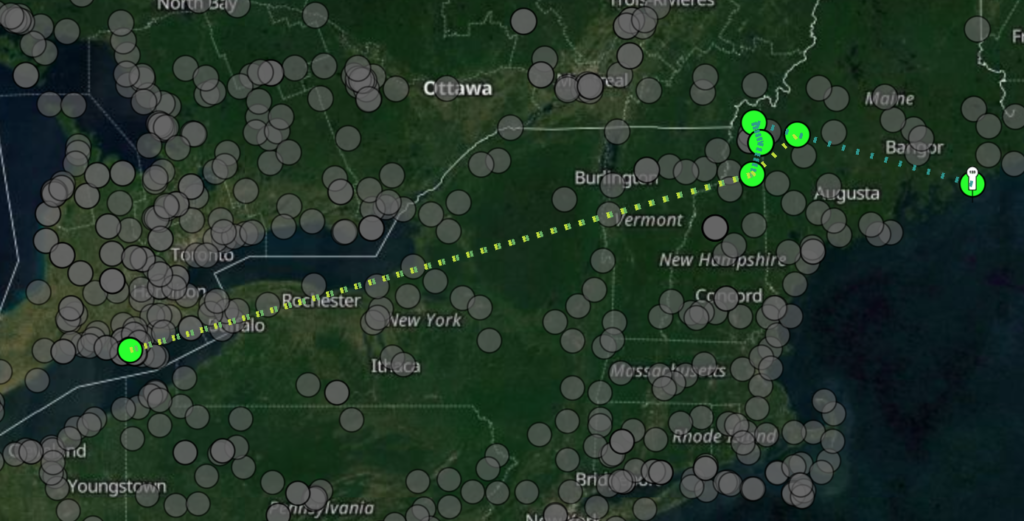
This two year old female was tagged in late October of 2024. Her next detection wasn’t until almost a full year later, on October 17th, 2025 in northeastern New Hampshire. She went west to the north shore of Lake Erie, where her tag was picked up on February 1st. As a now four year old bird, she flew past stations in New Hampshire and Maine again in late June of this year.
An Unusual Summer Sighting:
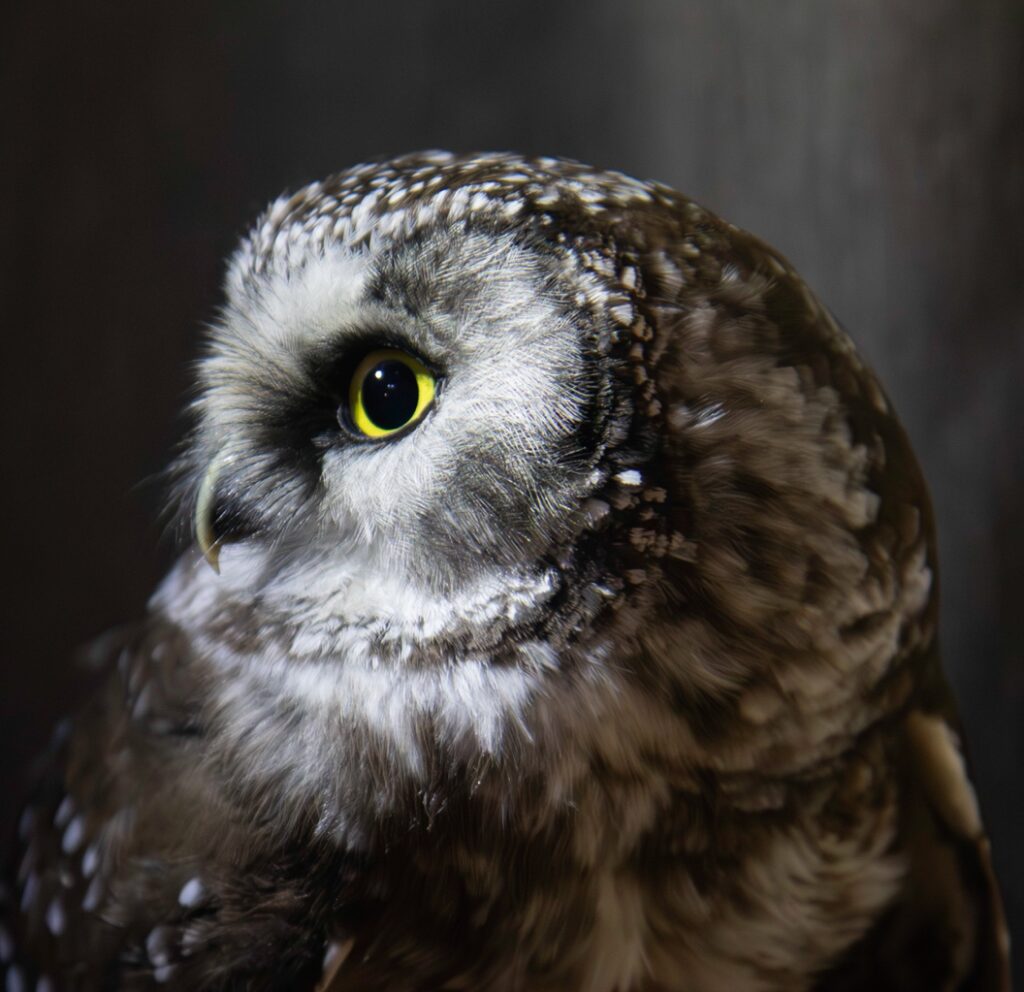
Seabirds and owls don’t often end up in the same places during the breeding season, particularly on islands farther from the coast. The owls who occasionally find their way to such distant locales in Maine tend to be Great Horned or Snowy Owls, who can have a devastating impact on nesting seabirds. Matinicus Rock, where terns, four species of alcid, storm-petrels, and eider ducks breed 25 miles from the mainland, had an unusual visitor in mid-July. A Saw-whet still in its juvenile plumage spent two nights on the island, perching in the corner of the open basement of the lighthouse. This young owl, hatched earlier in the summer, could have been dispersing from one of many nearby treed islands. While it did eat a storm-petrel, it was still a delight!
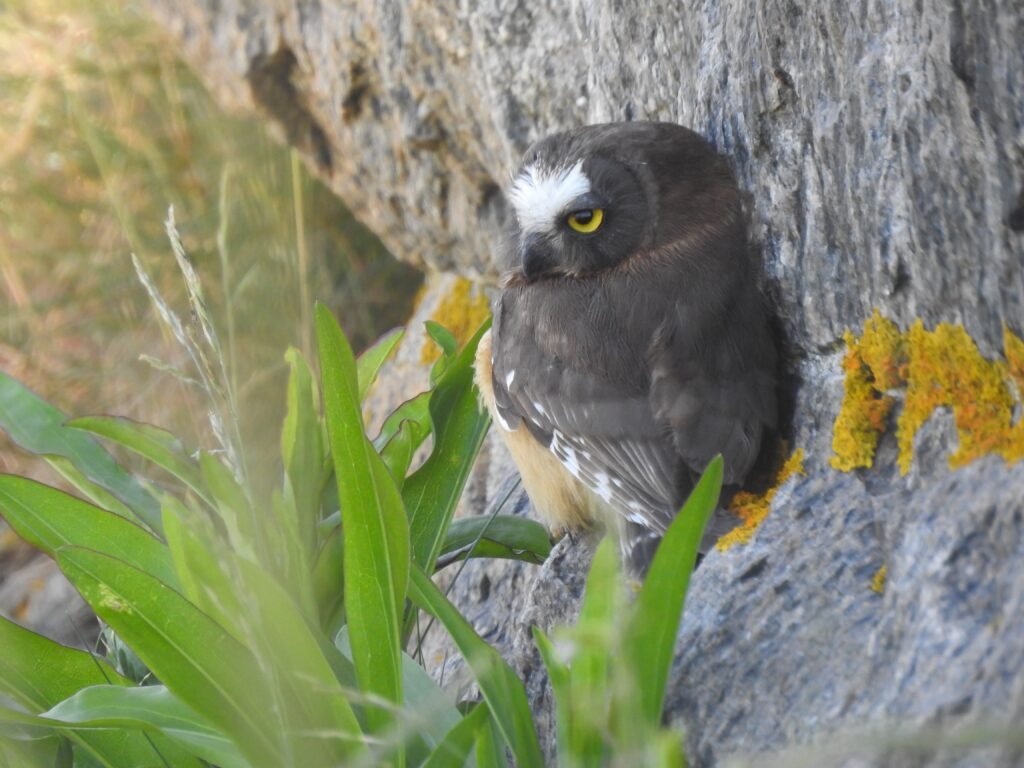
Juvenile Saw-whet, photo taken by Katelyn Shelton
- Tracey and Coco Faber
Share
Related Content
-

Preparing for owls at the Petit Manan Monitoring Station
28 September 2026 – by Tracey and Coco Faber